
Safari 1
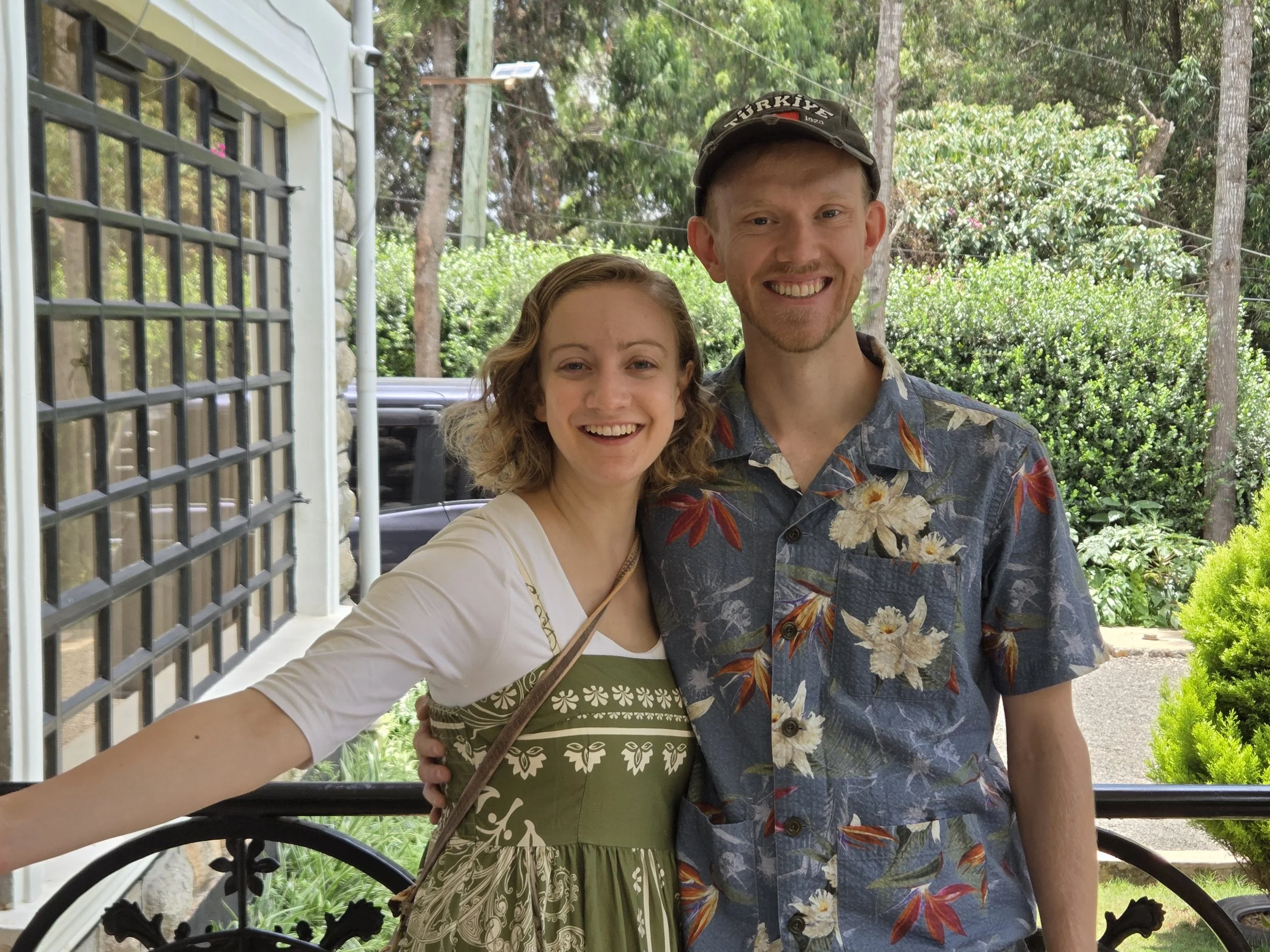
We were honored and thrilled to have a pair of our sponsors join us for this trip to Kenya. Jaime Lewis and Nathan Szalewski were among Tuko Pamoja’s first sponsors, for both the porridge and child-sponsoring programs. They were married in May 2025 and came to Kenya as part of their honeymoon trip.
After meeting them at the airport at about 3 am, we dashed back to the house and everyone slept for a few hours. Then we loaded up in the van with our safari driver, Thomas, and headed for the Maasai Mara game park. (I’m using the tribal spelling of “Maasai” here. The British colonialists shortened it to “Masai” for their own ease.)
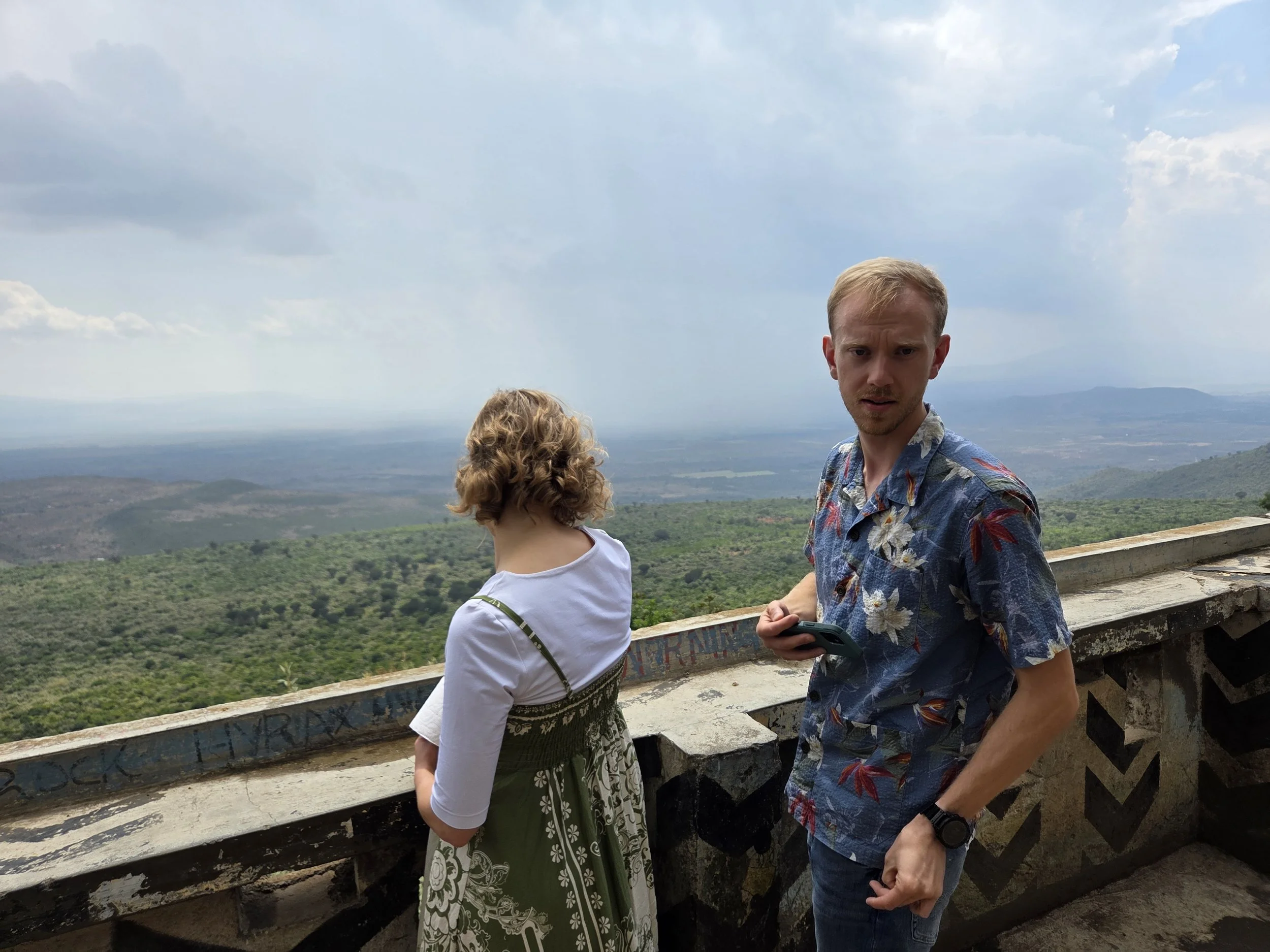
There are two main routes from Ngong to the park. We opted to take the slower one to get there. This takes us down the escarpment road into the Great Rift Valley. This road, basically down a cliff, has some pretty remarkable views. Below, Jaime and Nathan look out over the valley.
Since we were late getting to the park, we planned to stay in a hotel outside the park that first night. You can’t safari in the dark, but we would still have had to pay $200 each for tickets, just to get to a resort inside the park.
The tickets only allow one entry/exit a day. So if you stay at a resort in the park, you can come and go from the resort. But if you are outside, you must stay in the park until you’re finished for the day.
We got to the main gate after dark. We picked up Letipat, our Maasai guide. We then had to drive on a rough dirt road for about 25 km to get to the resort for that night. About 5 minutes into this part of the drive, we found ourselves in a tower of giraffes. They were on both sides of the road, barely visible in the dark. Then one ran across right in front of us. Yikes!
The road had a few other safari trucks and other traffic going the other way. The further we got, the less visible the road was. It kept disappearing. Thomas and Letipat would confer and figure out a path forward. We had a few spots where the road dead-ended.
Thomas was talking on the phone to the hotel the whole time to ensure they knew we were still on our way. And that we’d need food when we got there.
After several wrong turns, we pulled up to the hotel, “Zebra” something or other. The manager informed us we were at the wrong “Zebra” hotel. He gave us directions.
We went back to the interwoven paths that passed for a road and went the way he told us. We got to the security gate. Wrong hotel again. And we were told the road to the one we were going to was washed out. So we needed to cut through another hotel property to get to ours.
The discussions at the gate of that hotel were challenging, but we made it through and got to our hotel.
We went inside, accompanied by a guitarist and several staff members. We started the check-in process. Jaime and I made a beeline for the restrooms. On the way she quietly said of the ride, “That was terrifying!” I agreed. Welcome to Africa.
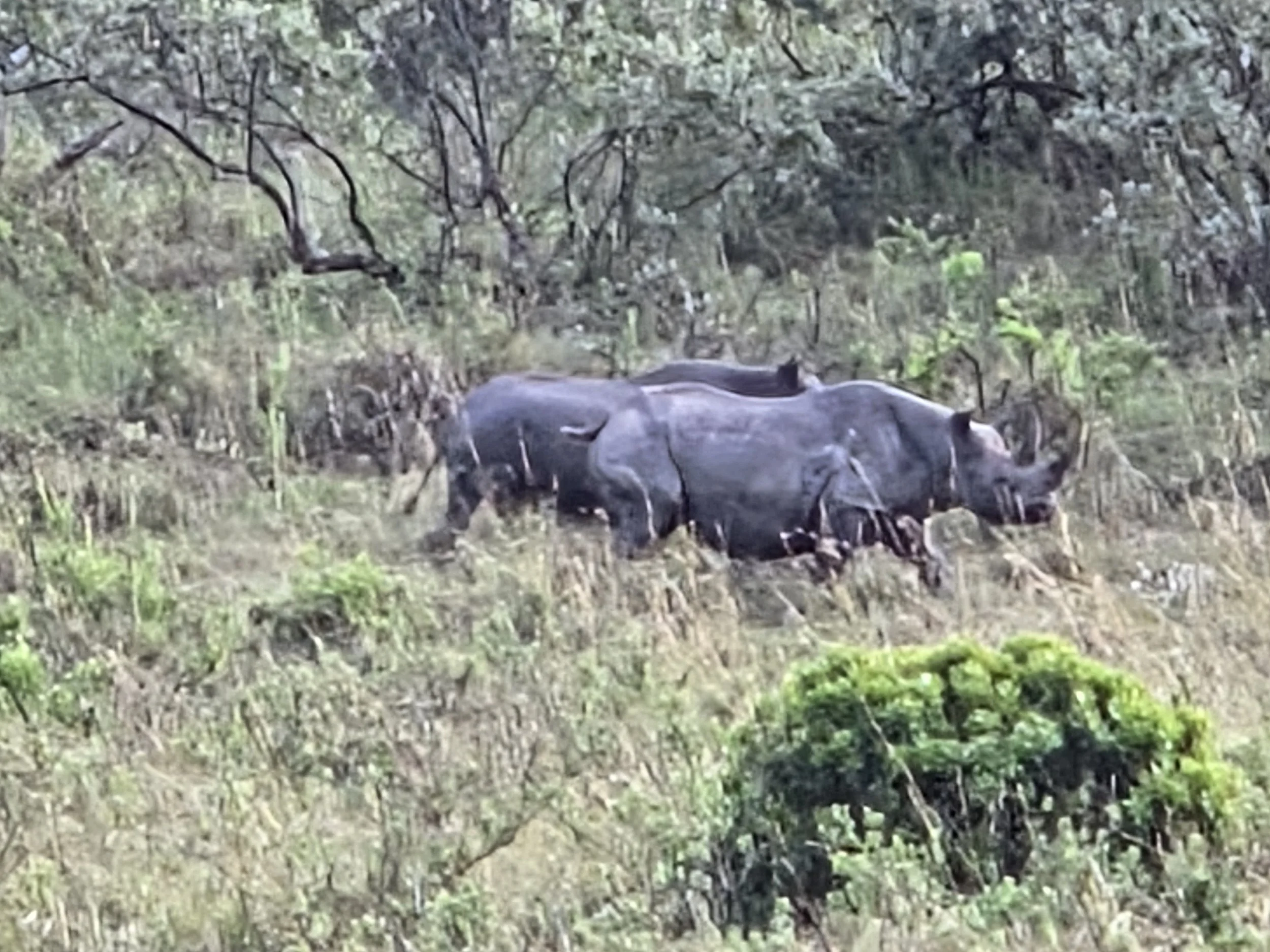
The next morning, we headed out on safari. One arbitrary measure of “success” on safari is to see the Big Five animals. This includes finding an elephant, a lion, a leopard, an African buffalo, and a rhino. The leopard and the rhino are the hard ones to locate. The rest are pretty easy, usually.
We took one morning to go hunting for rhinos. The road we were on was beautiful and majestic. Even without animals, it’s a good time.
Our guide’s job is to find the right places for us to see animals. But it is up to everyone in the truck to actually spot them. Luckily, we learned that Nathan has excellent “safari eyes”!
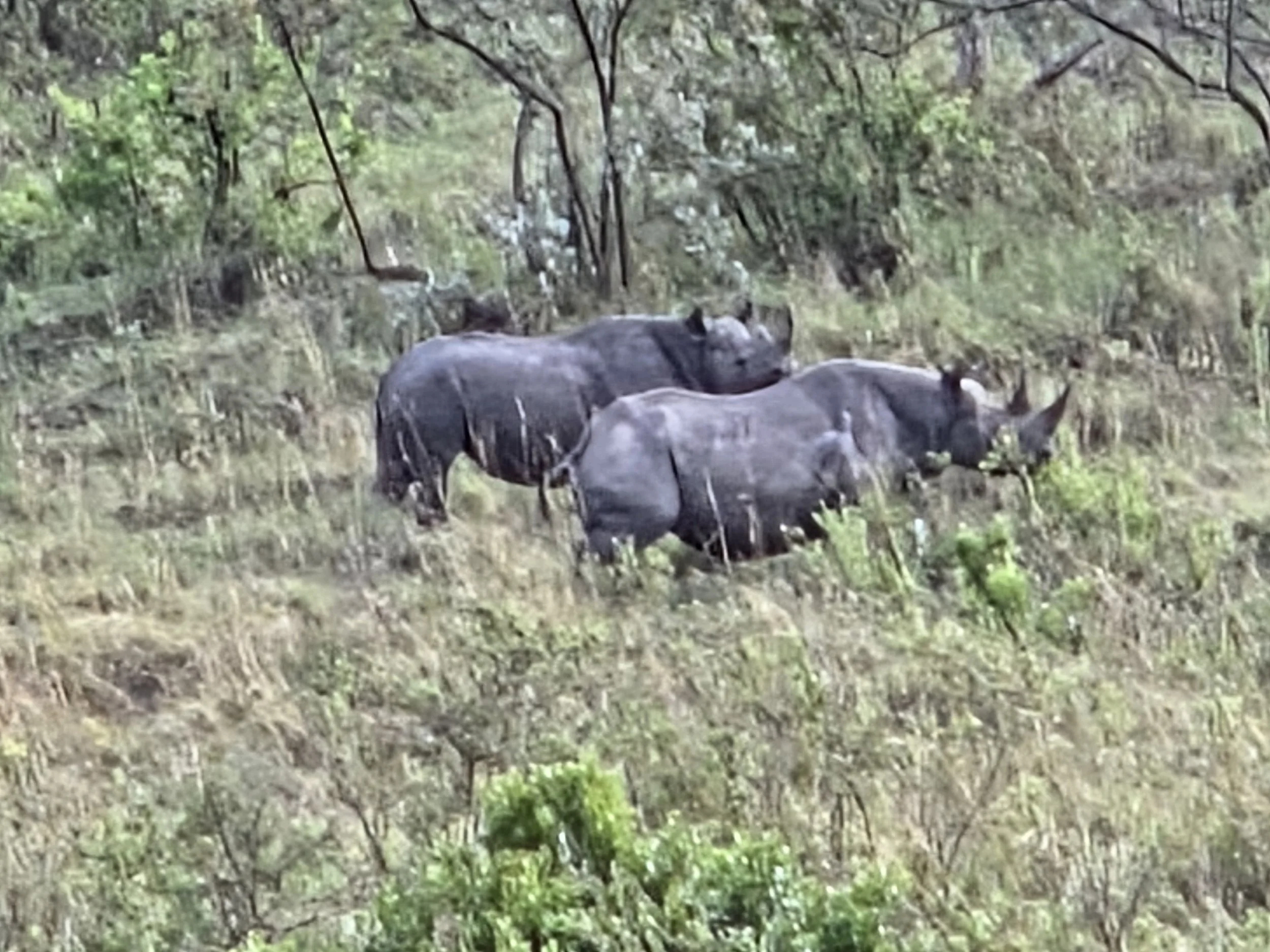
He spotted the rhinos off in the distance. We were the first truck to spot them and had them to ourselves for probably 10 minutes before any other trucks got there. The rhinos were walking to a stream to drink. We kept moving along with them.
Eventually, we left them to the other trucks and went on. These are such beautiful animals.
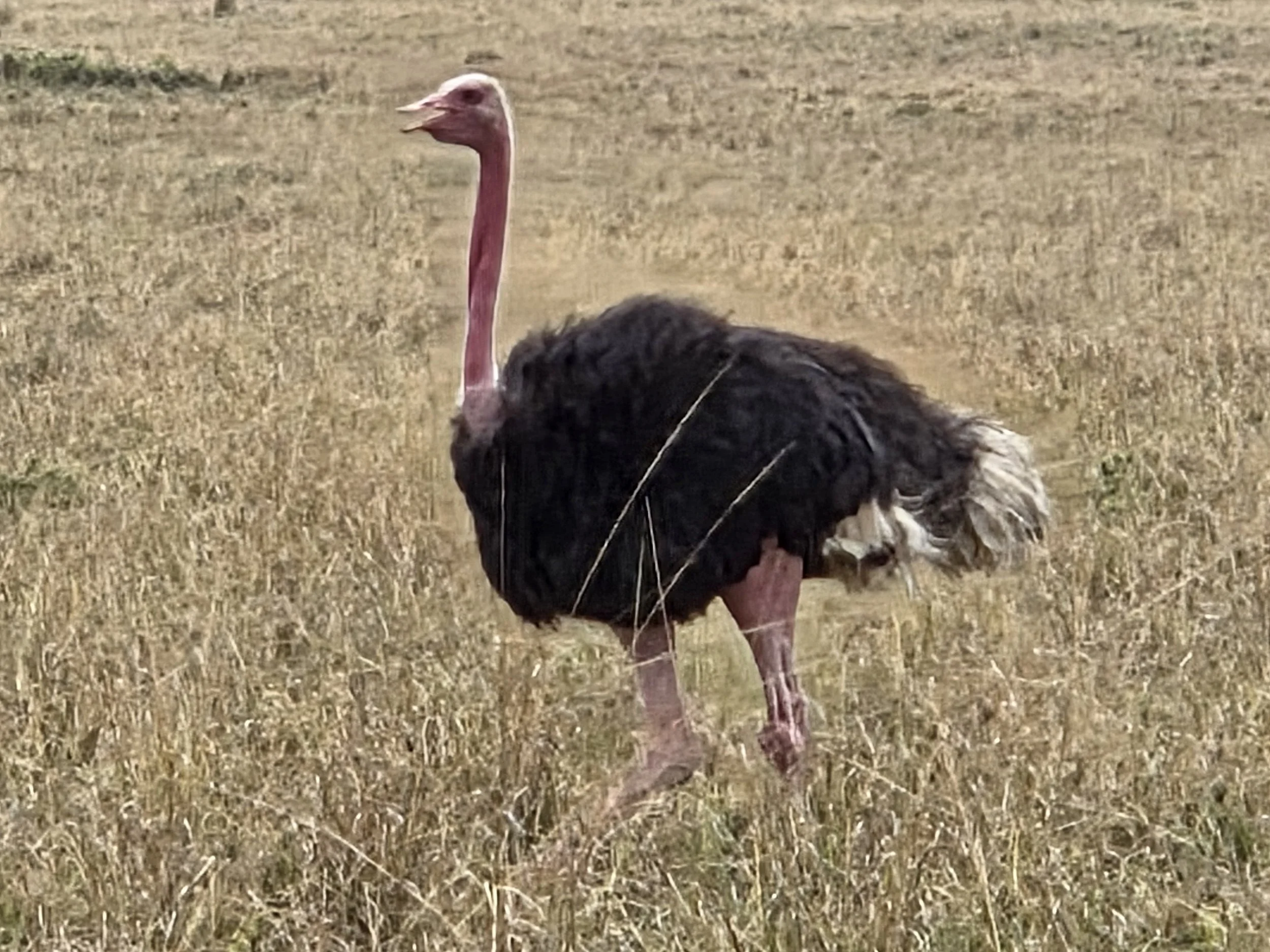
Below is a male ostrich. The males are much darker than females. They mate for life. The males are also the parent that sits on the eggs.
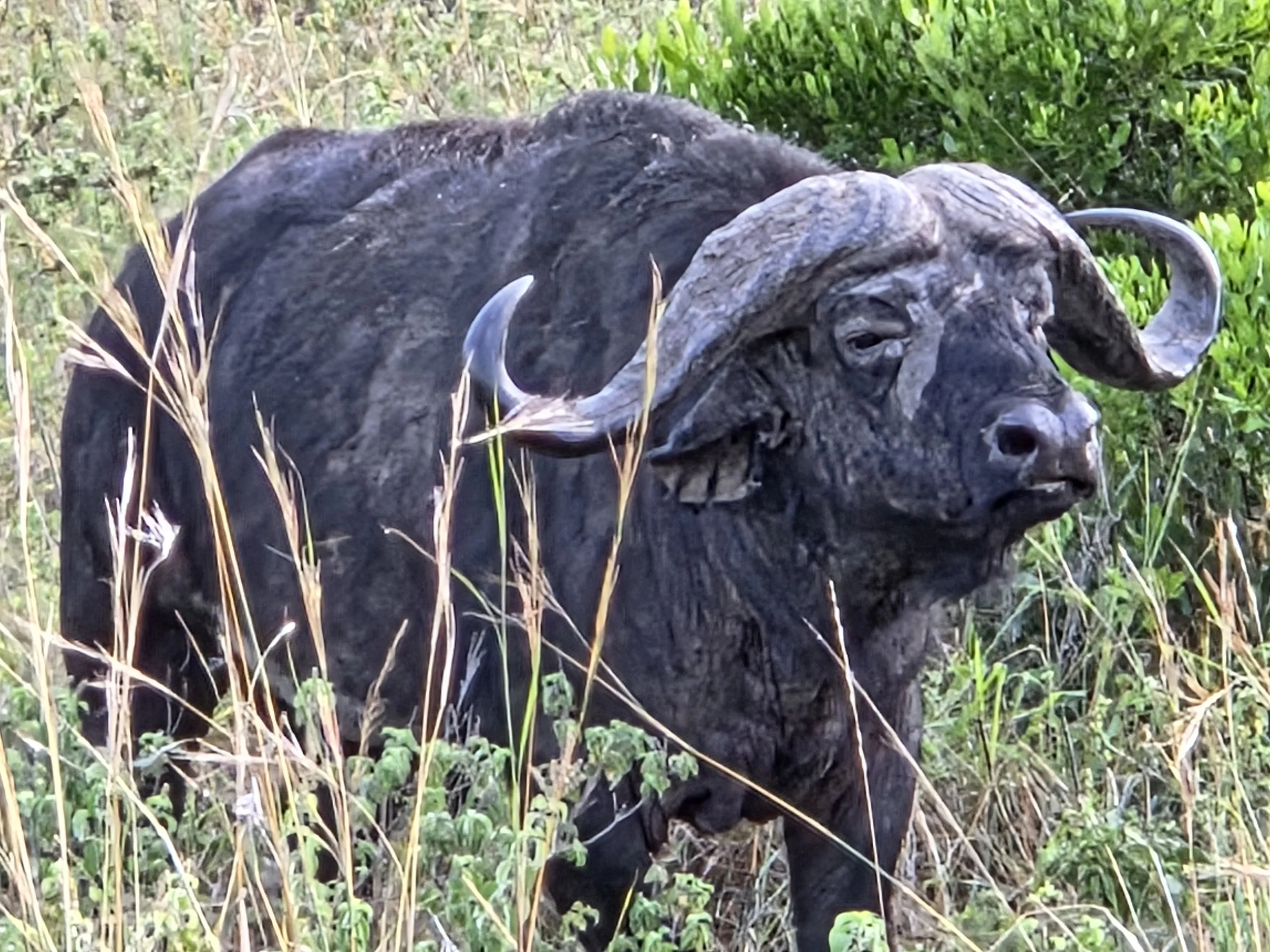
Above is an African buffalo. I have referred to them as water buffalo in the past, but have been corrected by guides. These guys are very large.
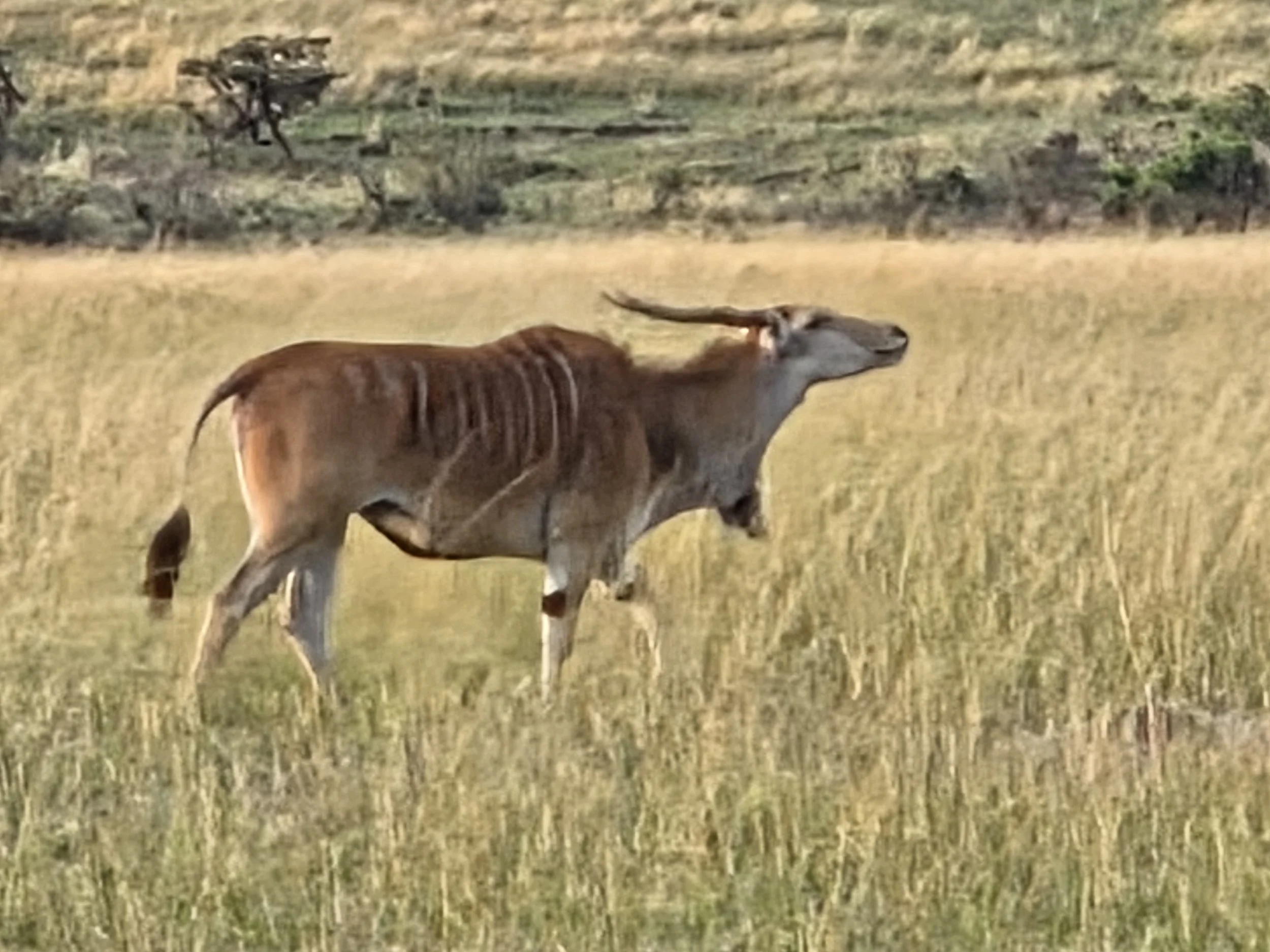
Above is an eland. They are a large member of the antelope family.
On our second full day, Thomas’s truck broke down. We were on our way back to the resort for lunch at the time. Other drivers were willing to help to the extent they could. One other truck had only one tourist couple in it. They offered to drive us back to our resort.
The couple were very nice people. Also honeymooners, but from Ireland. As it turned out, they were headed to our resort anyway. The woman uses a wheelchair and needed an accessible restroom. The resorts normally only let their own guests in, but they make exceptions for situations like this.
Nathan, Jaime, and I had lunch and basically killed time all afternoon at the resort while Thomas got his truck jumped, then drove to the gate to find a mechanic. It took all afternoon.
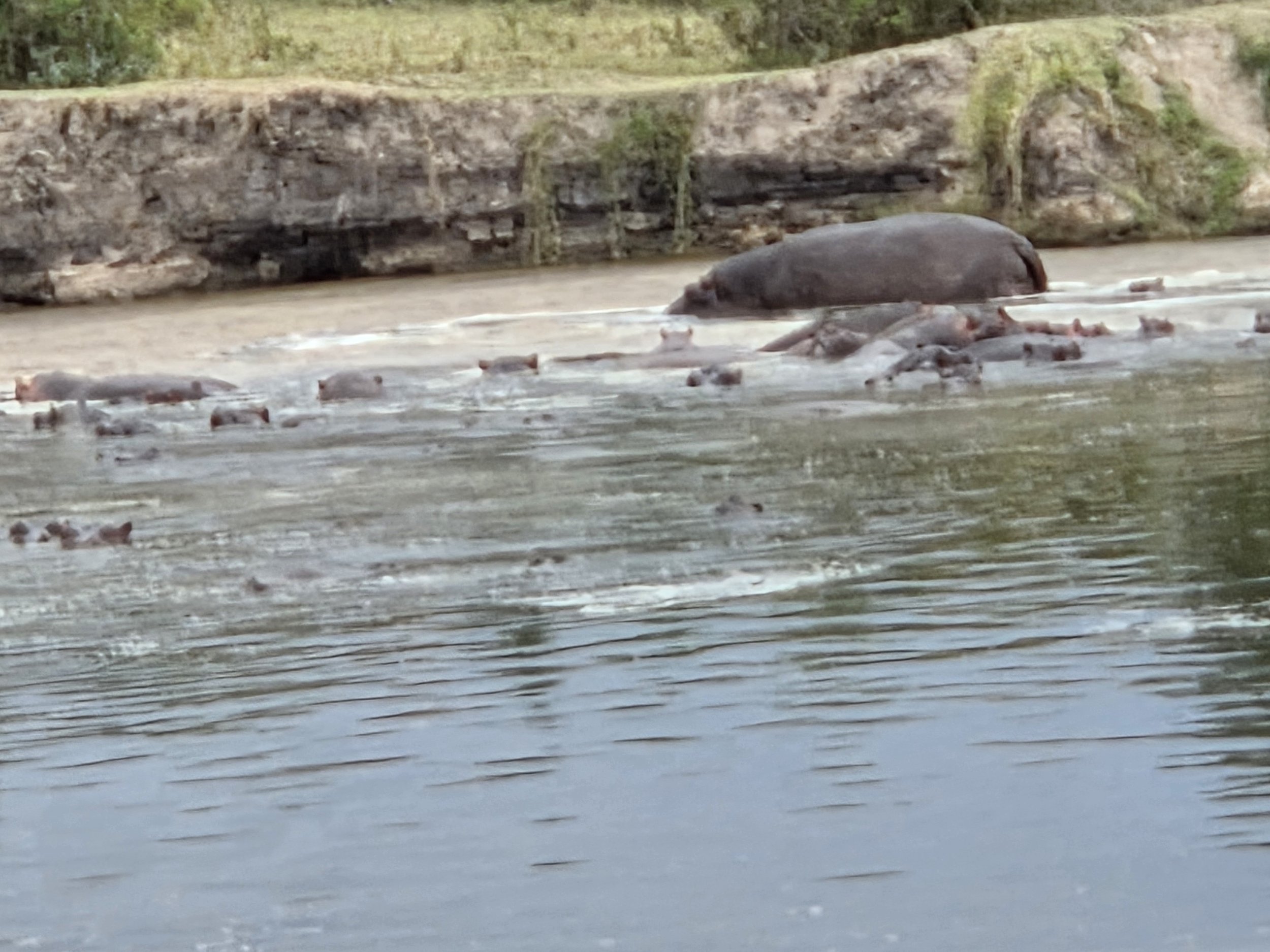
We took advantage of the forced downtime to chat and wander around. The resort is adjacent to a large hippo pool, with probably at least 100 hippos in residence. And a bar to watch them from. The hippos got really lively in the late afternoon, around happy hour.
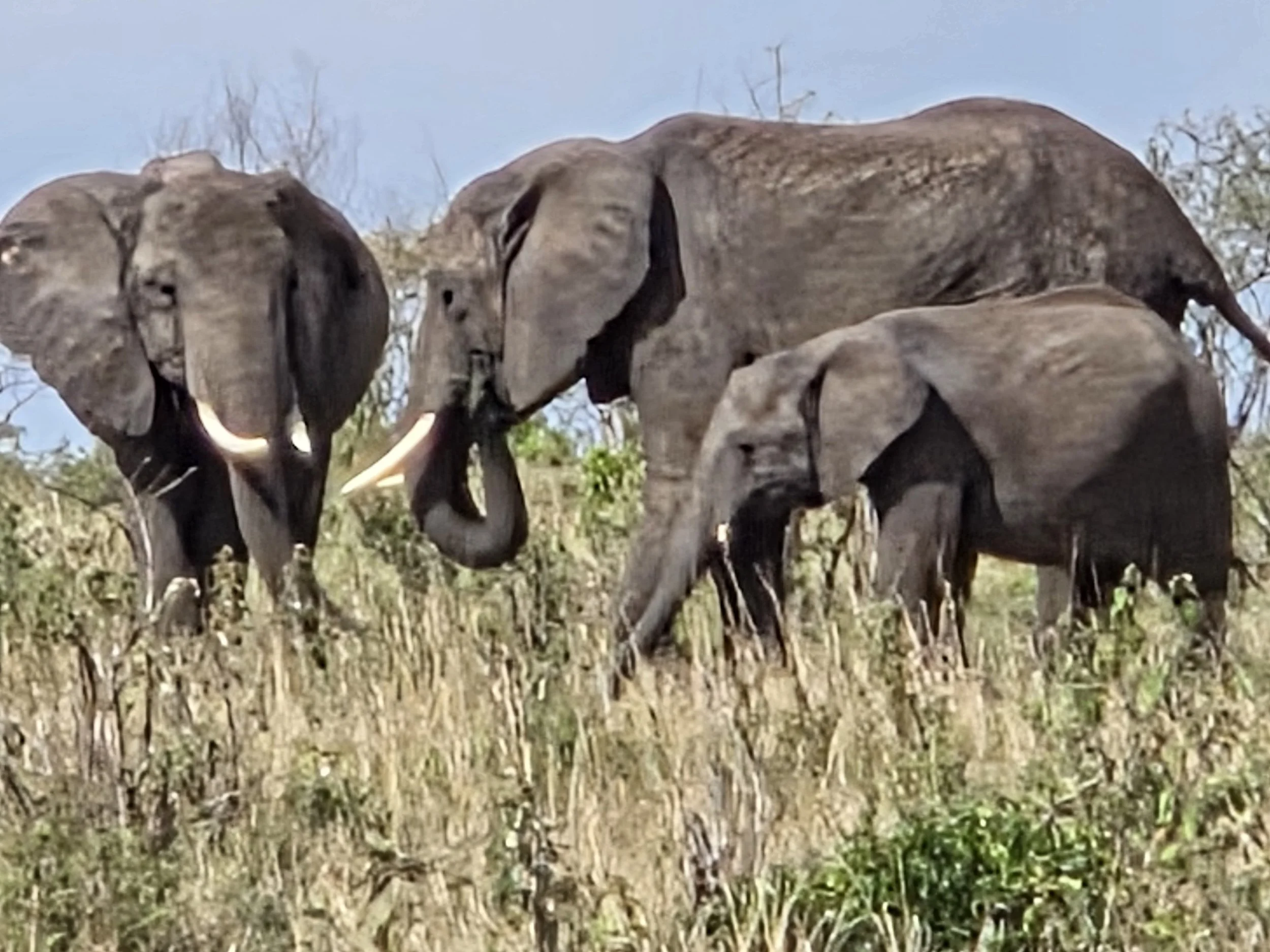
Each of the national parks has a different selection of animals that hang out there. Maasai Mara is known for big cats and the wildebeest migration. There are elephants, but not as many as you can find in some other parks. We did see a bunch though.
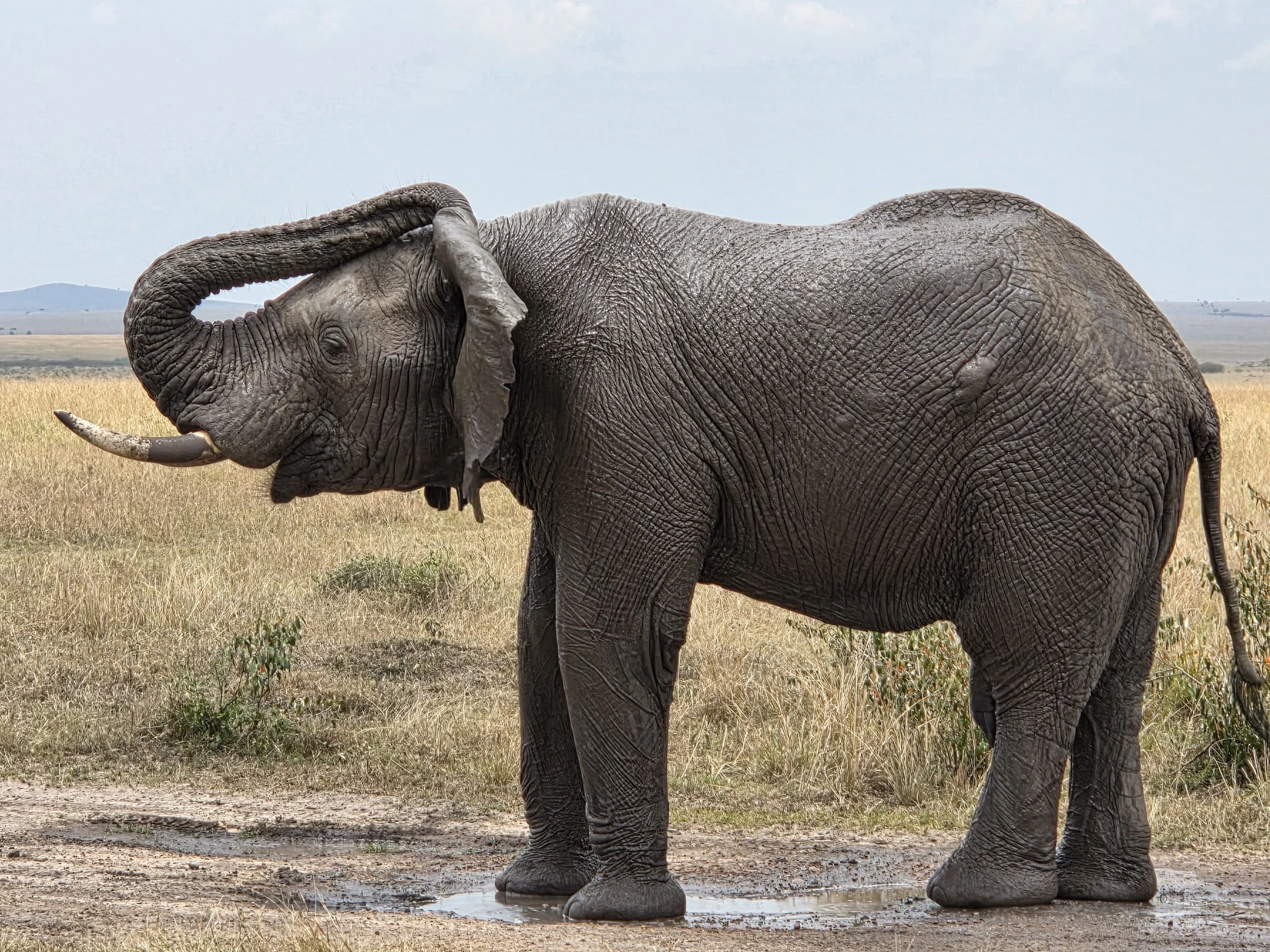
Above is a young male, who is on his own. The herds are made up of females and young, so when a male gets older, he will leave the herd.
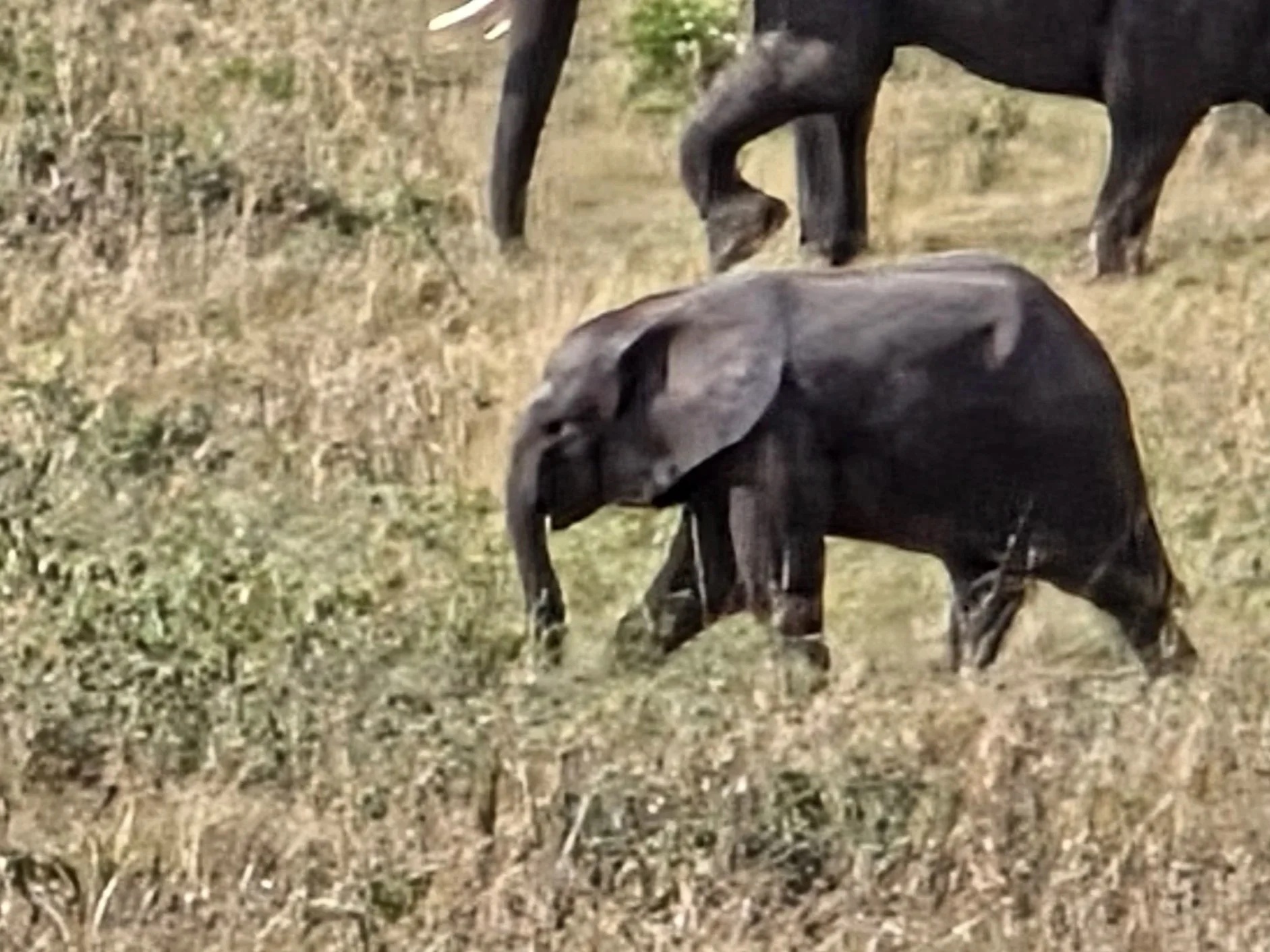
Above is a young elephant. He’s probably a couple years old.
More of the same herd, below.
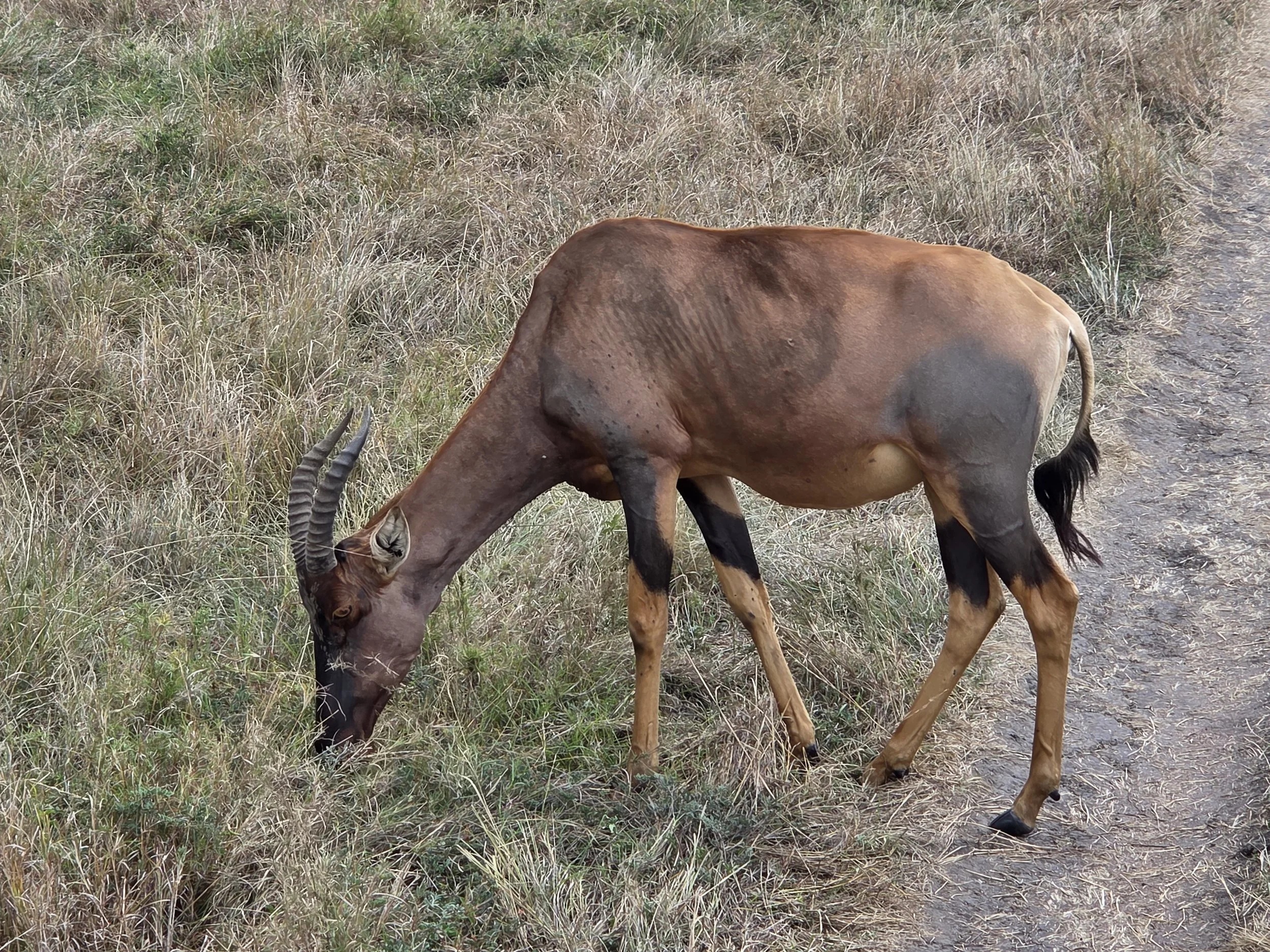
Above is a topi. These are a very common animal in the area. The common grazing animals—topis, wildebeest, zebras, impalas, gazelles, eland, etc—are the reason for all the big cats. The grass supports the grazers, and the cats have plenty to eat.
The topi are distinctive with their purplish coloring. It is said the spot on her rear hip, above, looks like a map of Africa. A herd of topi will also post sentinels, standing on mounds. They keep an eye out for other males and predators.
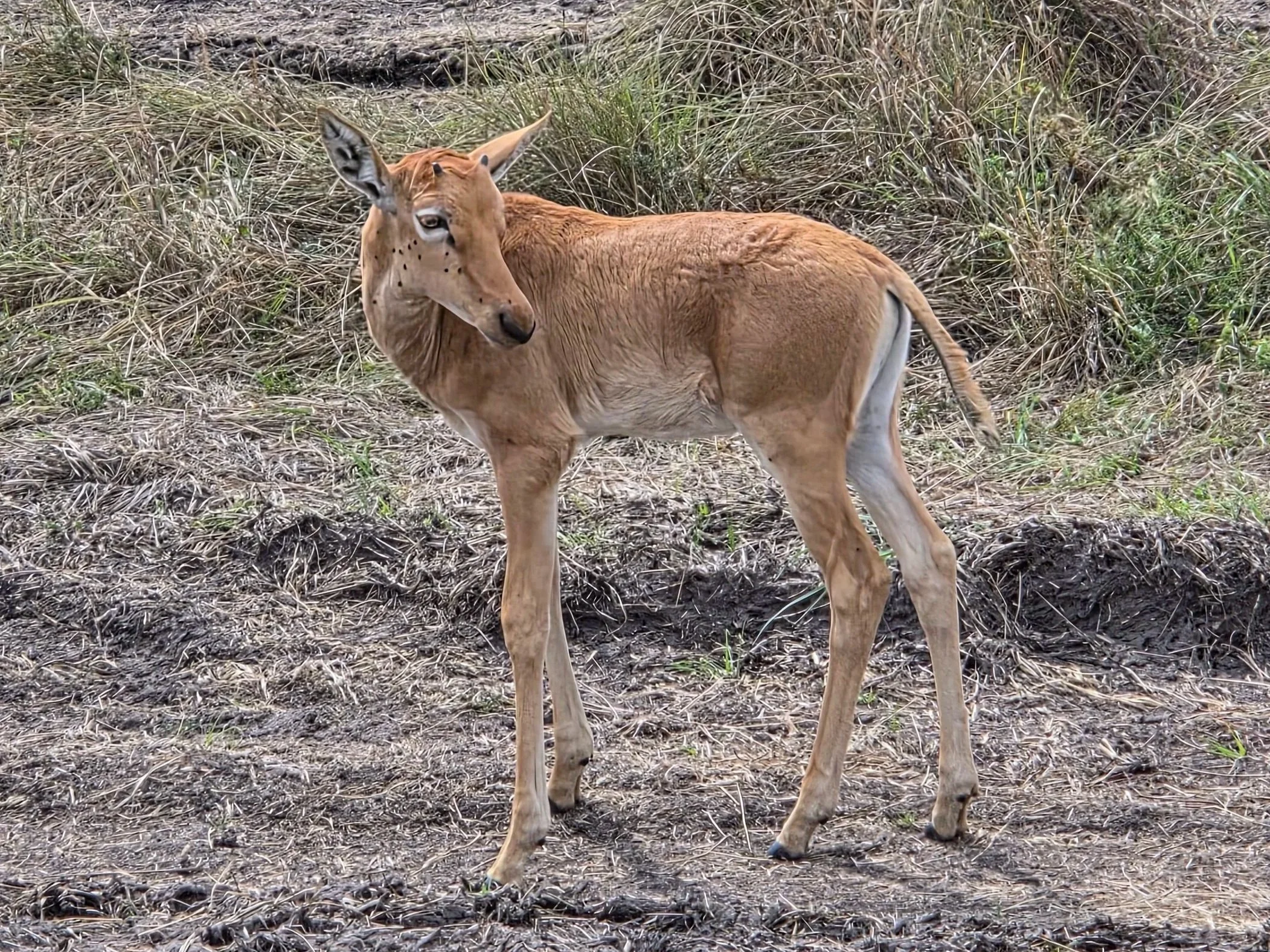
Below is a baby topi. Note that they have to mature into the distinctive coloring.
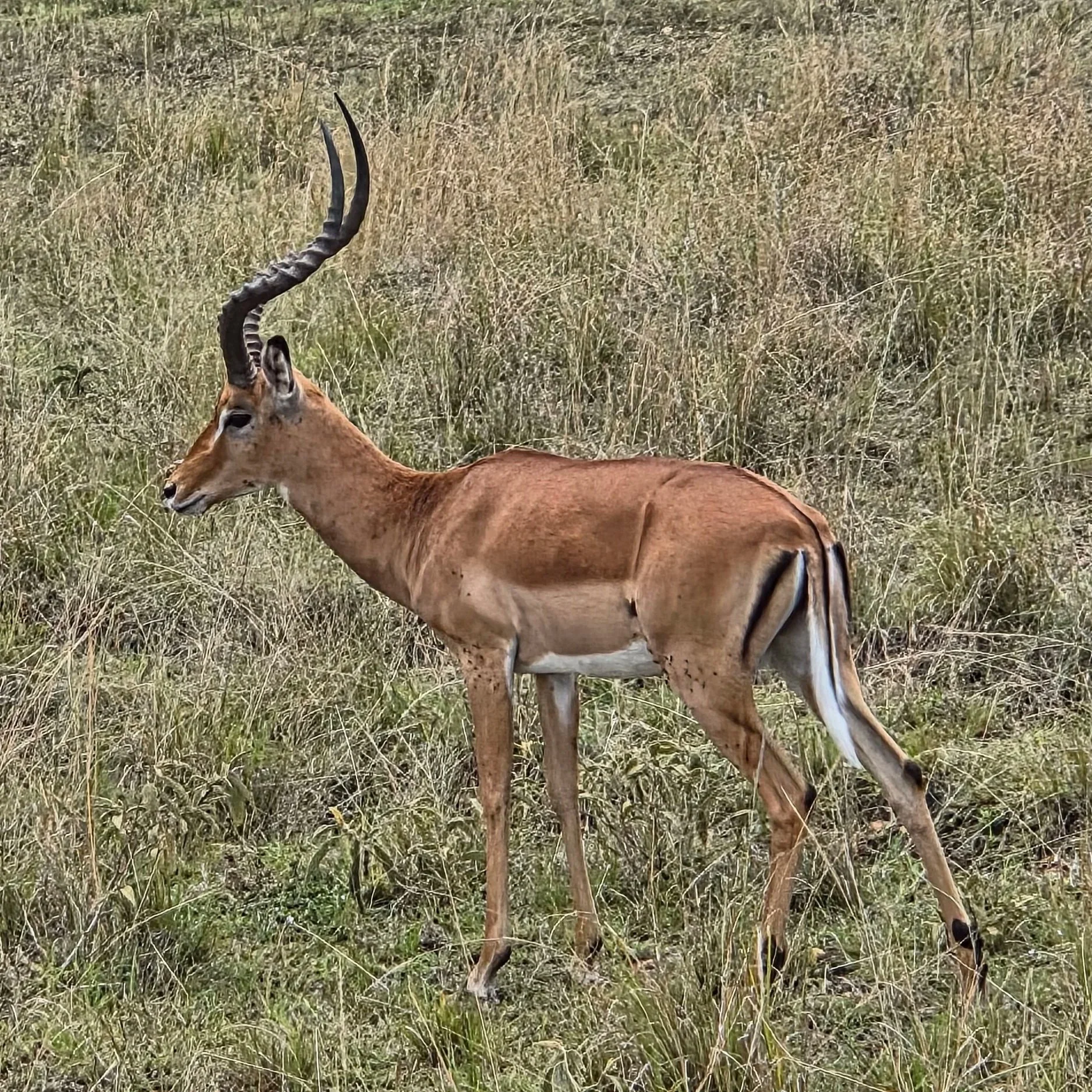
Below is a male impala. Only the males have horns. A herd will consist of one adult male, many females, and their young. When a male comes of age in the herd, he is expelled. So there are also herds of “bachelors.” The bachelors will practice fighting with each other. Then they can challenge the male with a herd. The winner gets the herd.
The males don’t last long as the head of a herd. They spend their days fighting or mating. It doesn’t take long before they are too exhausted to fend off challengers.
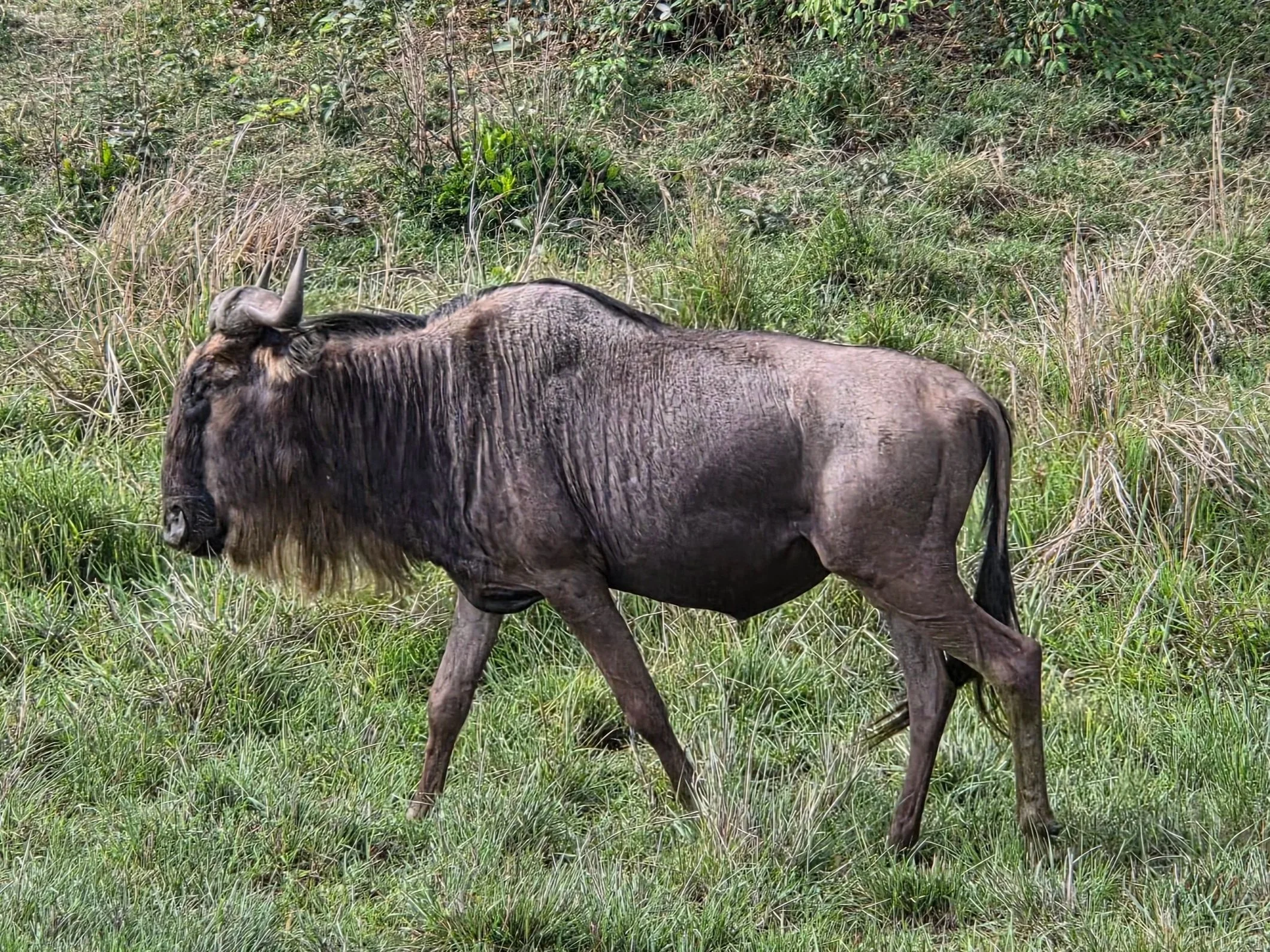
Below is a wildebeest. The migration had passed this point already, but there were a lot around. The wildebeest were pretty thick, but I’ve never seen close to this many zebras. The numbers were huge.
The grazing animals often are hanging out together. They all eat the same food, so that brings them together. But there are other advantages.
The wildebeest and zebras have a symbiotic relationship. The zebras have better hearing and eyesight. So they can react to a predator quicker. But the wildebeest are faster. (Wildebeest are the fifth-fastest land mammal, able to run for distances at 50 mph.) So the relationship works out for the zebras as they can react faster and the predator may focus on a wildebeest instead. But the wildebeest also benefits by taking advantage of seeing the zebras react sooner.
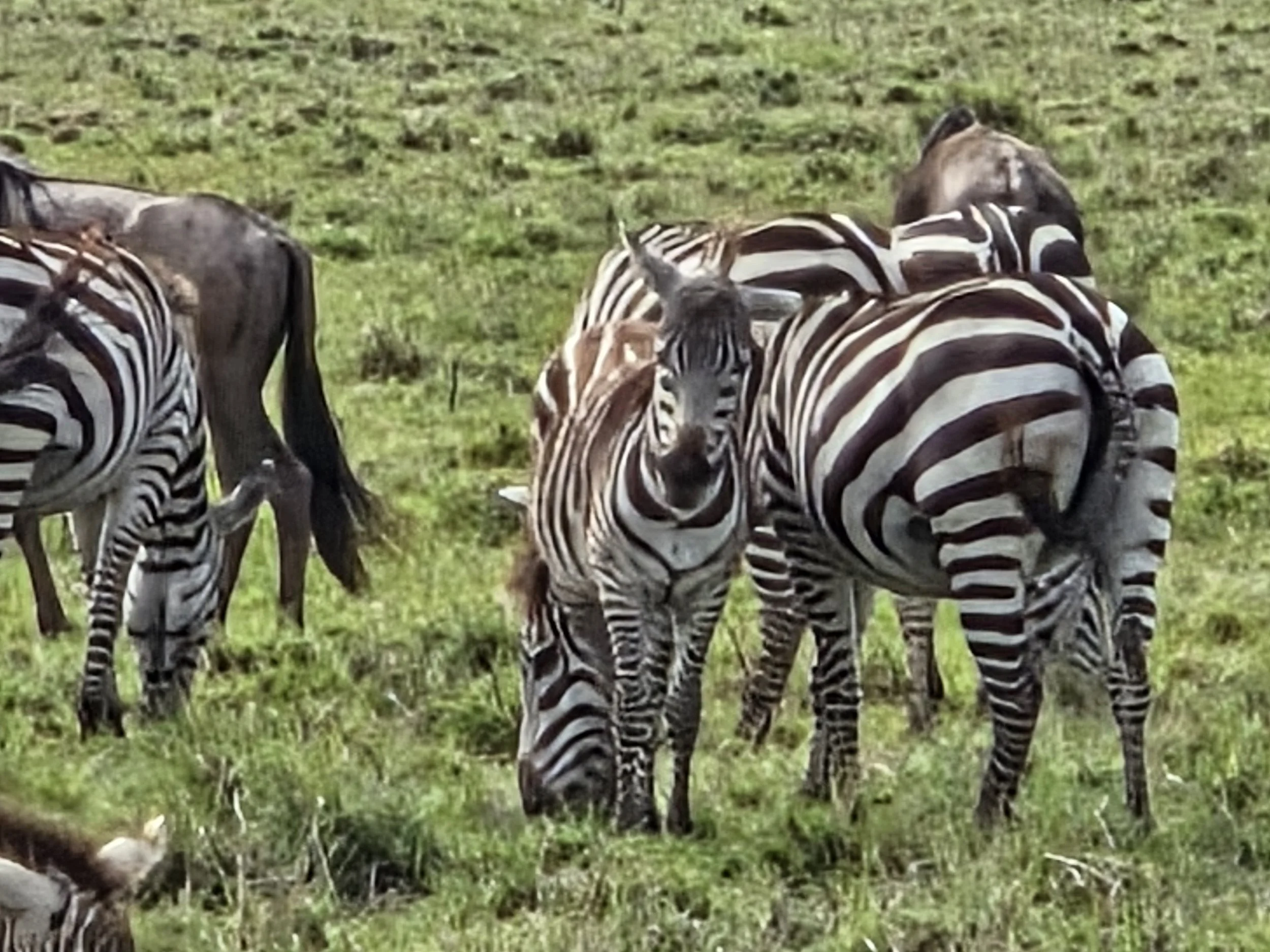
Above, zebras, with a couple wildebeest in the background.
Below is a warthog. They are fun to watch. They have a bounce in their steps when they walk or trot. There are often babies around. They get down on their front knees when they eat, munching on grasses and roots, mostly.
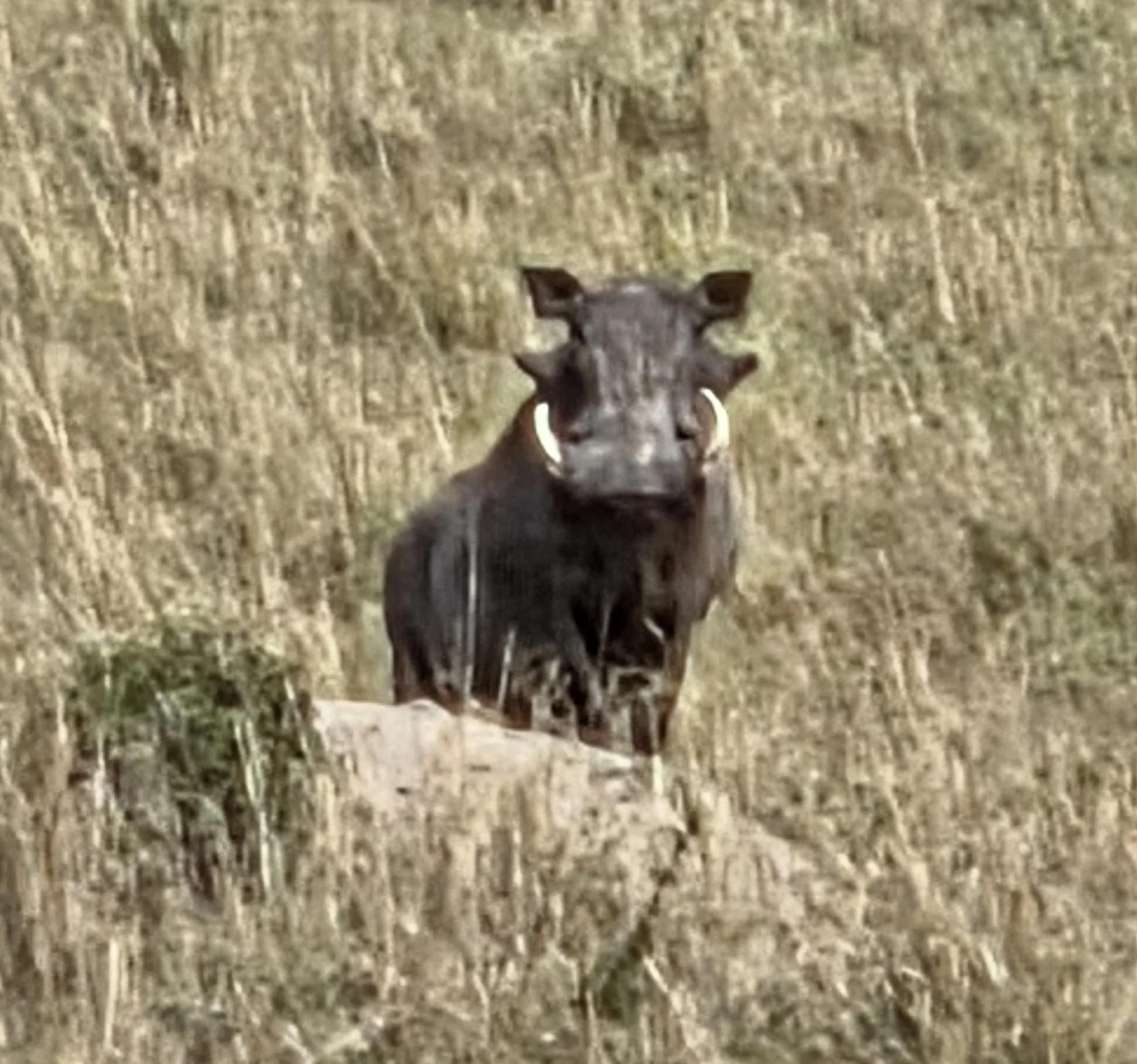
This mom was keeping an eye on the safari trucks, as there were many around. What she failed to notice was that a cheetah crouched in the grass not far away, waiting for her and her baby to get closer.
The cheetah broke too soon and missed his chance. More on the cats in the next post, Safari 2.