
Loose Ends: Last Home Visits
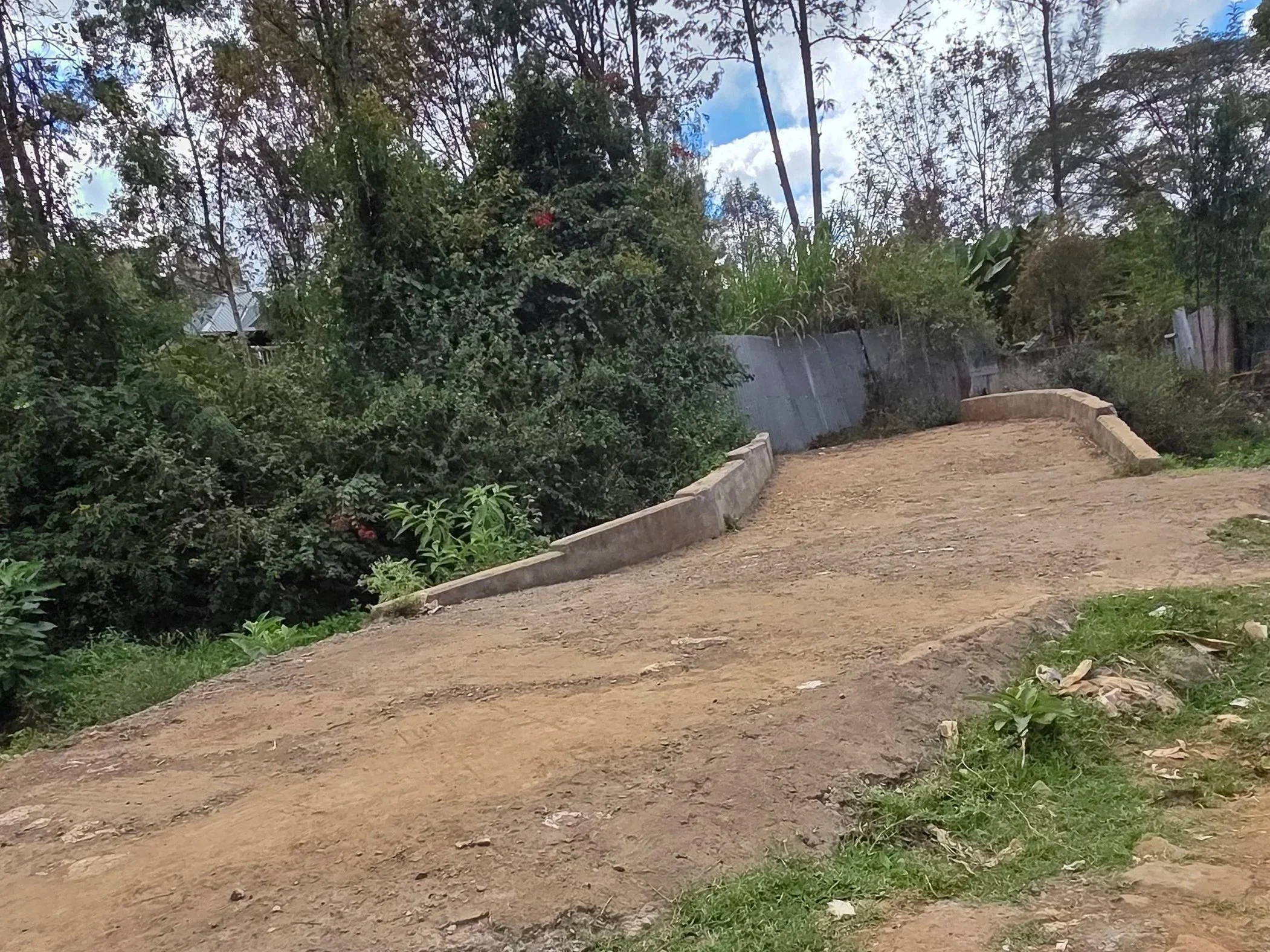
The bridge to nowhere.
In our final couple days, we have several families we want to visit. Two visits were related to the gardens people had planted. Two were families we needed to get some information from and learn more about their situations. Two were to visit the Tuko Pamoja safe houses. And then chilling out before the endless flight back from Nairobi to JFK.
But starting with the gardens. As I’ve mentioned elsewhere, we began a new partnership with UBI Business School in Brussels in the summer of 2025. We are working with two MBA students serving as interns for Tuko. They applied for the opportunity by pitching their project ideas, both to us and to UBI faculty. We have been working to get started on implementing the plans.
One project is to enhance Tuko Pamoja’s social media campaign. One area of that is to emphasize our women’s empowerment projects.
The second project has a piece that is helping local small-scale farmers to be more efficient in growing food crops.
Our first stop is to see Mary. She has two daughters sponsored in the program, and two great-nieces, as well. But before we can talk, we have to get there. No small feat.
The road is worse than terrible. It is barely passable in dry weather. There is a creek next to the road. When it rains hard, the road is impassable and the creek floods.
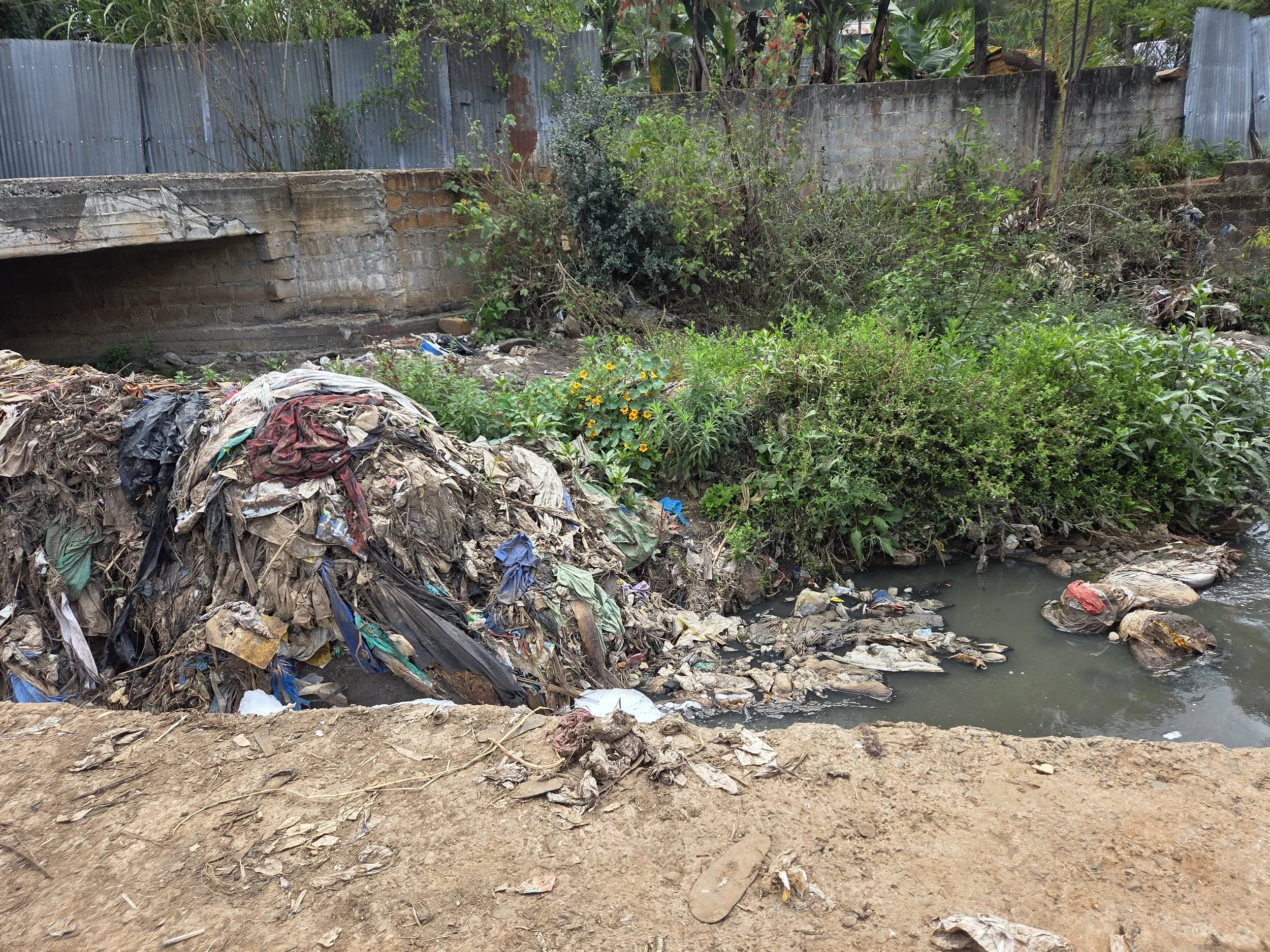
Above is some of what’s left over from prior high water in the creek. The creek is also polluted with sewage. It is downstream from an informal settlement.
We made it to Mary’s. Getting Virginia’s car parked on the narrow road is also a trick, but she managed.
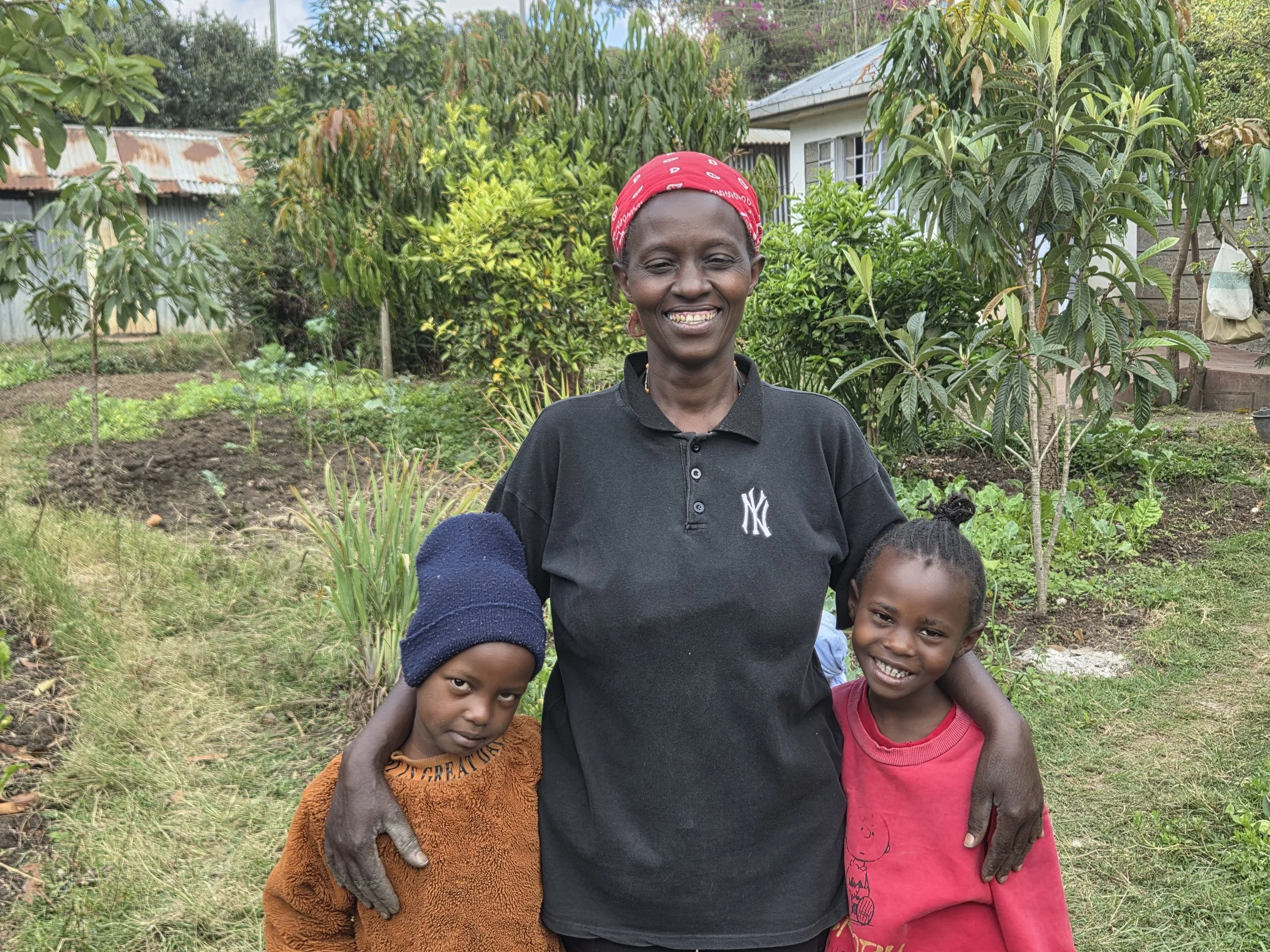
Mary has enough land for a medium-sized garden. The lack of water is a major problem. She is close to the creek, but the pollution prevents her from using the water. She also has to get seeds and fertilizer. The people who sponsor Mary’s kids and great-nieces paid for these items before. We wanted to hear her plan before committing any more funds.
Below is Mary with her great-nieces Zana and Sue.
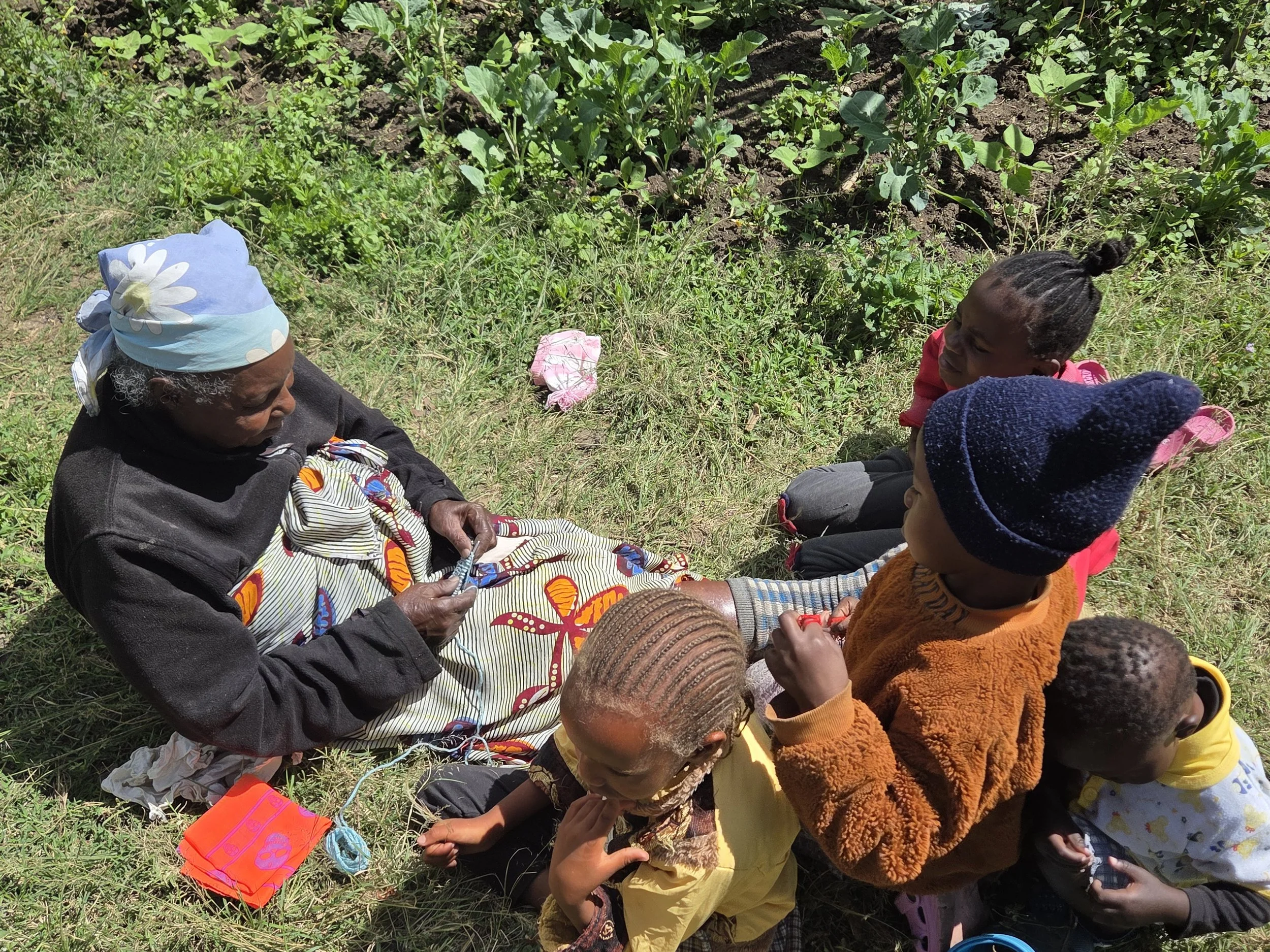
Below is Mary’s mother with some great- and great-great-grandchildren.
After this visit, we had another stop. We were attending a graduation ceremony for some young men being mentored and coached for good mental health. I’m not completely sure what the program entails, and thus what they are graduating from, what was accomplished, and what is commencing. This made giving the keynote address a bit more challenging for me. But I limped through.
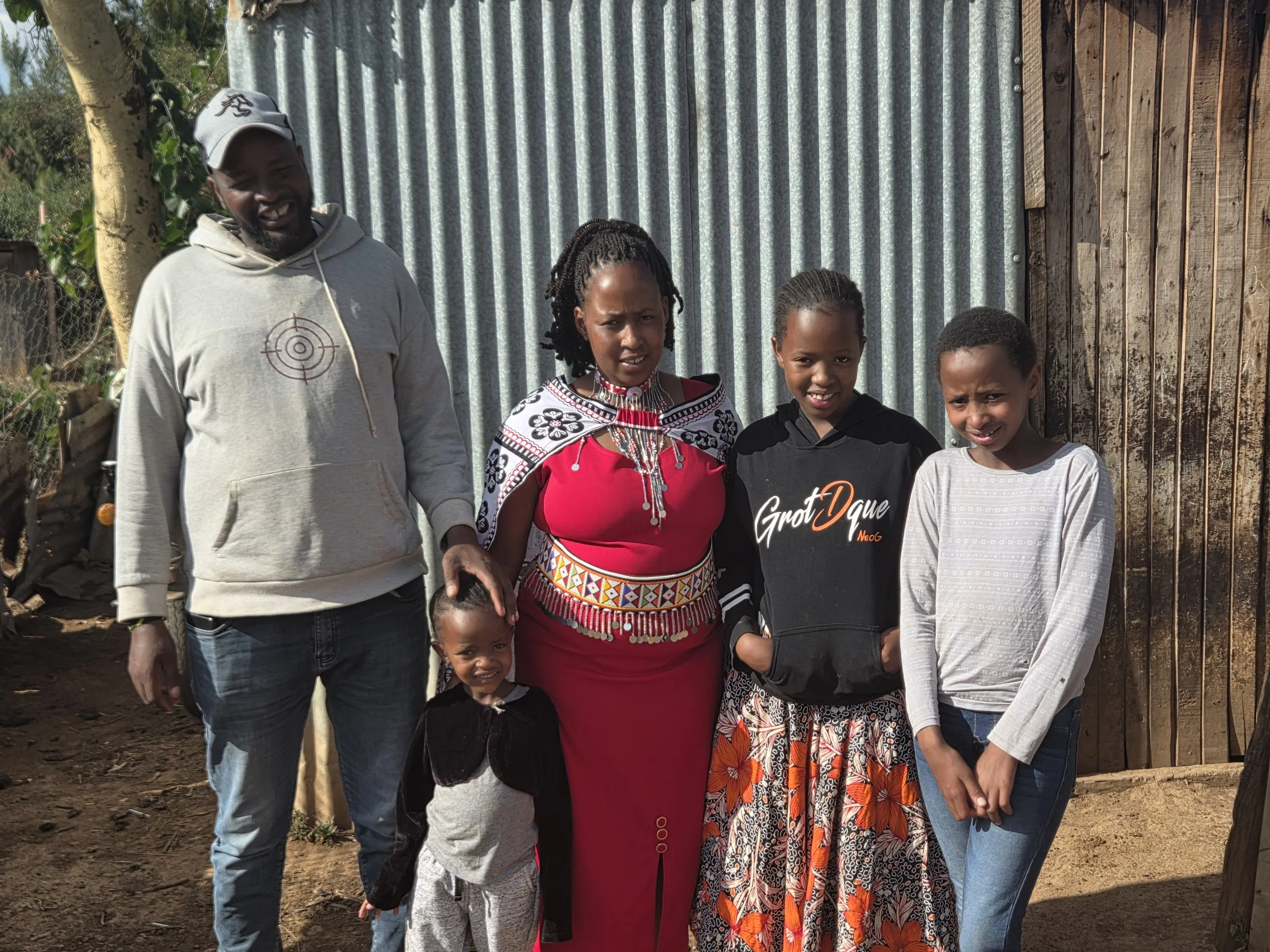
Then we were off for some home visits. The first was to visit Precious. Precious’s sponsors were interested in providing support for the family beyond the child sponsorship. We were meeting with them to determine their priorities.
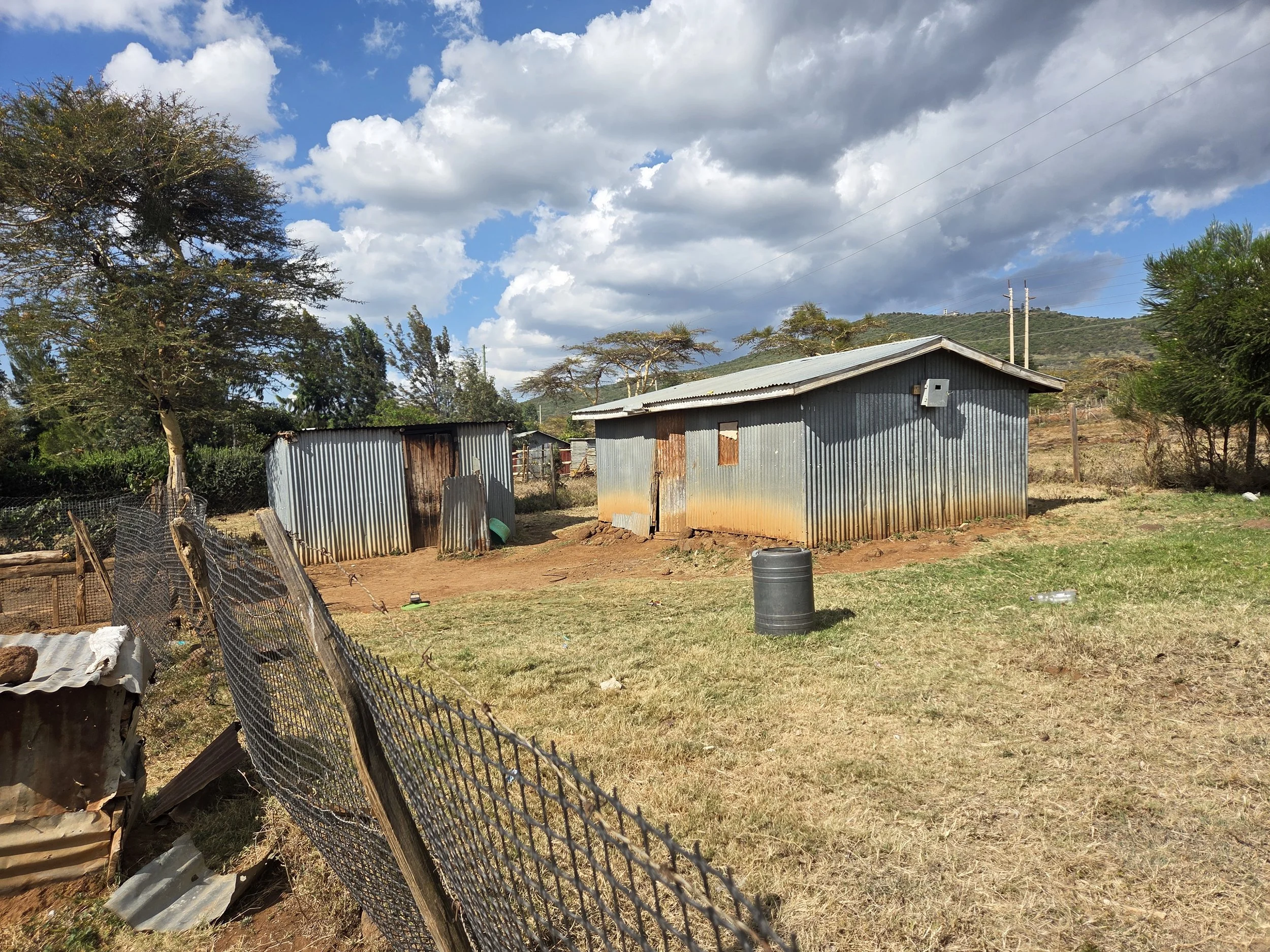
Below is their home. It is two rooms: a living room and a bedroom. The entire family sleeps in the bedroom.
Usually the top priority is food. School fees are close behind. The couple has emphasized covering these items since Precious became sponsored. Their top priority is to get another bedroom added onto the house. With 13- and 11-year-old daughters sleeping in the same room with the parents, it has to be an uncomfortable situation.
We did some very quick cost estimates on adding a room to the house, and the sponsors are up for it! This will be a huge help to the family.
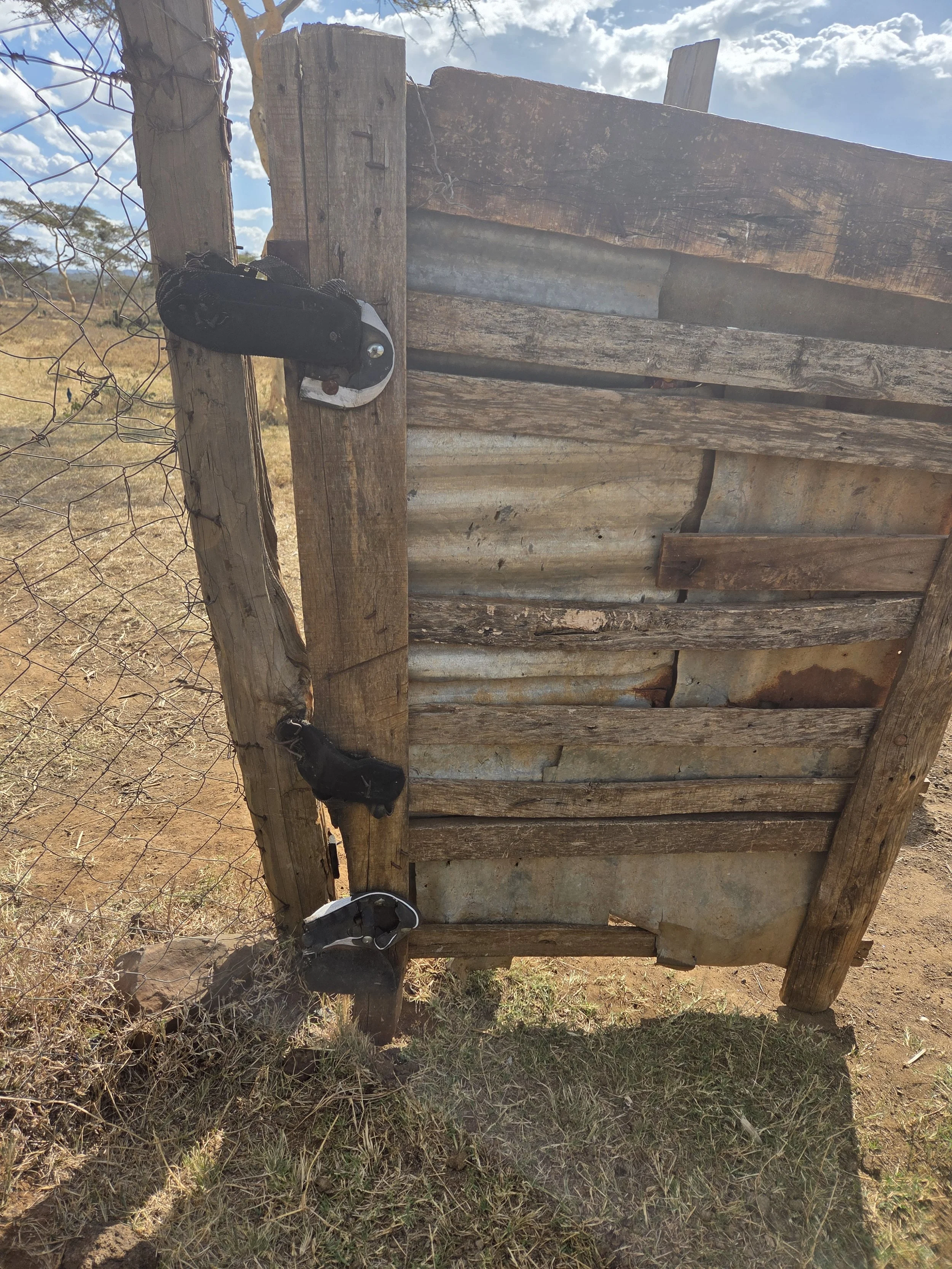
Below is the gate to their yard. Note the hinges made from old shoe soles. They are flexible and resilient. This is at least the second pair of shoe soles used on this gate for the purpose.
After this, we went to visit the home of three sponsored kids: Alex, Anthony, and Monicah. Monicah was the first of the kids sponsored. When we heard of the difficulties of the family, we picked up two more of the children.
The family is in deep hiding from the abusive father. After the mom left with all the kids, the father tracked them down. He set fire to the home they were in. It was attached to four other homes and all were burned. His family’s possessions weren’t suitably ruined, so he pulled them all out into a pile in the yard and set fire to them again.
Anthony had been kicked out of secondary school due to nonpayment of fees when we met him. He had been climbing over the fence—breaking into the school—to attend classes, avoiding the security guard who would stop him. Eventually the teachers were told not to let him in the classrooms. His sponsor and Tuko Pamoja got him caught up on fees and back in school.
His older brother Alex wanted to go to plumbing school. Another sponsor volunteered for that.
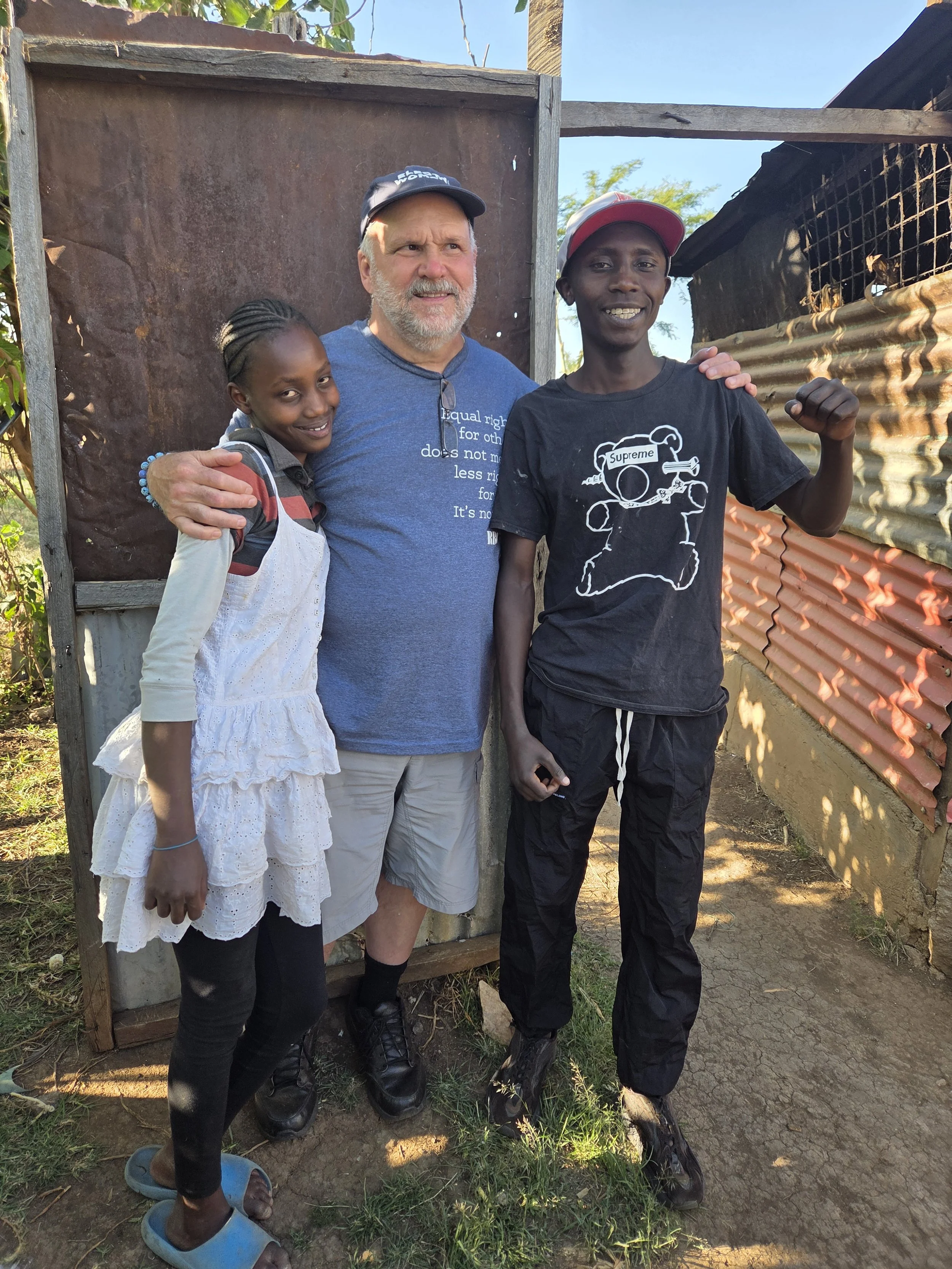
Above are Monicah and Alex.
Alex also has a successful garden and travels around the country participating in boxing meets.
Monicah is a really sweet girl. She and I have gotten to be friends. She doesn’t have a father figure in her life and it seems to me she needs and wants one. She is very cuddly. And when not around a lot of other people, will chat freely with me.
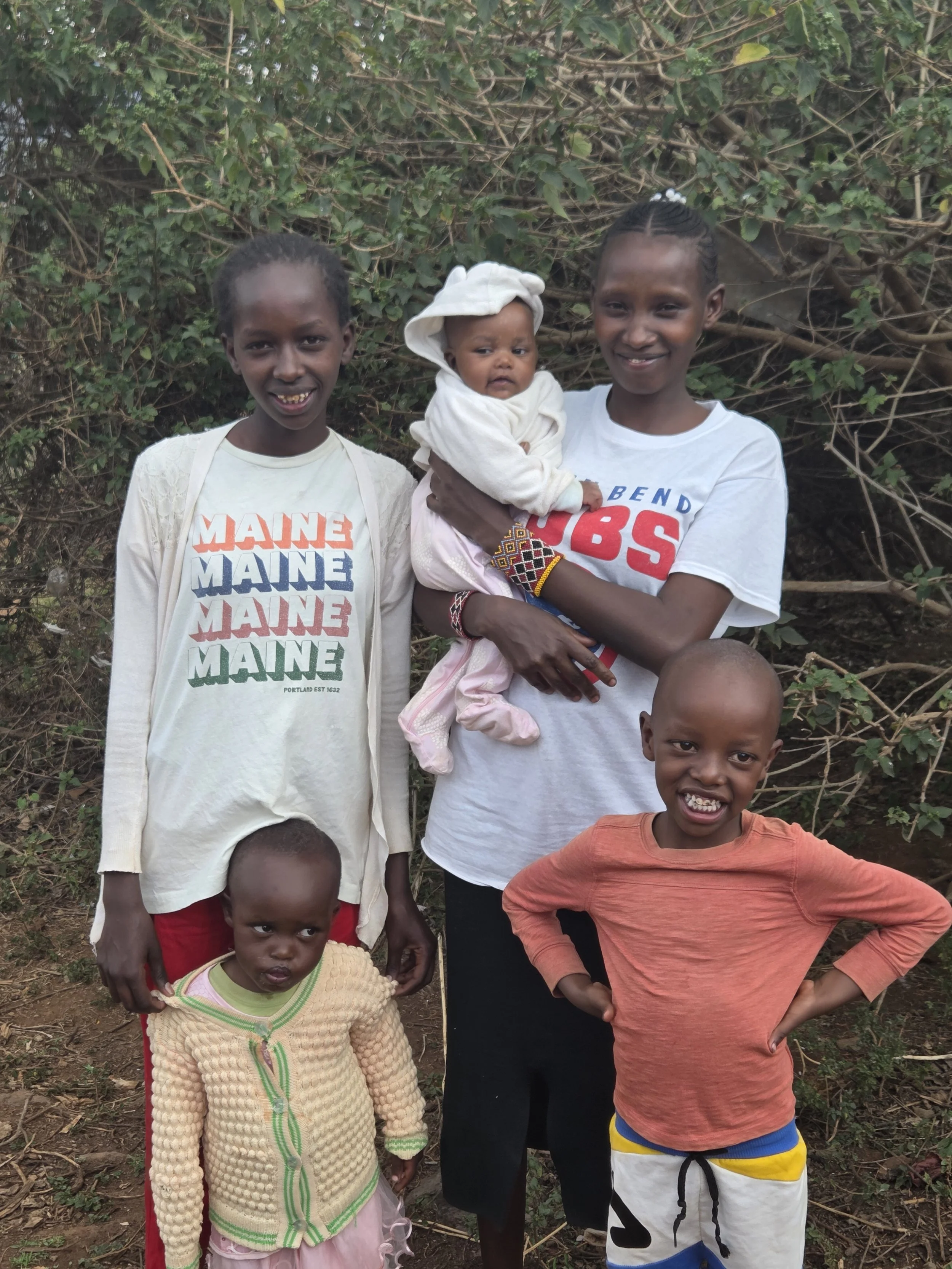
Above is Jackline, with her relatives that she lives with. Her mother (not pictured) is the second wife of her father. Jackline lives with a half-brother. He is the son of the first wife. His wife Emily and most of his children are in the picture.
Emily is 20 years old. Her oldest child is 8. She was probably 11 when she got pregnant.
Their home is small and there are a number of kids. It is unclear why Jackline is there at all, and not living with her mother. We’ve been told different stories.
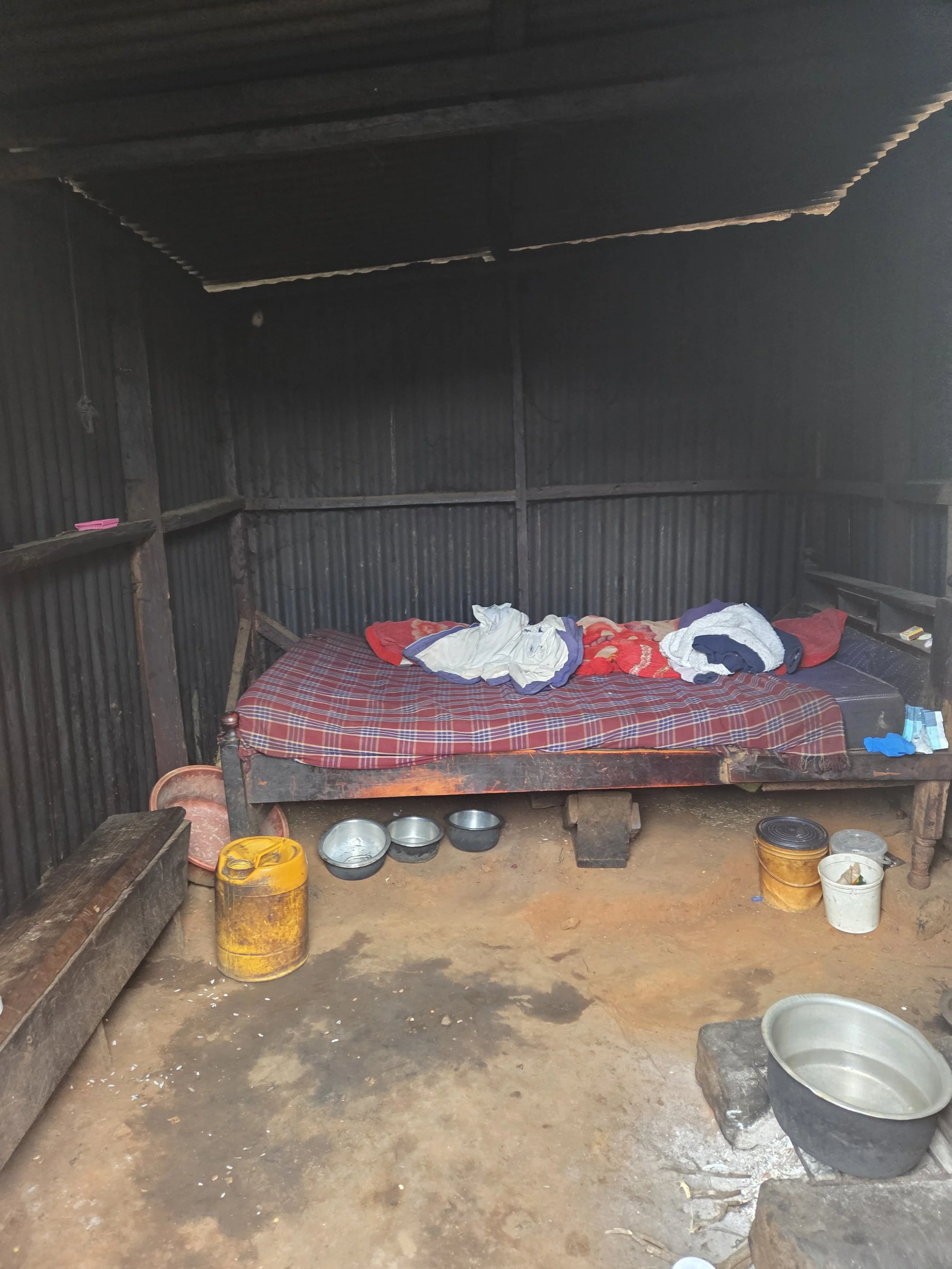
It came out that Jackline sleeps in the kitchen, below. The door probably locks from the inside. We aren’t sure and didn’t have a chance to check. The kitchen is a separate building from the house.
In the end, neither Virginia nor I were at all comfortable with the safety and security of this situation. Let alone how difficult it must be to sleep in that environment. Note how black the walls and bedframe are from smoke. Our plan is to work toward making other living arrangements for Jackline for the next academic year.
We drove by the below scene on our way between visits. Note the tower of rock just to the right of the center of the picture.
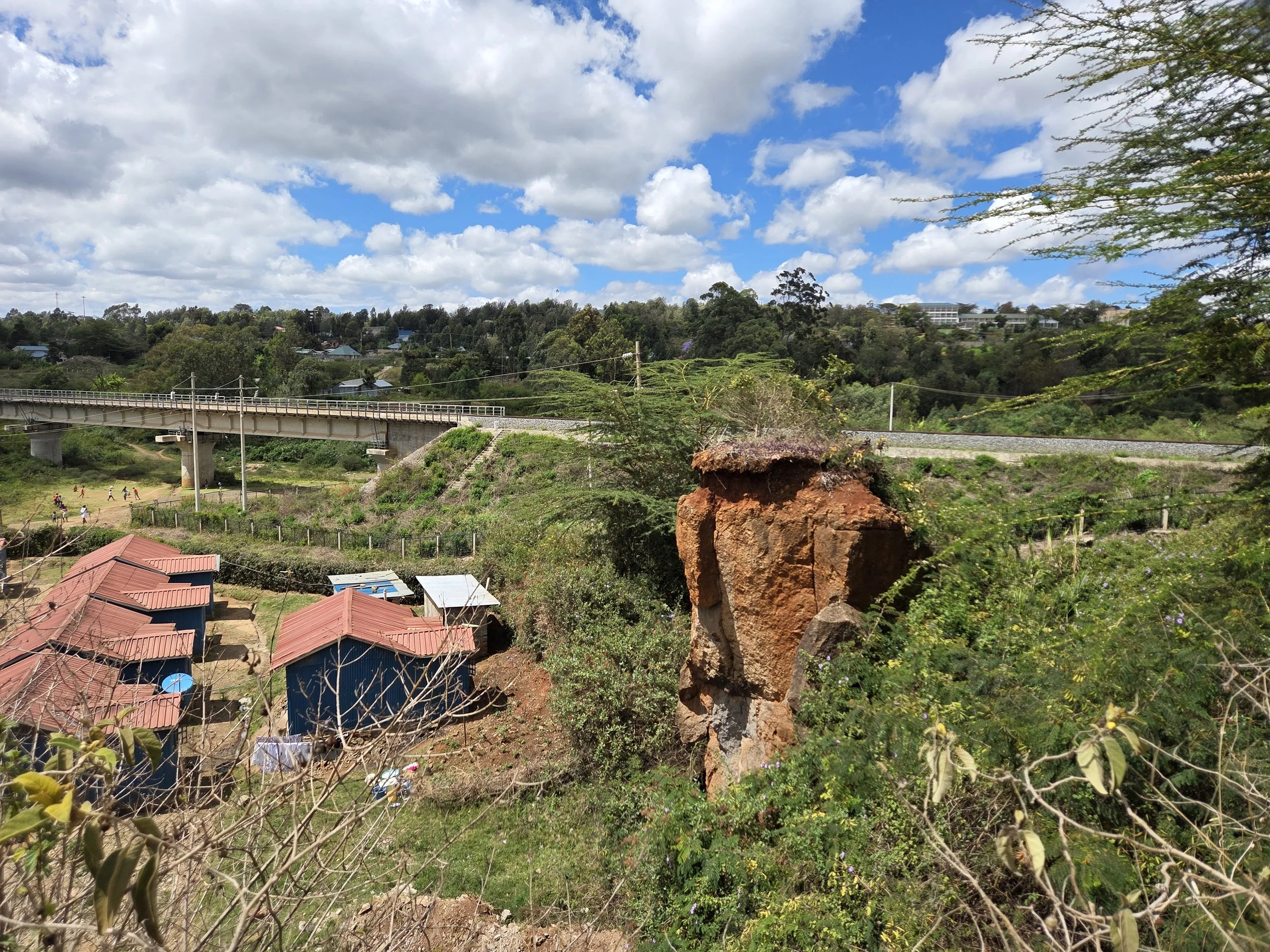
The top of the tower obviously used to be ground level. The rest was excavated around it for the railroad construction. The houses were then built. But why leave the tower?
Virginia explained they couldn’t take it out. There is a grave on the top of it and they couldn’t desecrate or relocate the grave. So the tower remains.
The next day was my last in the country for this trip. It originally was planned to have many things to do that day. Virginia and I had managed to do most of them on prior days. Our agenda was to visit the Tuko safe houses and then return to the house for a visit with the post-secondary kids who Ginger and I sponsor.
The first home is managed by Wangari. She lives there as the house manager. There are two sisters who live there on school breaks. They are both in boarding school and weren’t there when we visited.
Wangari is doing a great job of making a home for these girls. When the younger one walked in the first time, and realized she would be living there instead of with her abusive mom, she said, “I’m in heaven.”
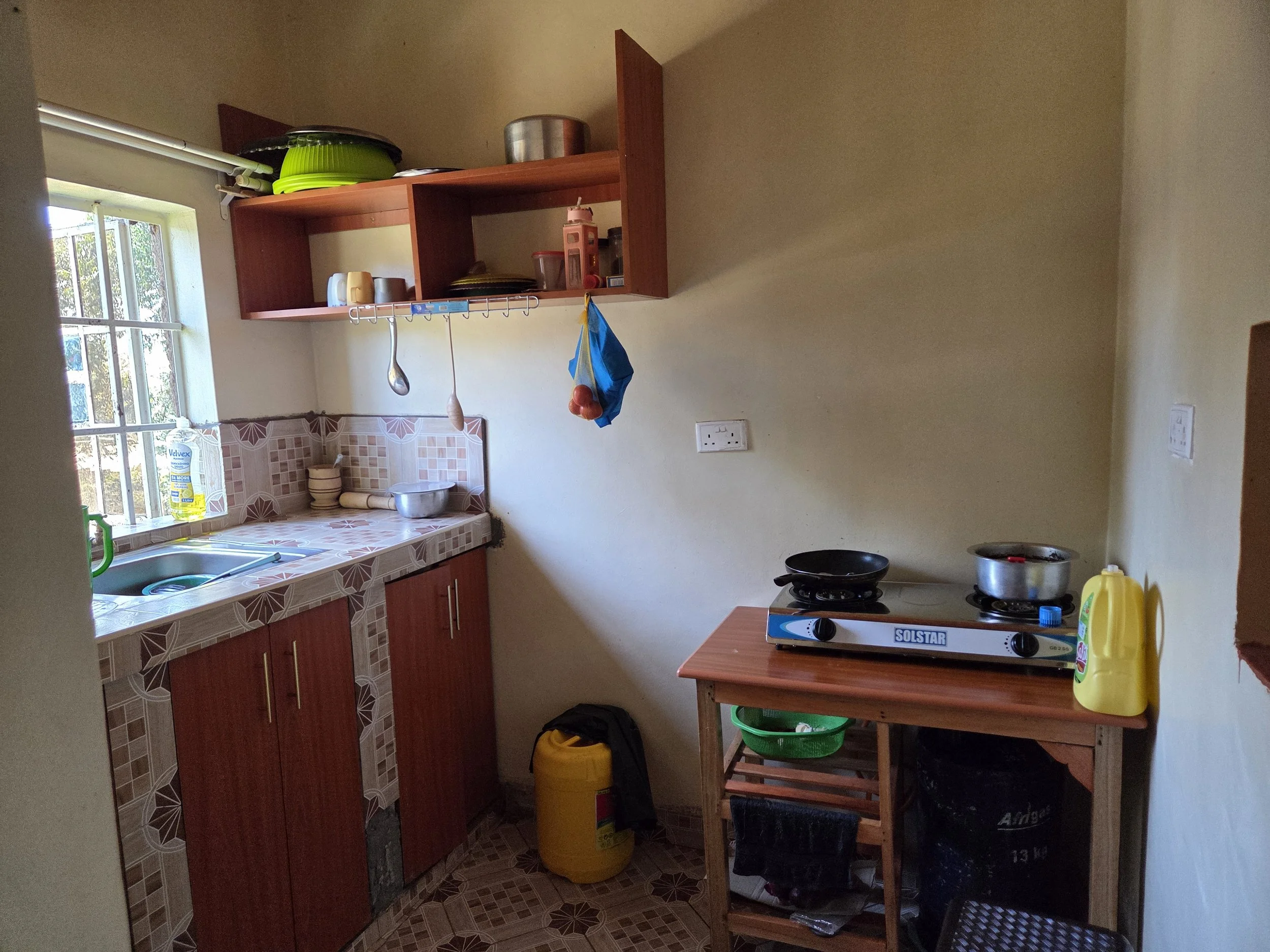
Wangari made breakfast for us. Actually, it was second breakfast.
There’s no lack of furniture in the living room. There is also a kitchen (above), and a bedroom.
Notice the books on the table. Wangari is an avid reader. We have been bringing books for her library from the US. So far, her three favorites are: All the Light We Cannot See (Anthony Doerr), The Color Purple (Alice Walker), and I Who Have Never Known Men (Jacqueline Harpman).
She is starting a lending library for kids in the program. So far, Alex is also a frequent patron.
Note the martial arts striking pads hanging on the wall.
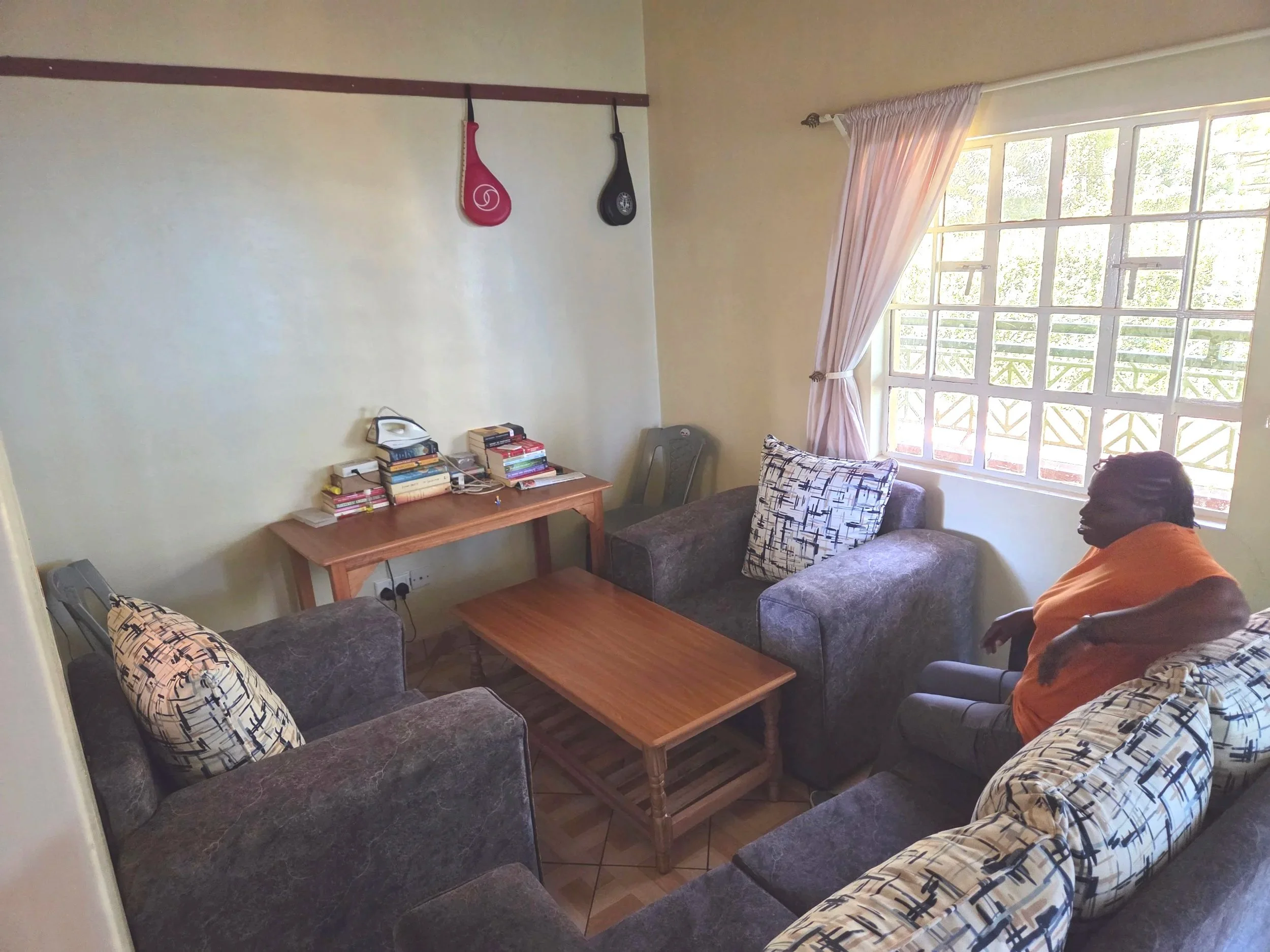
After eating, Wangari loaded in with Virginia and me. We then went to visit Naomi.
Naomi’s daughter Sipha is also sponsored in the program. Sipha is in a school for the visually impaired.
Naomi had Sipha when she was 17. Their lives have been difficult since. Naomi is trying to finish a Psychology degree. But she has struggled with money and a place to live.
During the last school term break, Naomi was living with her brother. But Sipha wasn’t allowed to live there. She had to live with her father’s sister, with an abusive cousin. In addition, Naomi had to provide all the food for Sipha and it wasn’t clear who was actually eating it. Sipha was losing weight rapidly.
We concluded we needed to get them both out of their residences and into a home together. Plus, it needed to be secret to avoid financially predatory family members.
Below, Naomi leads us to her home.
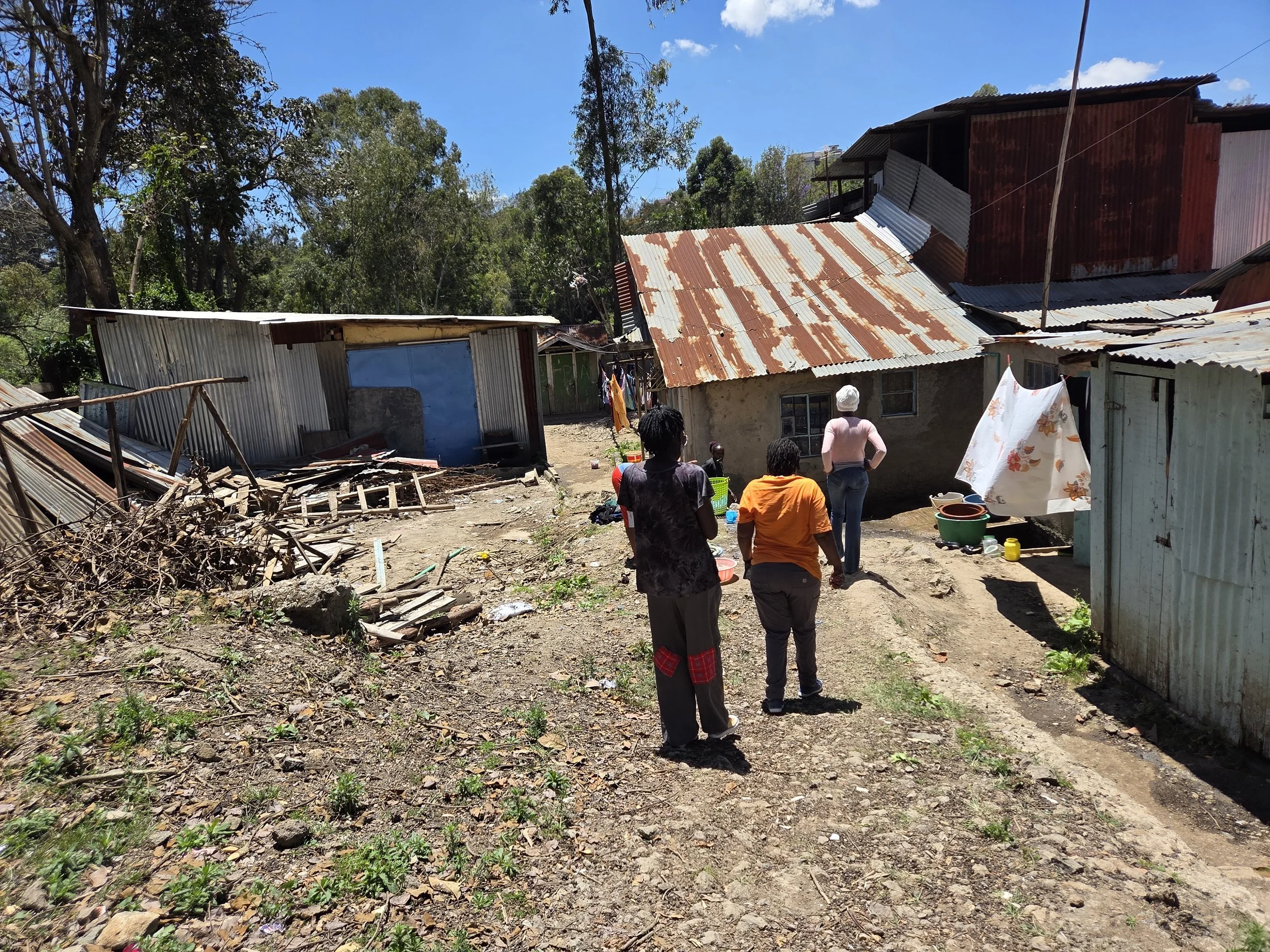
Below is their home. It is only one room, but they are happy and together during term breaks.
Tuko Pamoja has a vested interest in Naomi being successful. We want a good, stable home for Sipha. Naomi can provide that, but needs to get on her feet, as well. She is finishing up school now and has started a mandatory internship. We agreed to provide a house and food for a year to allow Naomi to focus on finishing school and getting a job. We will re-evaluate after the year is up. We believe in Naomi and her ability to provide the stable home Sipha needs.
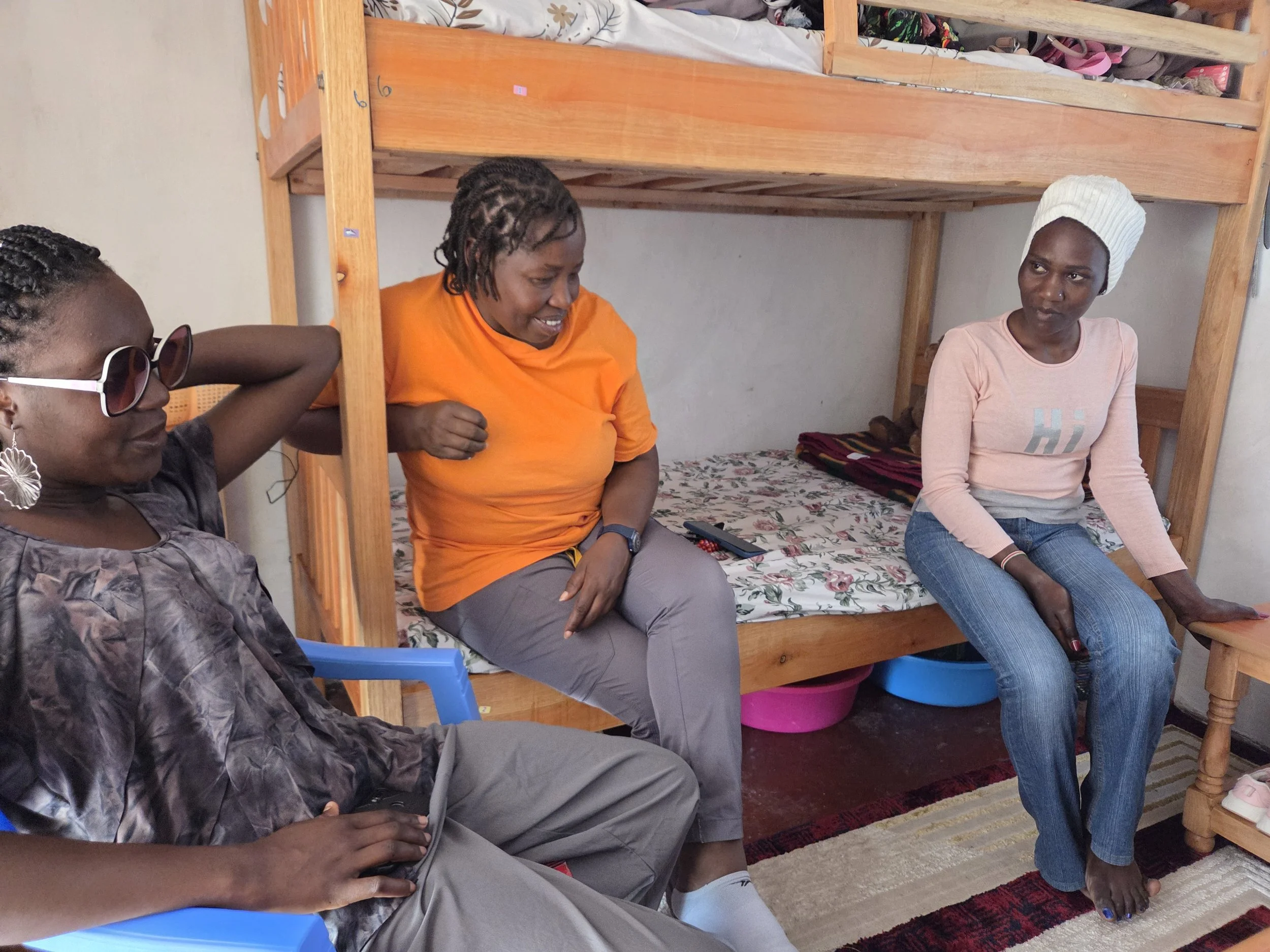
After that visit, Naomi also piled in with us and we drove back to the rental house where we were staying.
Ronald, Sarah, and Kikey were there waiting. In addition, Mama B (our housekeeper during visits and mom of sponsored kids) was there. Two of her kids came over and one of her grandkids.
Ginger has been sponsoring Ronald since 2018. He is now in university, studying automotive engineering.
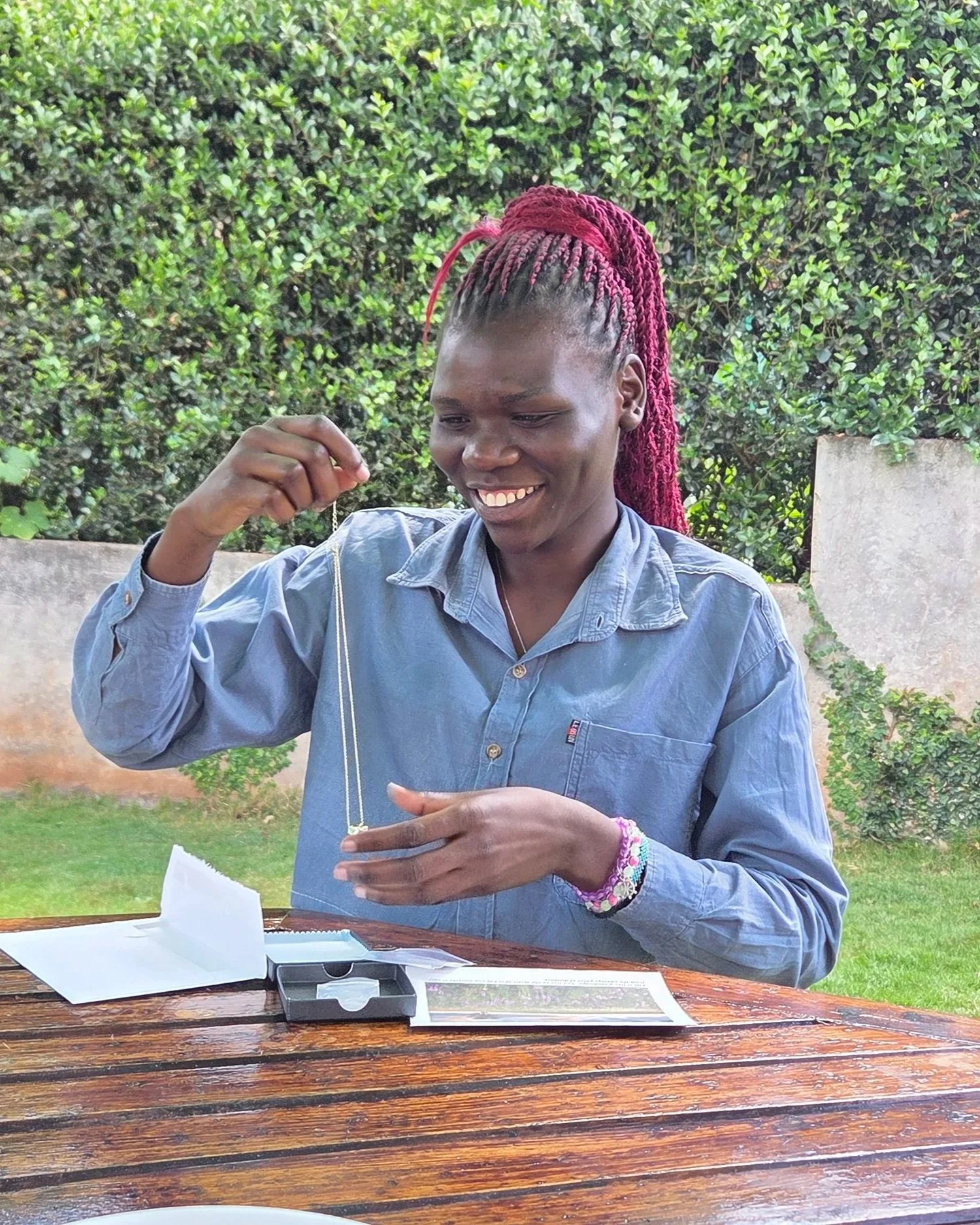
Below, he shows off the necklace Ginger sent for him.
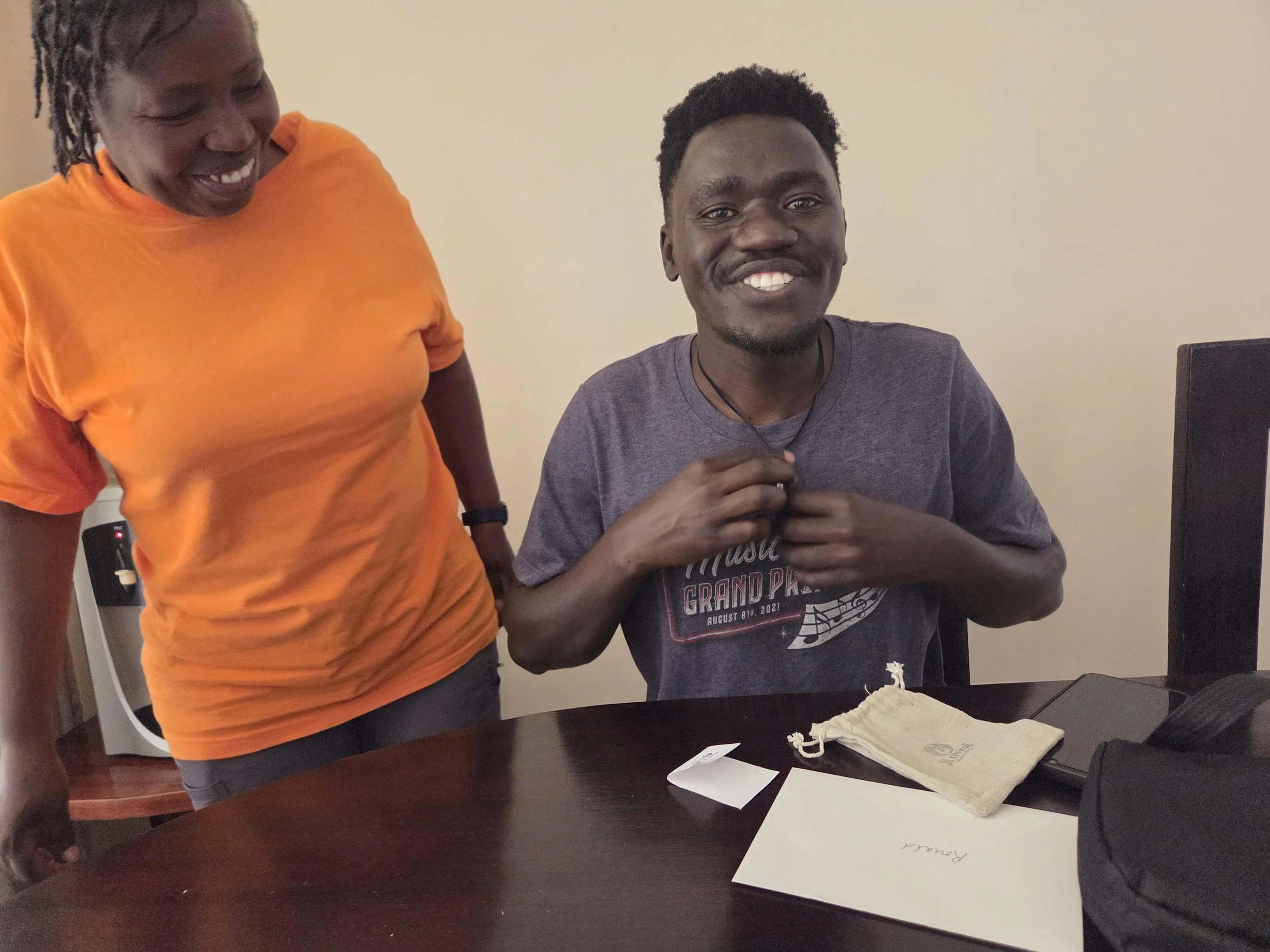
Below is Sarah, with her new necklace.
Ginger started sponsoring Sarah in 2017. Sarah was living in an orphanage in Nairobi. We found out her mom had left her there, with her next two oldest sisters, Valary and Marion, when she could no longer provide for them. Their mother Gladys had gone west to look for work, with the two youngest girls.
We decided later to move Sarah out of the orphanage school to help with her studies. We had to move Valary and Marion too. If we’d taken the one sponsored kid and left two unsponsored ones, their lives would have been made even more difficult by the school head.
In 2022, we met the younger sisters and discovered there were 5 of them total. So Ginger and I have been sponsoring all 5 since.
Sarah is working on a diploma in supply chain management at university.
Mama B made food for the group, including what appeared to be truckloads of ugali, a corn flour starch product used to grab the rest of the food on the plate.
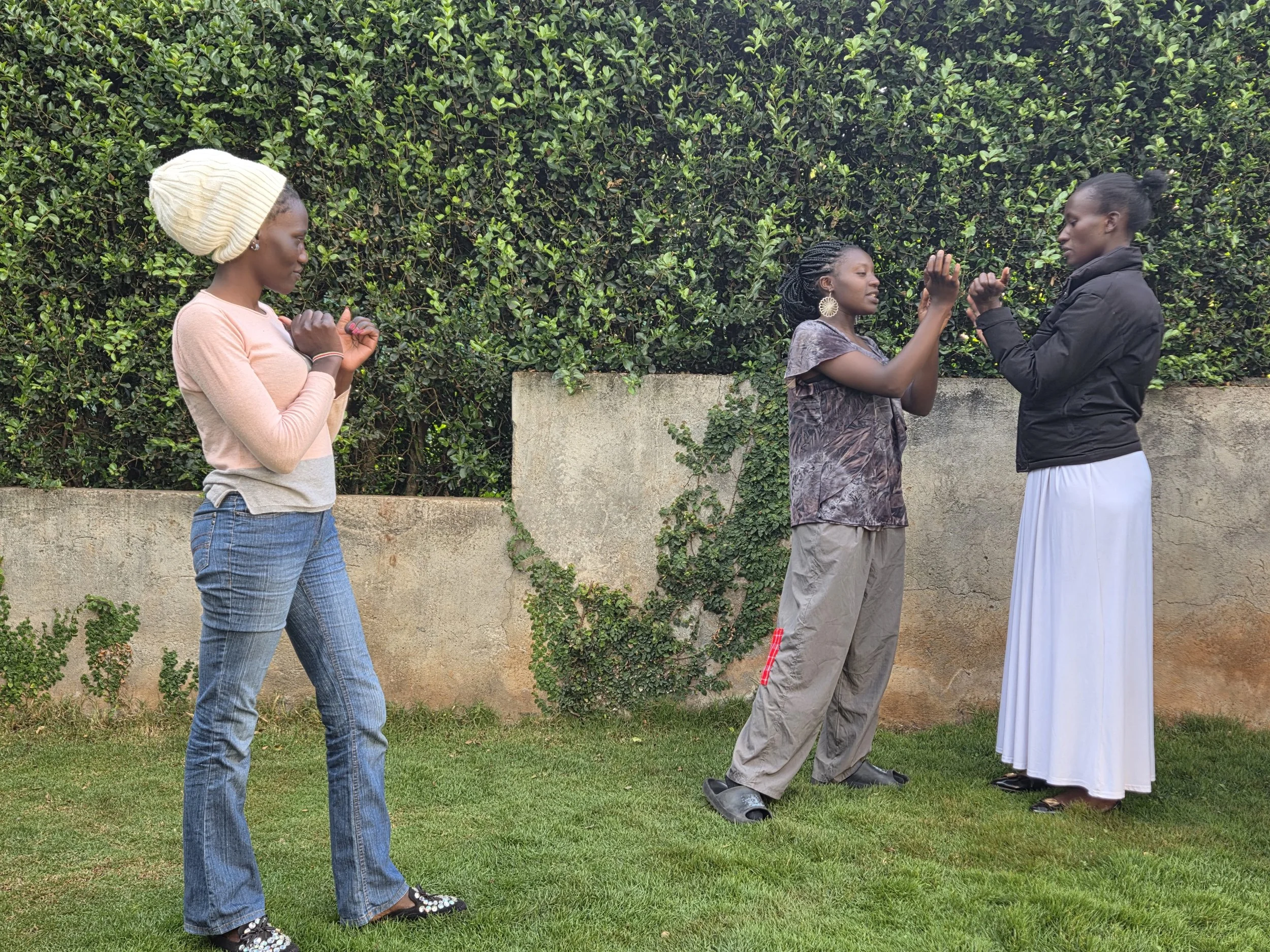
A self-defense class broke out, with Wangari teaching Naomi and Mama B’s daughter, Selena. Naomi was having way too much fun trying out the techniques and hurting us. It’s always disconcerting to have a young woman giggle and smile while she tries to break your fingers.
After the class, we started playing a card game. We had fun playing Uno and another strategy card game called Mafia.
Eventually, I had to jump in the shower, change clothes, and head for the airport. Everyone else left at the same time. There were many, many wonderful hugs all around. We really had a great time.
This was a very nice way to finish the trip. These trips are stressful and emotional. As Claudia and I have both written about, the re-entry into life in the land of privilege is difficult. Having a relatively calm day to end the trip came as a welcome relief.
Off to the airport for the 27-hour door-to-door trip home.