
Safari 2
Note: This post contains some photos of dead animals being consumed by other animals.
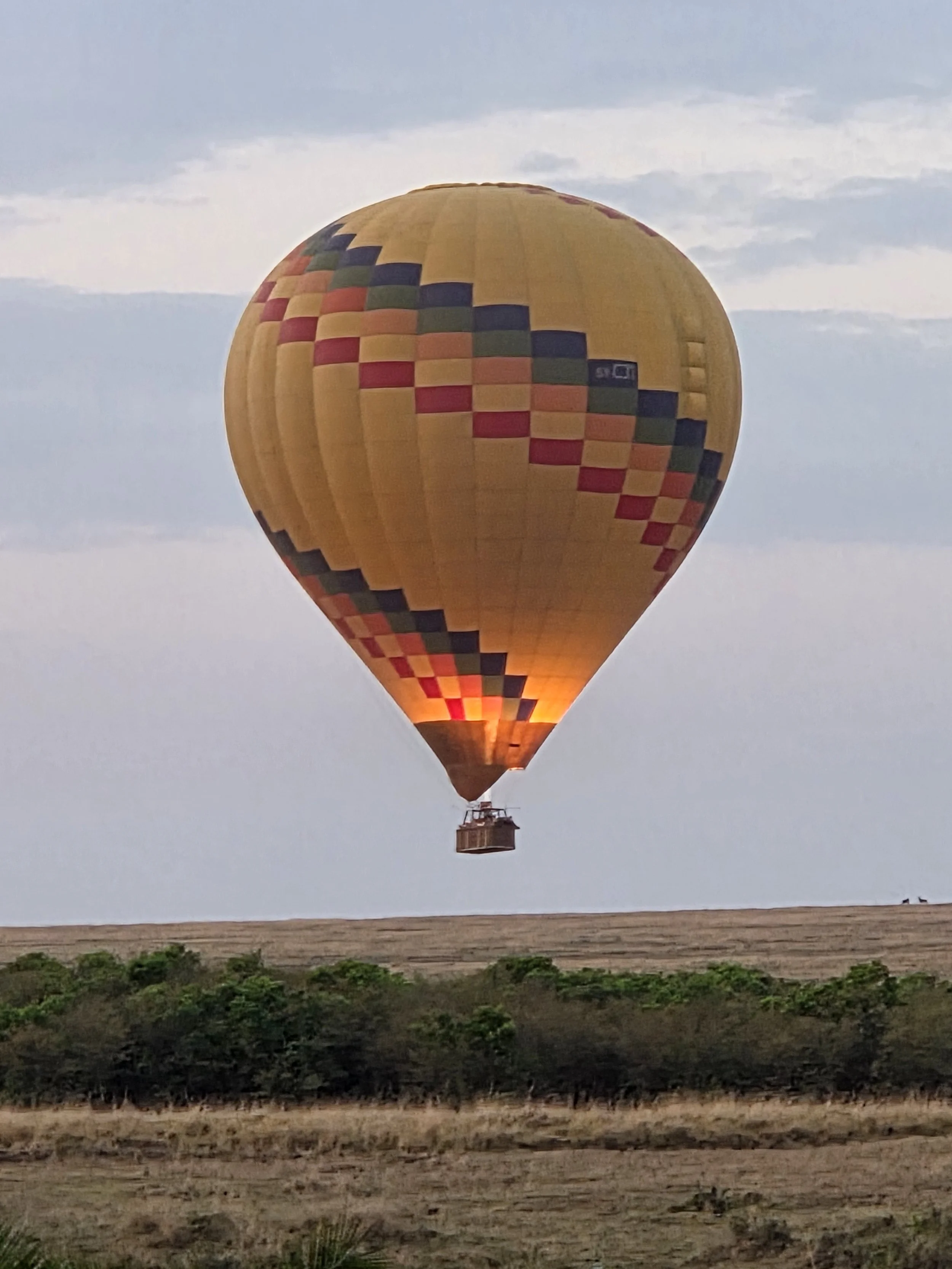
Our first morning on safari, we were taking an easy start to the day, due to the late arrival the night before. Sitting at breakfast at the lodge, there were balloons taking off right by us. People can book a balloon ride as part of a visit to Maasai Mara. The ride starts at dawn and they take off from several spots—all within sight of where we were staying. The closest ones were, in fact, very close.
Maasai Mara is right on the border with Tanzania. Across the border is the Serengeti. The roads in the two parks don’t connect, since they would need border control on them. But there are many places where you are looking from one park to the other.
Below is an area where you can get out for photo ops. It is right on the border. But there is no access from the TZ side. There is probably a similar area on the Serengeti side someplace.
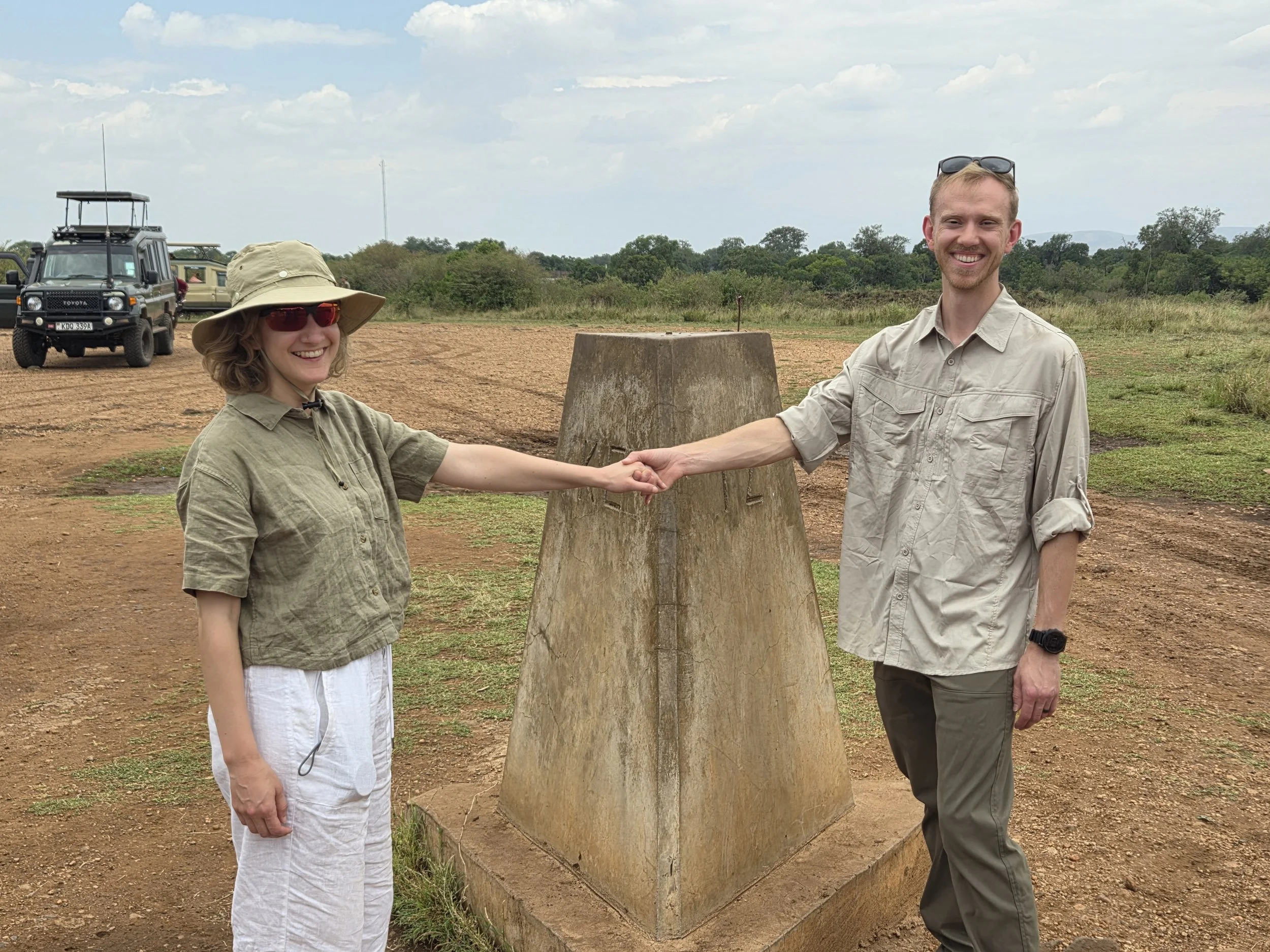
Above, Jaime is in Kenya and Nathan is in Tanzania. It wasn’t a typical long-distance relationship.
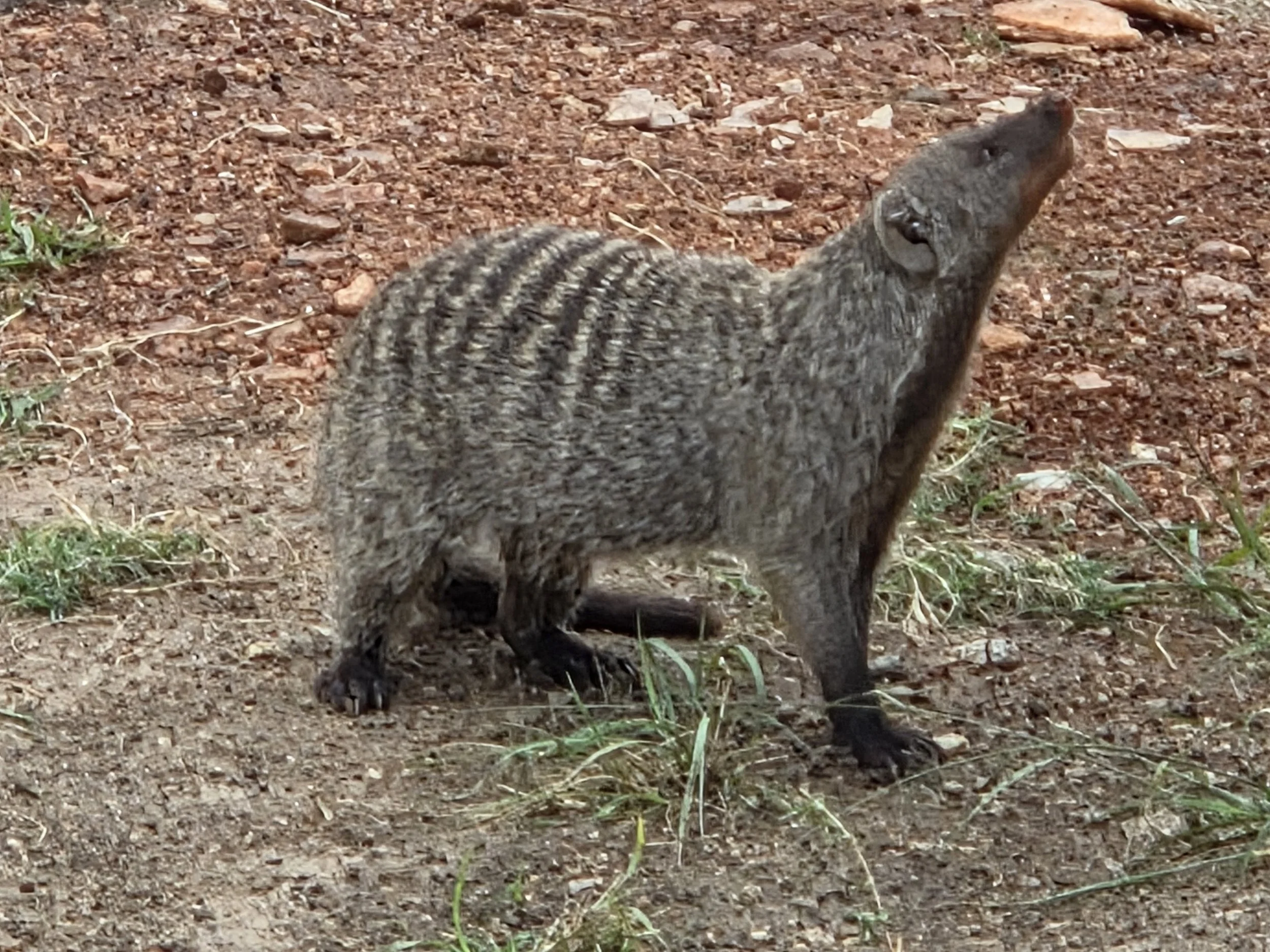
Below is one of our many companions at lunch the first day. There were many, many mongooses. They were begging for food, and many of the tourists were obliging, which doesn’t help the situation. But the mongooses are cute and friendly.
There were also a lot of birds eating crumbs. So we had quite the wildlife contingent at lunch.
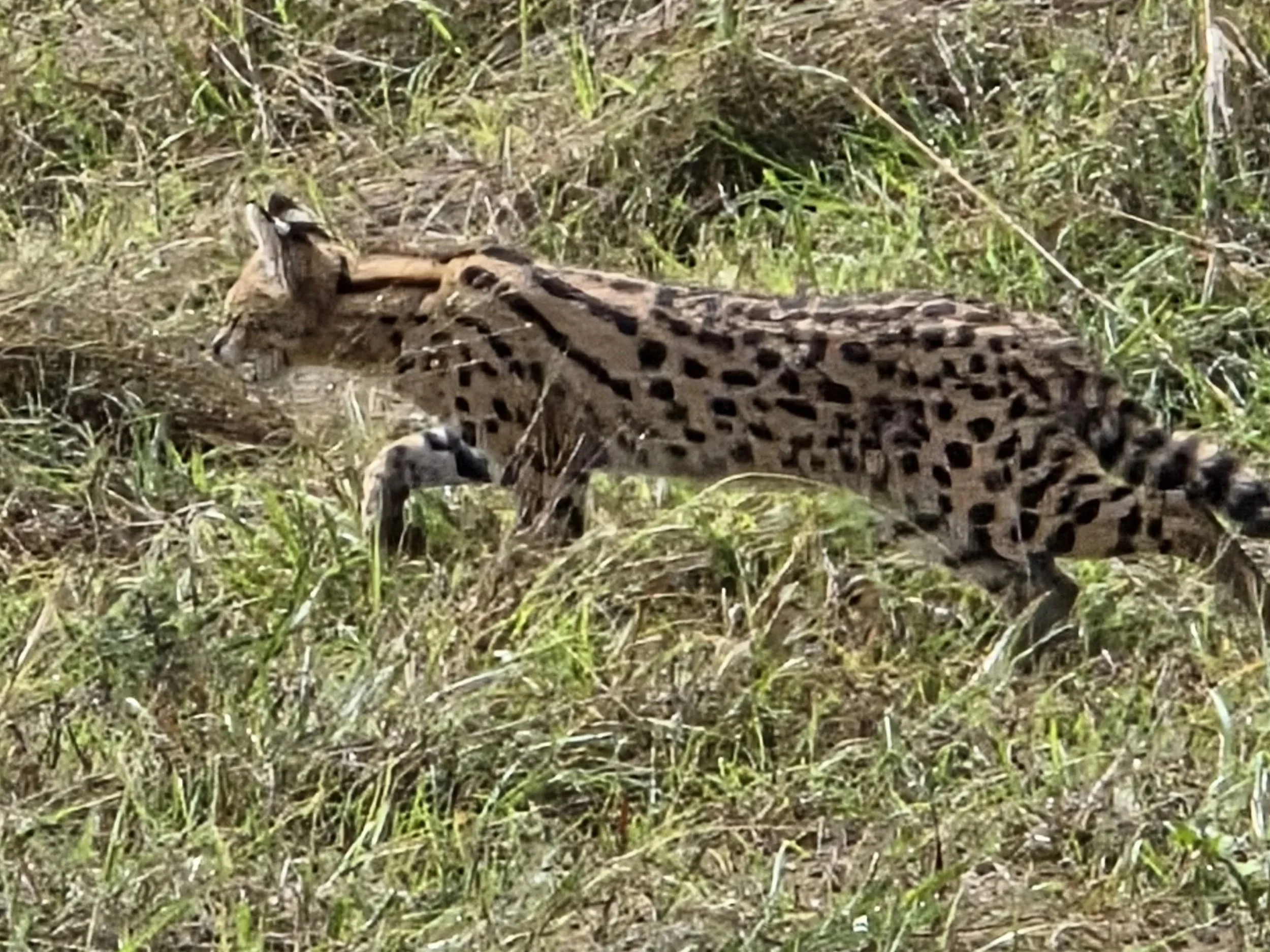
Below is a serval. They are a smallish cat. They’re also pretty hard to find. I’d only seen three or four before ever. And we saw two this trip.
When we spotted one of the servals, we were in a remote area of the park, with no other trucks anywhere in sight. We were on a small two-rut road and the serval was walking ahead of us. He stepped off the side of the road to let us by. He sat down about 4 feet from the edge of the road, watching us. We pulled up next to him for photos. Suddenly, he looked to his left and leapt several feet up and over to that side. He snagged a rodent of some sort and started crunching.
It certainly surprised all of us in the truck, the serval, and the mouse. Obviously the surprise had a better outcome for some than for others.
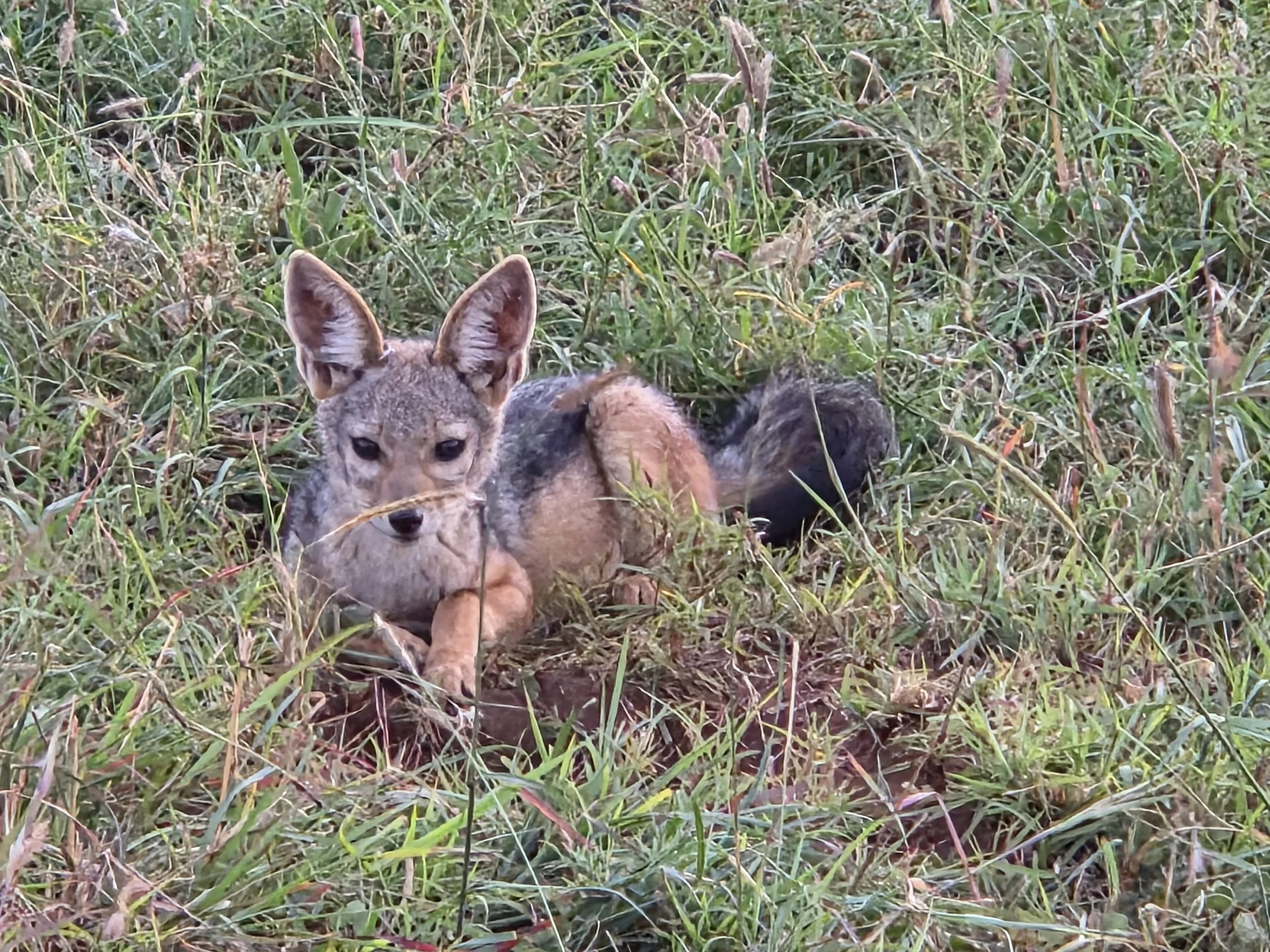
Also in the “cute but deadly” category, below is a juvenile jackal. He is very fluffy and adorable. But don’t be fooled.
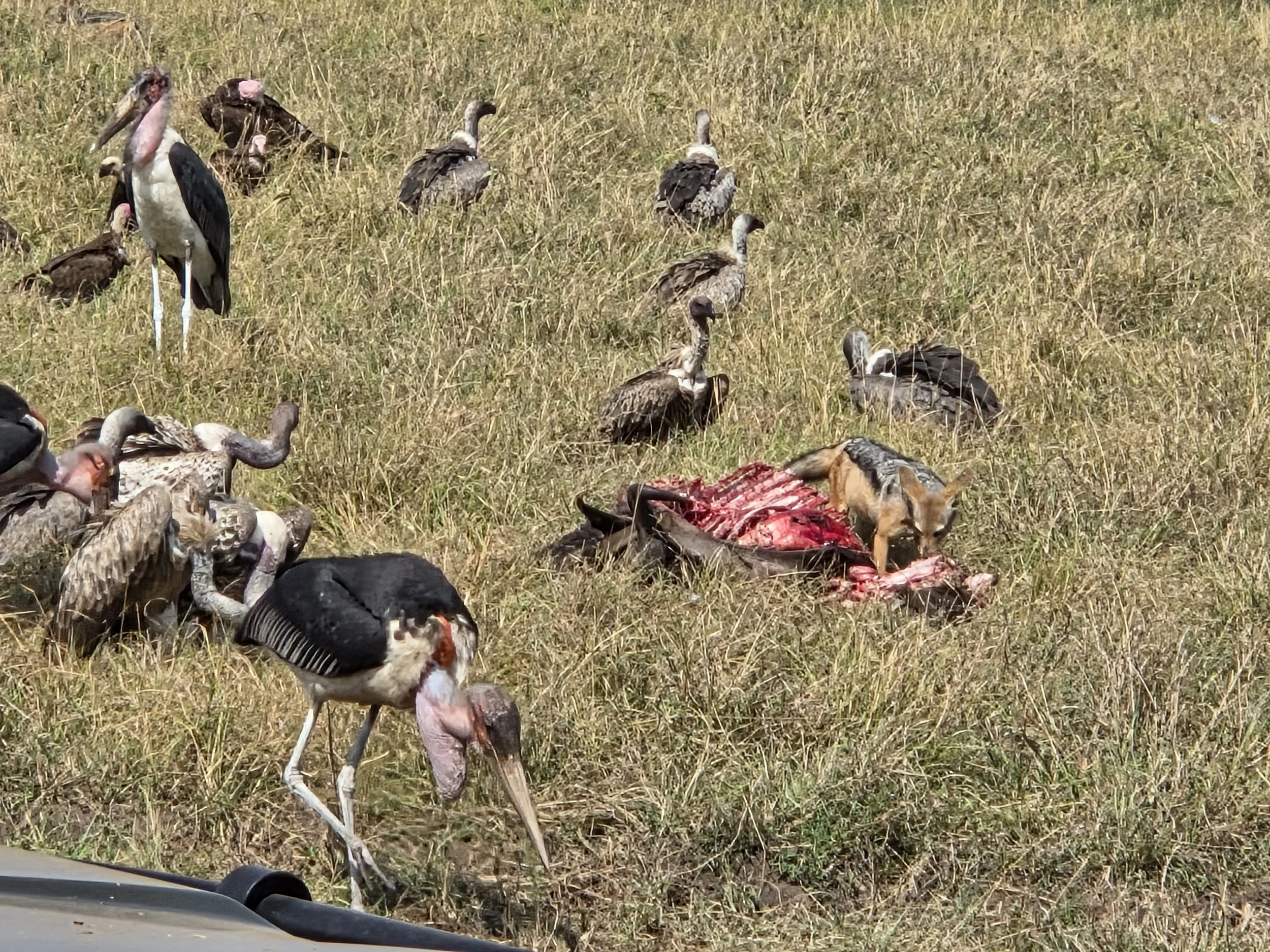
In the following picture, another jackal is eating the remains of a wildebeest that a lion left.
The lion, or a few lions, made the kill and ate their fill. The lions will chase off any other animals until they are done eating and leave. Then the scavengers move in. In this case, the jackal was next in line. He was eating and chasing off the vultures at the same time. Marabou storks, who are omnivorous, were also hanging out.
The jackal then ate his fill and left. So then the vultures moved in. The storks would sneak in for a bite, but weren’t challenging the vultures.
A few minutes down the road, we found the huntress of the wildebeest who started the whole pecking order we had been watching. She was probably headed to water. Or at least shade to sleep off her meal. Note her distended belly from eating so much.
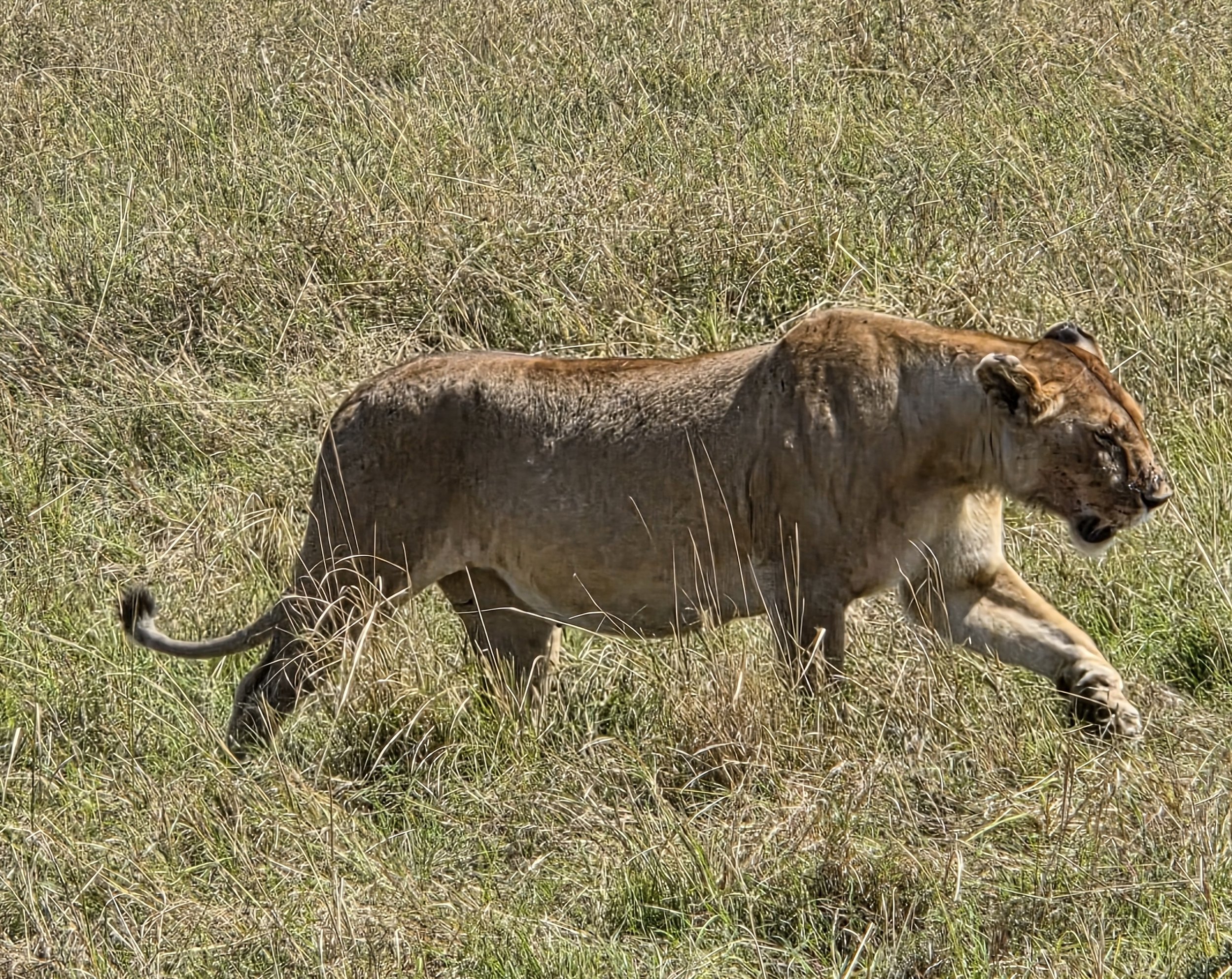
The lions know the safari trucks aren’t a threat to them. So they don’t pay a lot of attention to them. The lions just go where they want. This is true of most of the large predator animals. The advantage is you can often get up pretty close to them, without spooking them. It depends on where the roads are.
The safari trucks are required to stay on the roads. The drivers are all licensed, so they aren’t willing to take a lot of chances with their livelihoods. For a good sighting of some animals, the drivers will leave the road and circle the animal just long enough for the tourists to grab a couple pictures, then get back on the road.
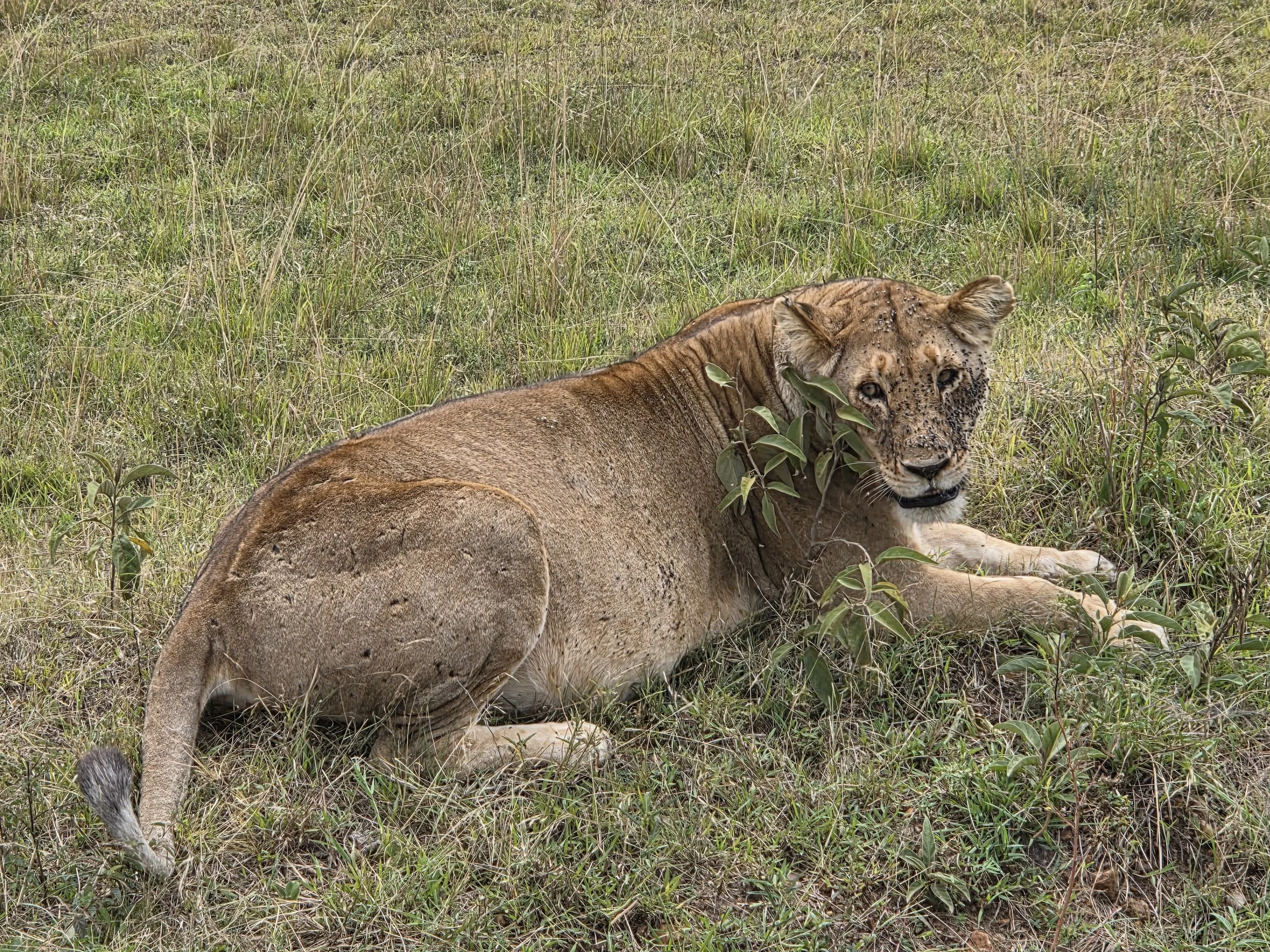
Below is a different female lion, who had also just eaten. As you can imagine, when they eat, their faces get very messy. After eating, their faces will be covered with bugs who clean them up. You can see all the black spots below.
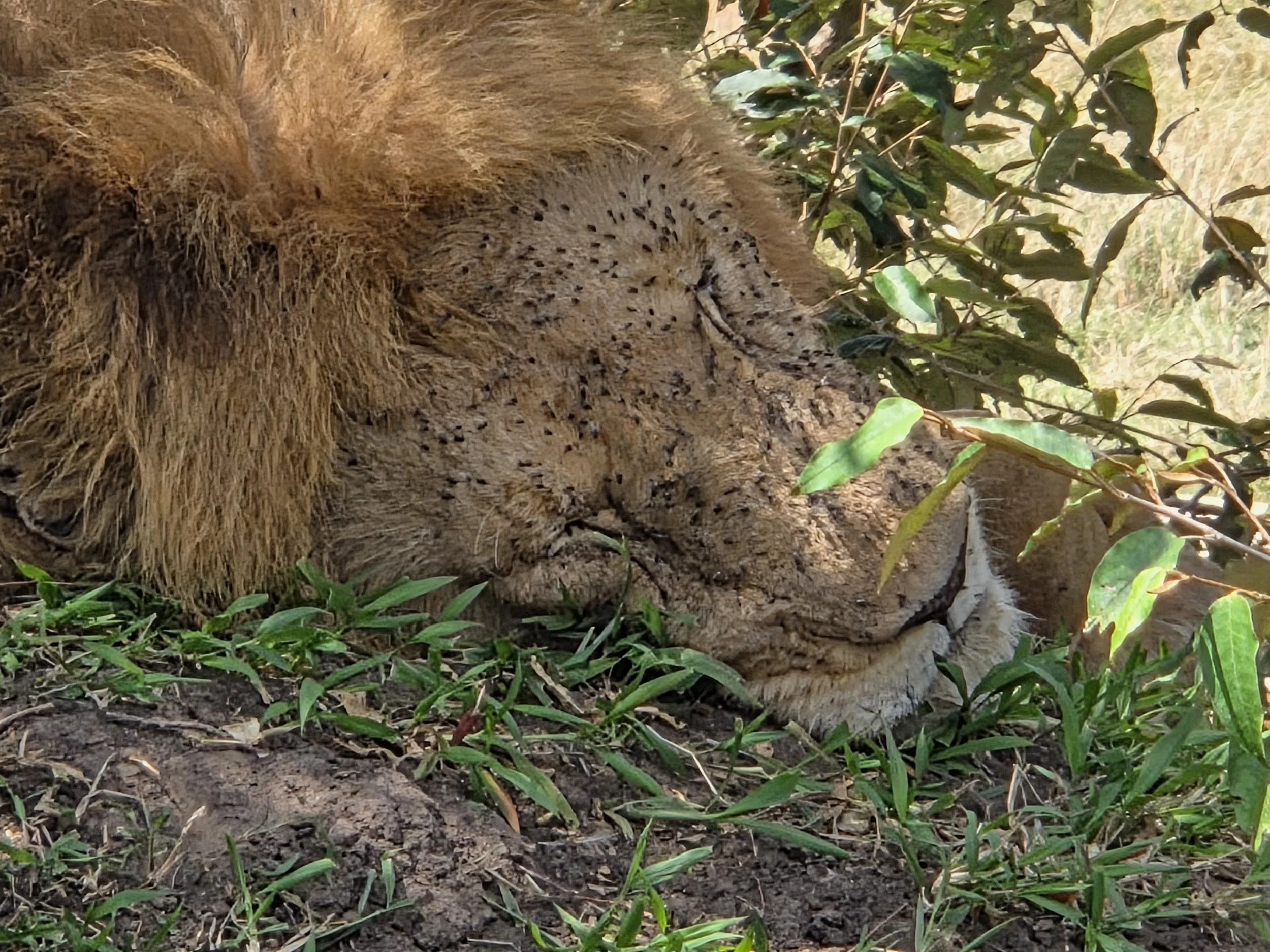
Above is a male lion asleep under a bush. You can again see the bugs.
Below is another male lion. There is a female lying down right in front of him.
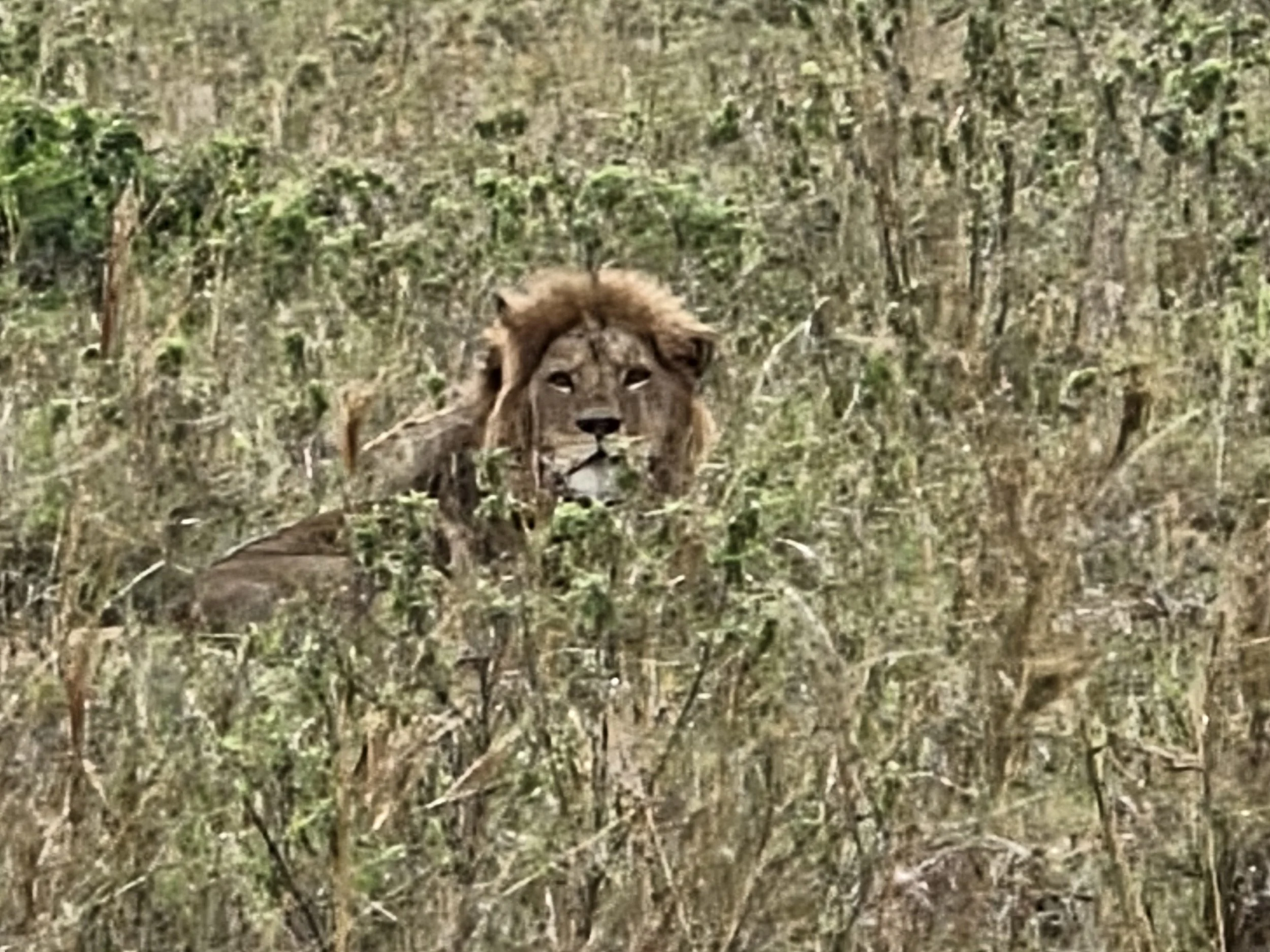
Jaime’s primary goal on safari was to see big cats. So we spent quite a bit of time looking for them. The lions are comparatively easy to find. We saw a number of them—double digits. The other candidates are cheetahs and leopards.
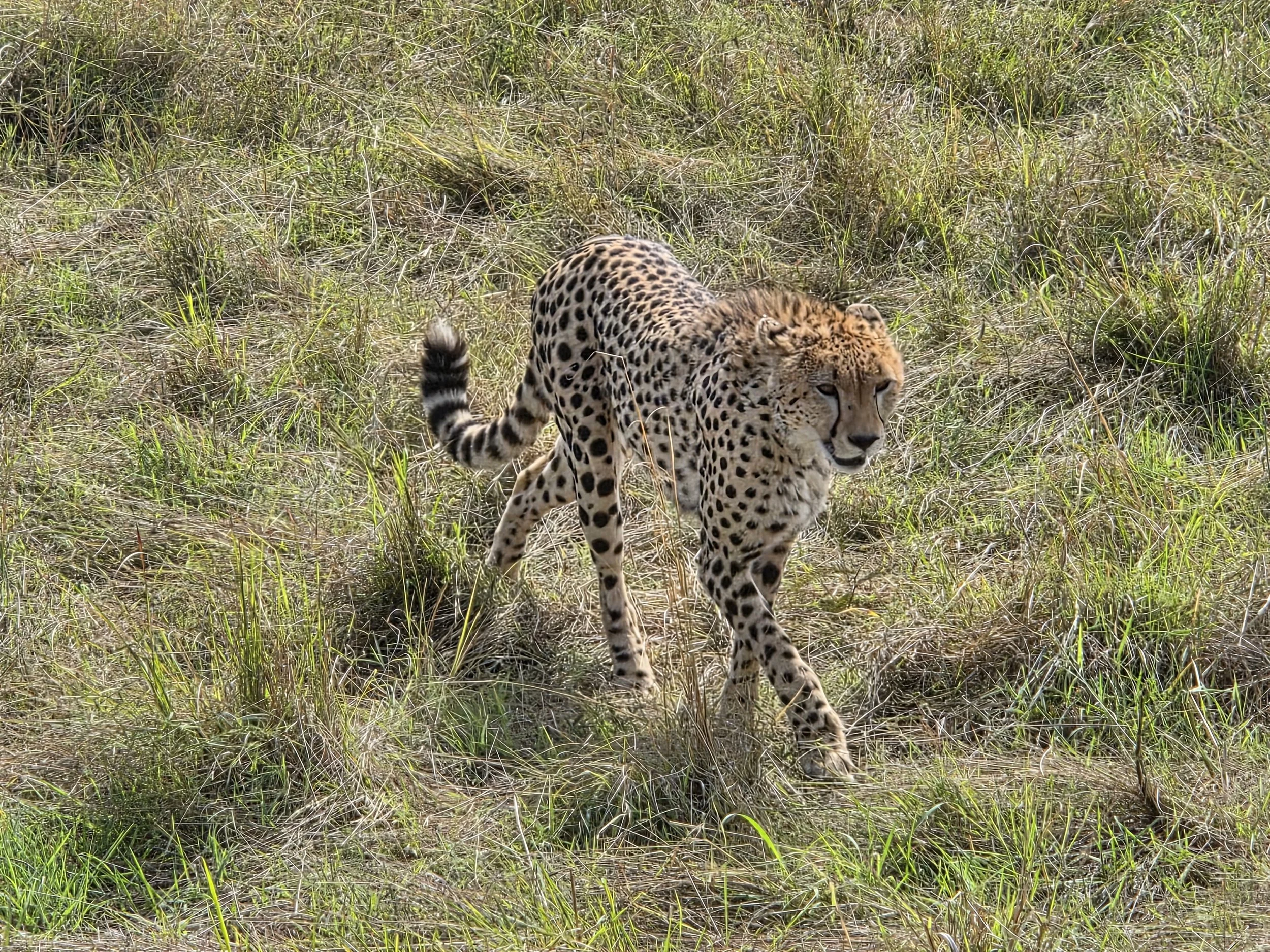
Below is a cheetah. In the prior safari post (Safari 1), I mentioned a cheetah hunting a warthog. This is the cheetah. He had already blown his chance at getting the warthog in front of a gazillion safari trucks. So here, he is trying to look cool as he strolls away. My guess is that this is a young male. A female would likely either be with the mother or have babies of her own. And the spiky fur on his shoulders makes me think he’s younger.
I still think cheetahs are my favorite of the big cats. They are beautiful and graceful.
Note the “teartrack” from his eye to mouth. This is unique to cheetahs. If you see a picture of a cat’s face and don’t know if it is a cheetah or leopard, this is the easiest way to tell.
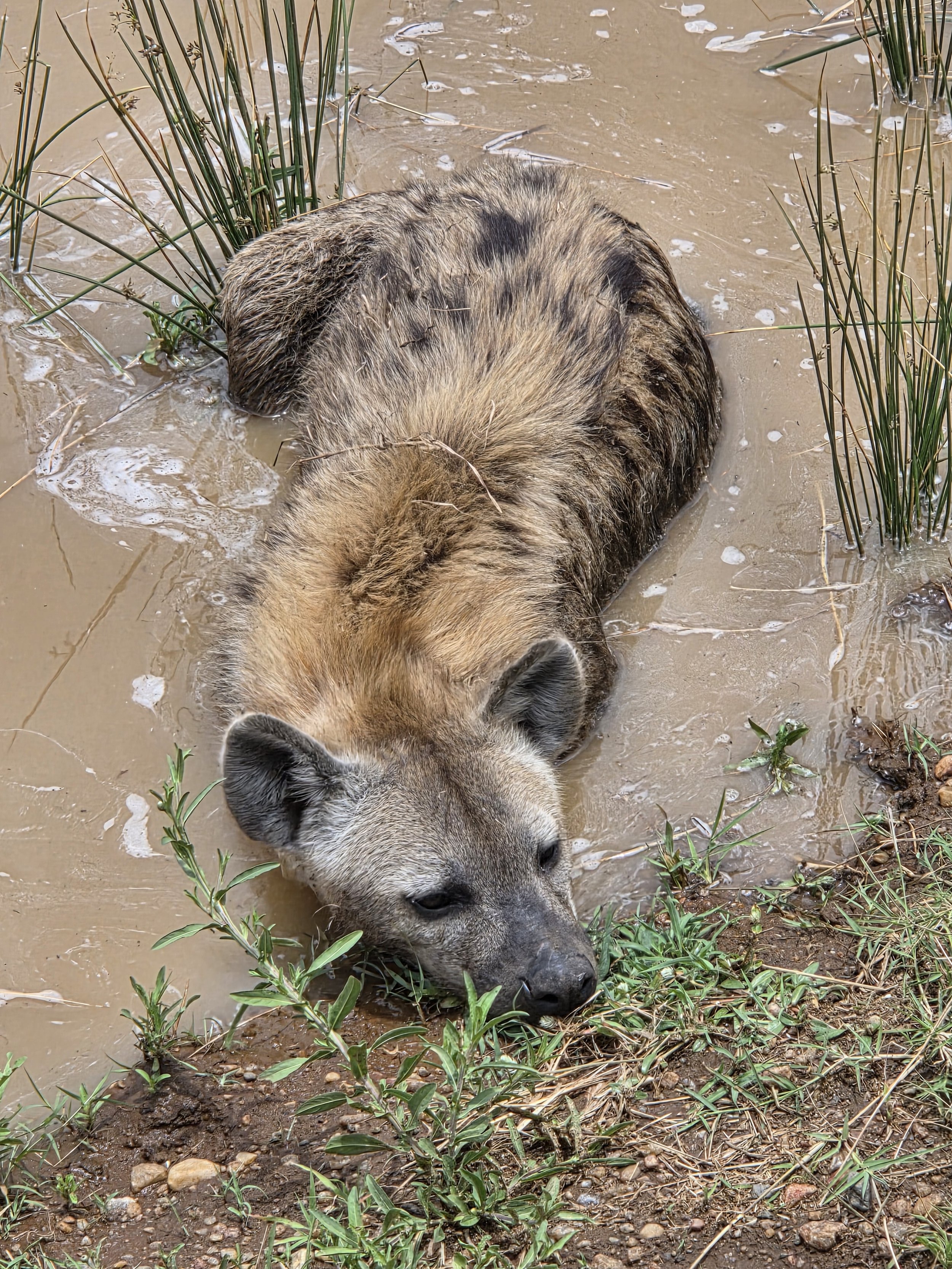
Also in the “cute but deadly” category, below is a hyena chilling out in a roadside ditch. Under normal circumstances, I never would describe a hyena as “cute.” They are typically anything but that. They are pack hunters and scavengers.
But this one, lying in the puddle by the road, just looked like a stray dog.
Nathan’s priority was to see crocodiles. We accomplished that too, but not in the same numbers as the cats.
We saw four Nile crocodiles. The one below is probably 15 feet long. We didn’t measure him to get any more accurate.
To see the crocodiles, and the hippos who are also in the area, you typically have to get out and walk. As one can imagine, this isn’t something tourists are allowed to do without armed escorts. So you have to hire a park ranger to escort you.
We climbed out of the truck. Letipat told a ranger we wanted to go on the walk. The ranger rounded the three of us up for a headcount and we were ready to go. Almost.
He said to come with him, so we followed as he went towards a small building. I was right behind him. He walked in the door. I was just getting to the door, with Nathan and Jaime behind me, when the ranger came back out with an automatic weapon leveled right at my chest. I was awake!
When he saw me right there, he lowered the gun and apologized. I refrained from suggesting weapons safety training classes. Once he had the gun, we were off on the hike.
I’d like to point out that it isn’t every NGO whose staff will take a bullet for their sponsors. But I was right there! Tuko Pamoja is full service!
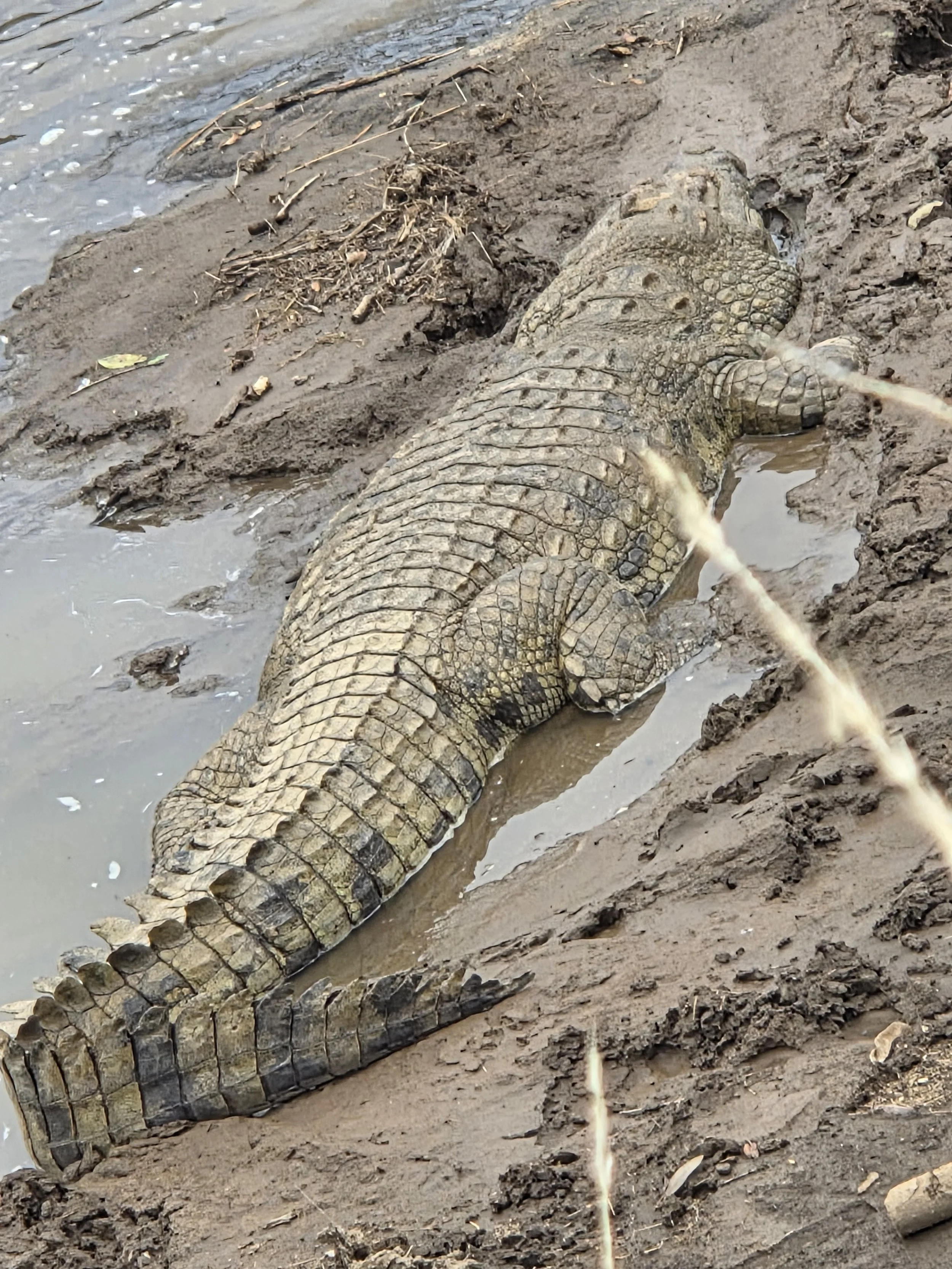
Crocodiles weren’t the only reptiles we saw. However, they were the only ones we got pictures of. And they are so photogenic!
Driving down a random road, we saw a python on its way across the road. It was young—only about 18 inches long. But it is the first one I’ve seen in Africa.
Early one morning, we came across this beauty fairly close to the road. When we first spotted him, he was hidden in the foliage. There were a few other trucks around and I saw movement in the leaves.
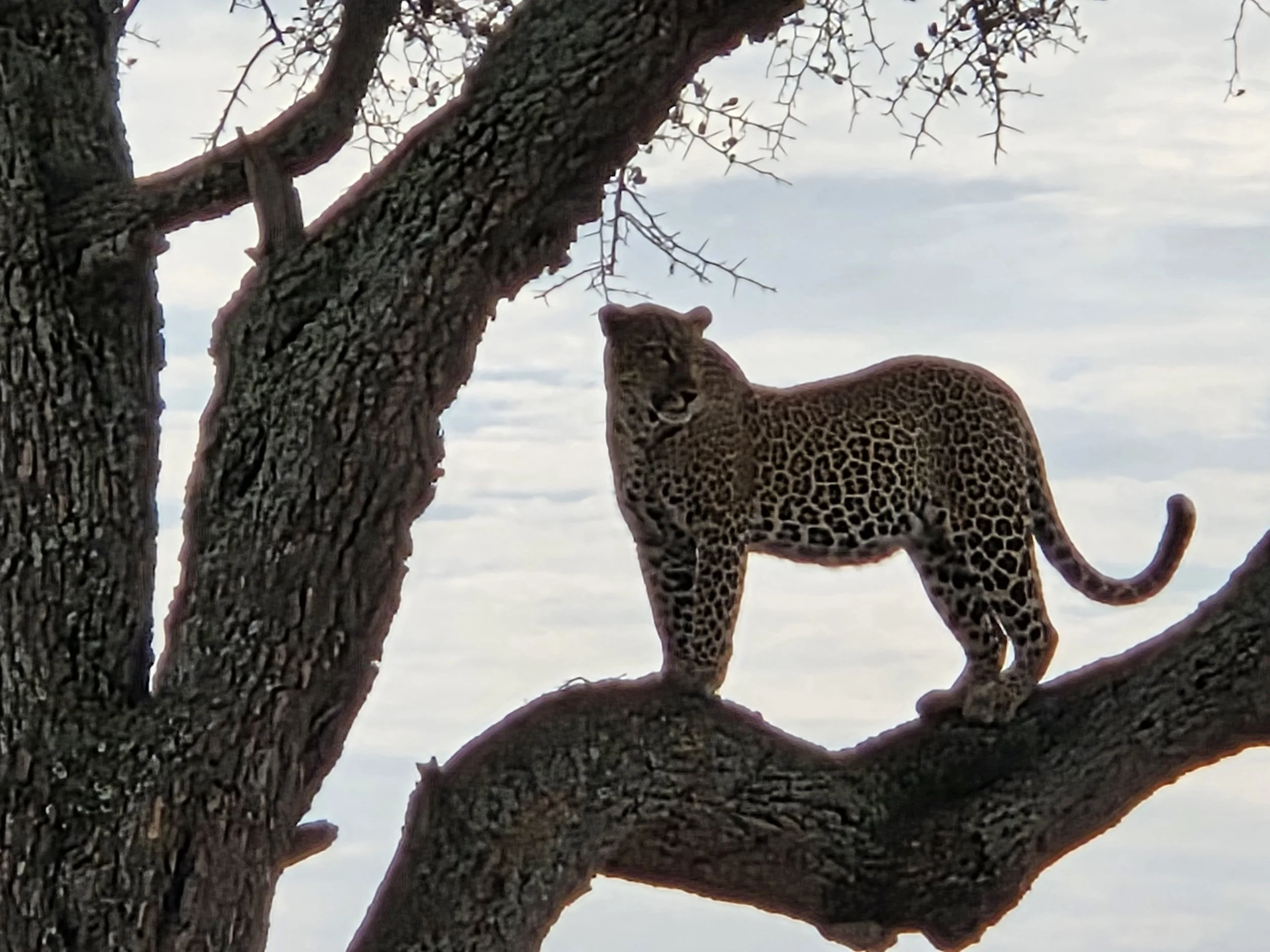
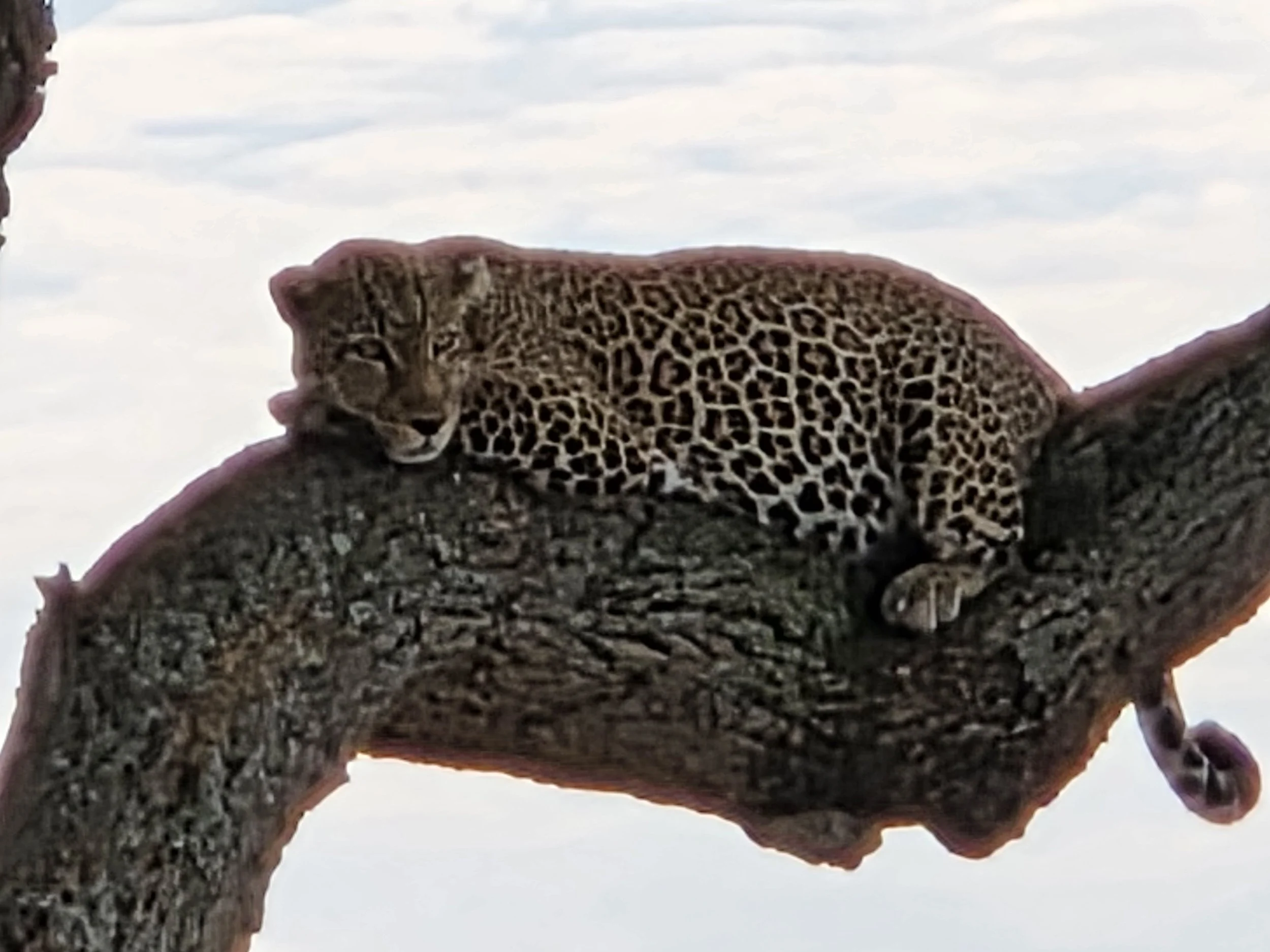
We got in a good spot to watch and waited for him to come out. Soon he did. He was on the branches, both climbing around and lying down (below).
He also has a bit of a belly on him from eating. The leopards will kill a grazing animal on the ground, then take the carcass up into a tree to eat it. In the second shot below, you can see the leopard eating a gazelle in the tree.
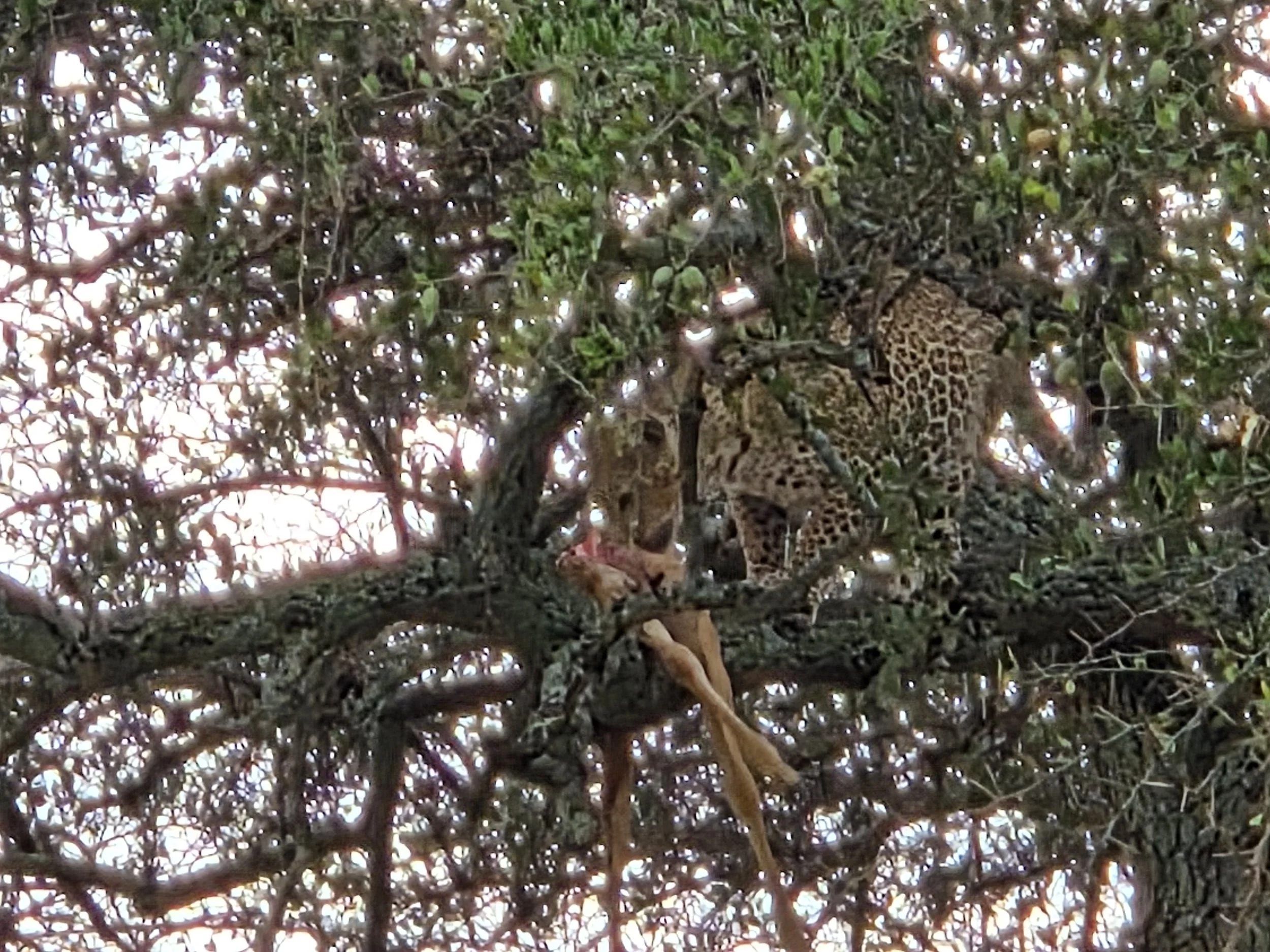
We actually saw two leopards on this trip. Both were buried in foliage when we first got to them. The picture below is an experiment. I shot it, using my phone camera, through my binoculars. See if you can spot the leopard in the picture.
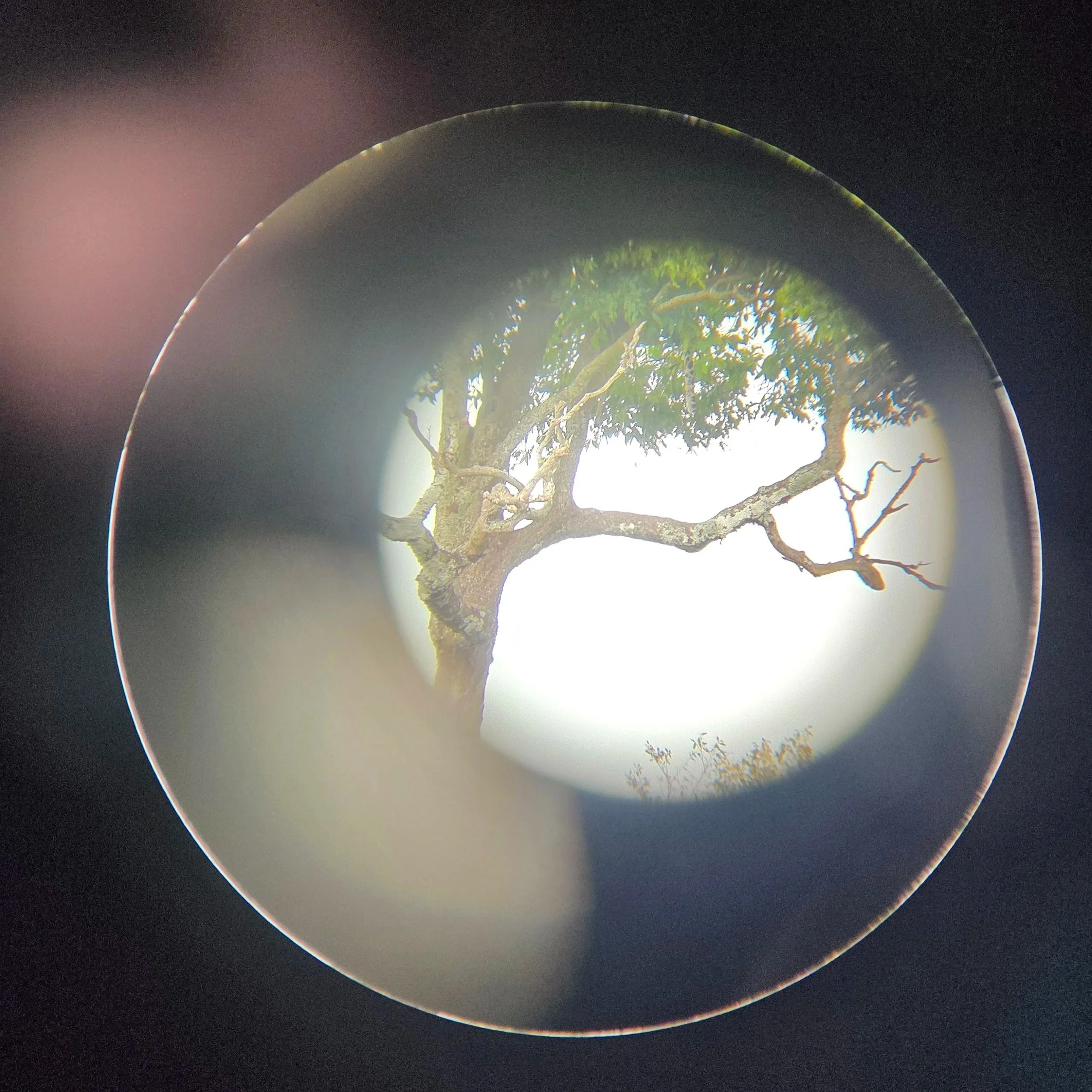
I don’t use any camera other than my phone anymore. It is too much trouble to carry something extra. And if we go on safari on these trips, it is more of a side trip than the main event.
Again, the leopard above cooperated and came to a lower branch to clean up.
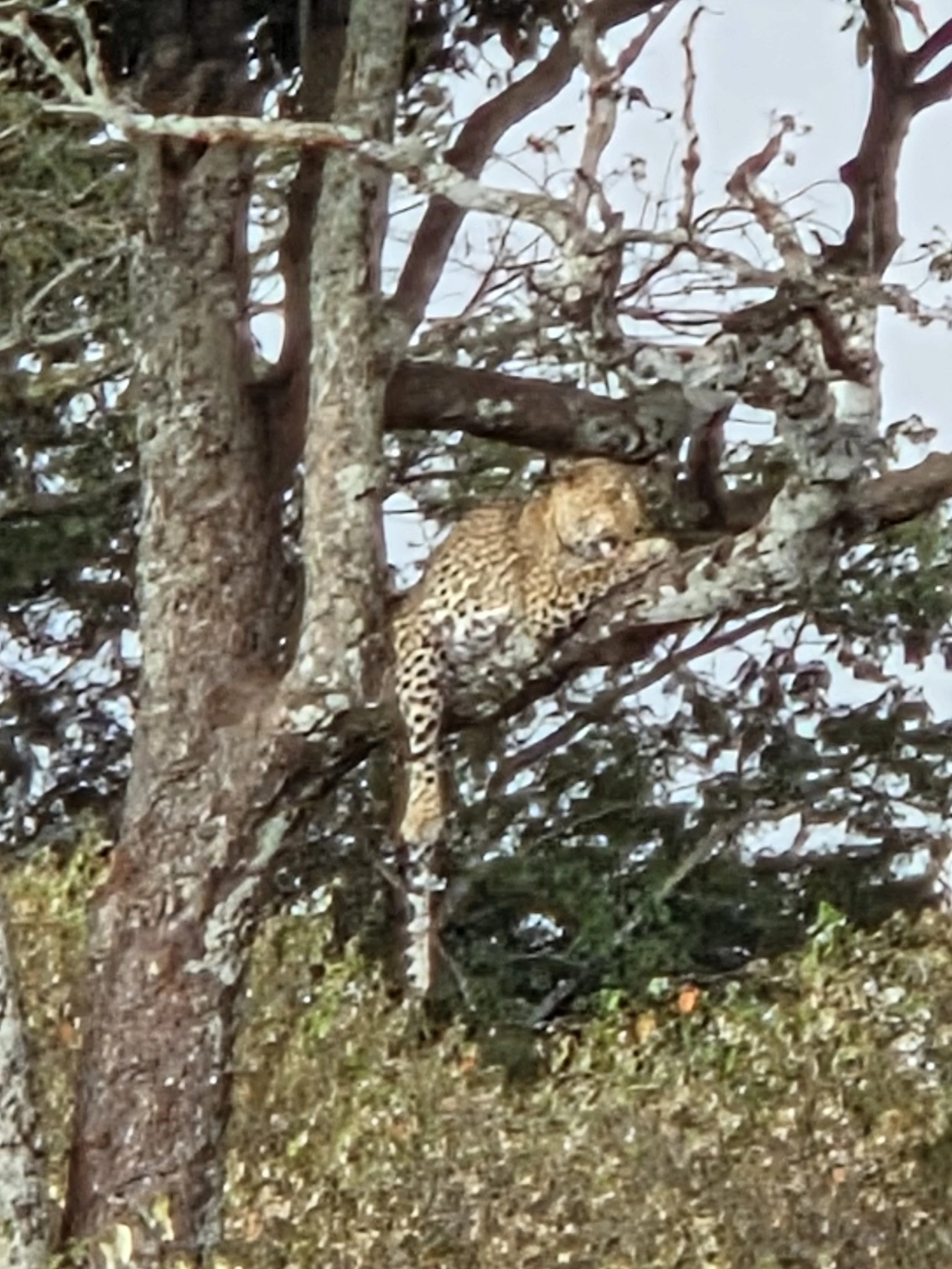
On this trip, we saw two leopards, to go with the two rhinos we spotted. With the many buffalo, elephants, and lions we actually saw the “Big 5” twice over. I’ve never done that before. It is hard to see all 5 anyway. And to see more than one of both leopards and rhinos on a relatively short trip is remarkable!