Self-Defense Classes: Into the Slum
We had two very full days this week with 5 self-defense classes. Over the entire trip, we had about 360 girls and women go through our classes. Since I started teaching this course in Africa in 2019, I’ve had over 4,300 total attend.
Tuko Pamoja’s first choice is to teach self-defense in schools. But we also hold classes in community centers, churches, or wherever we can get a group together.
One of our classes was in the Kibera informal settlement (slum). This is thought to be the largest informal settlement in Africa, with somewhere between 200,000 and 1 million people.
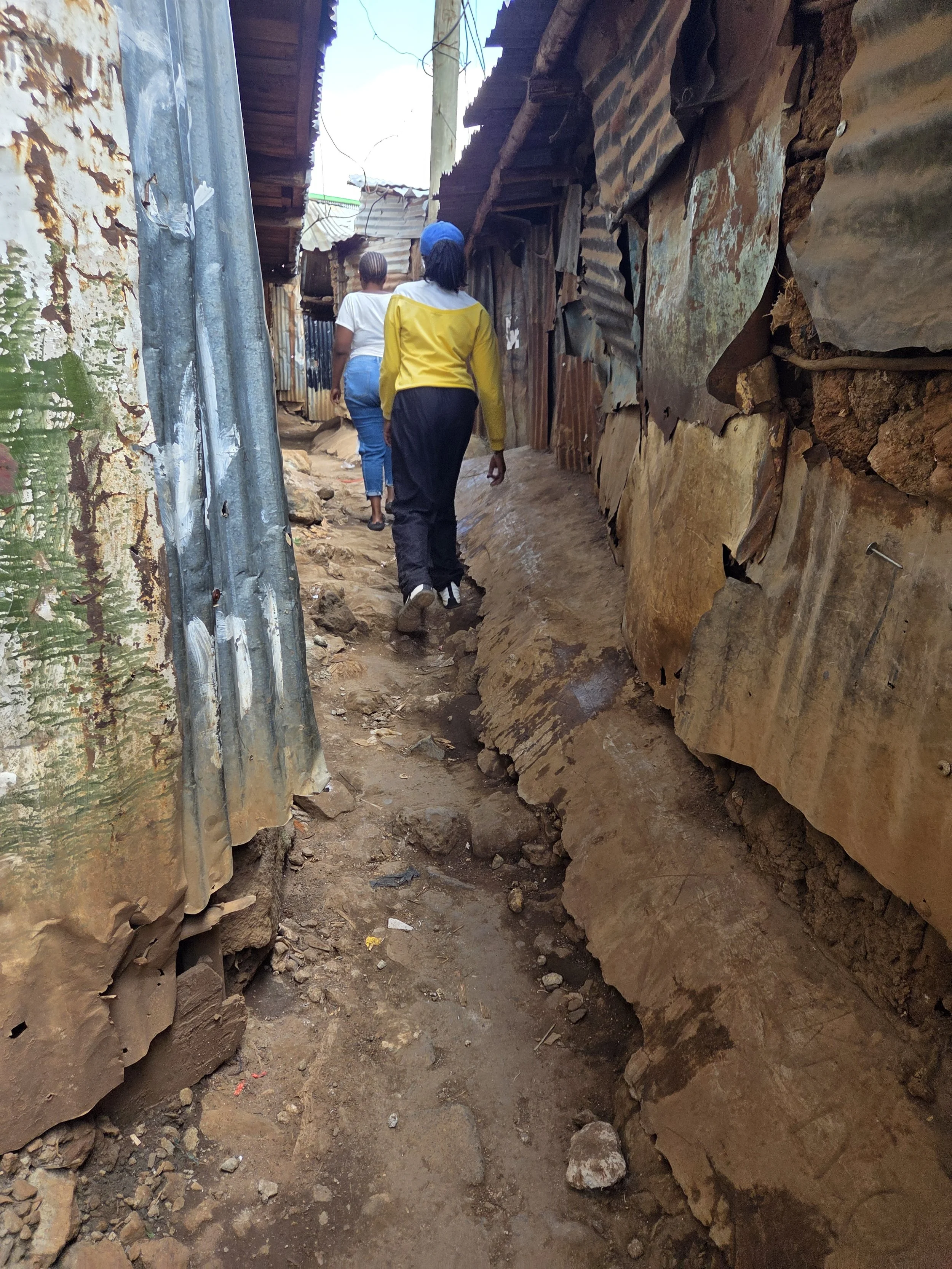
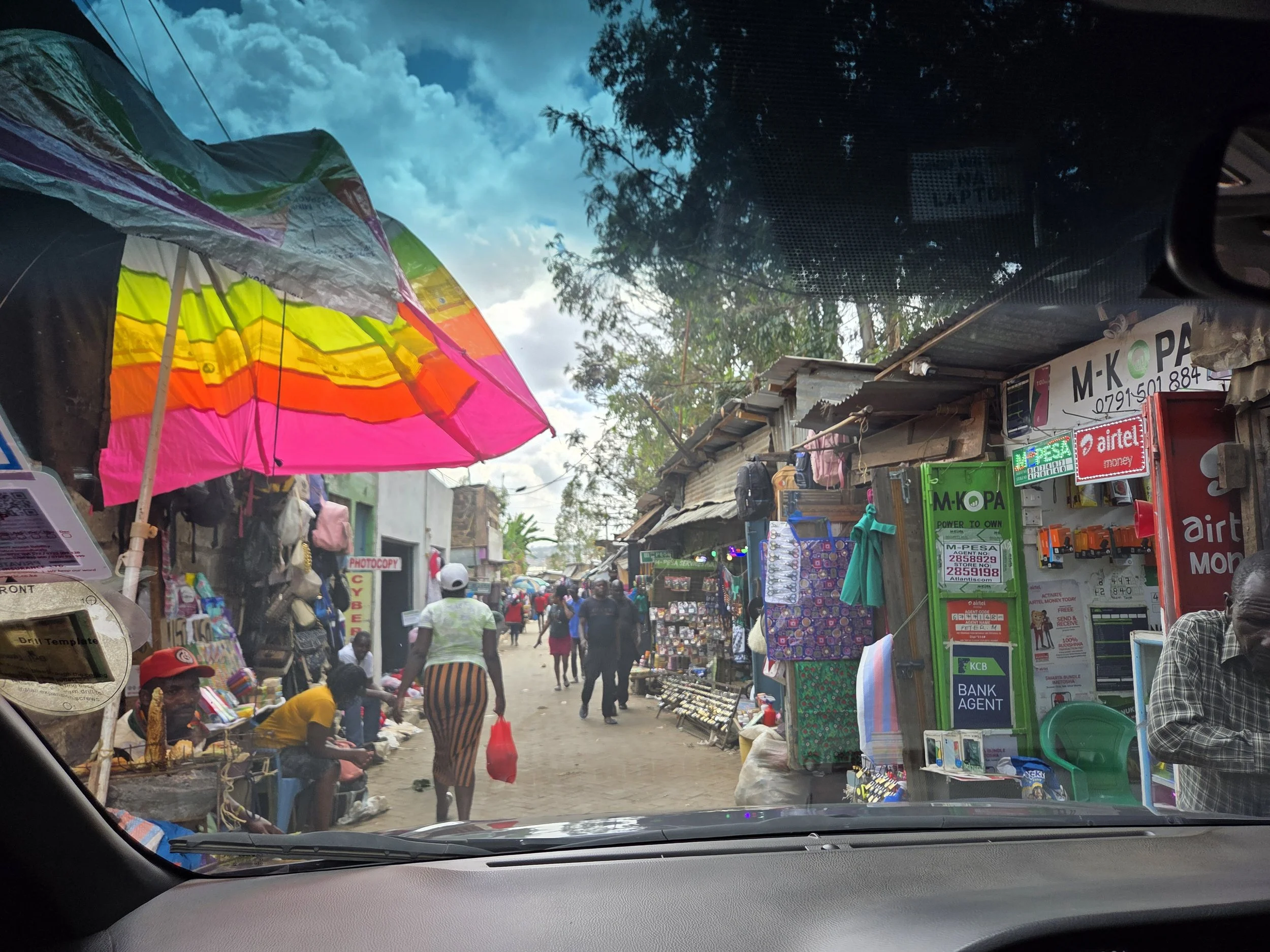
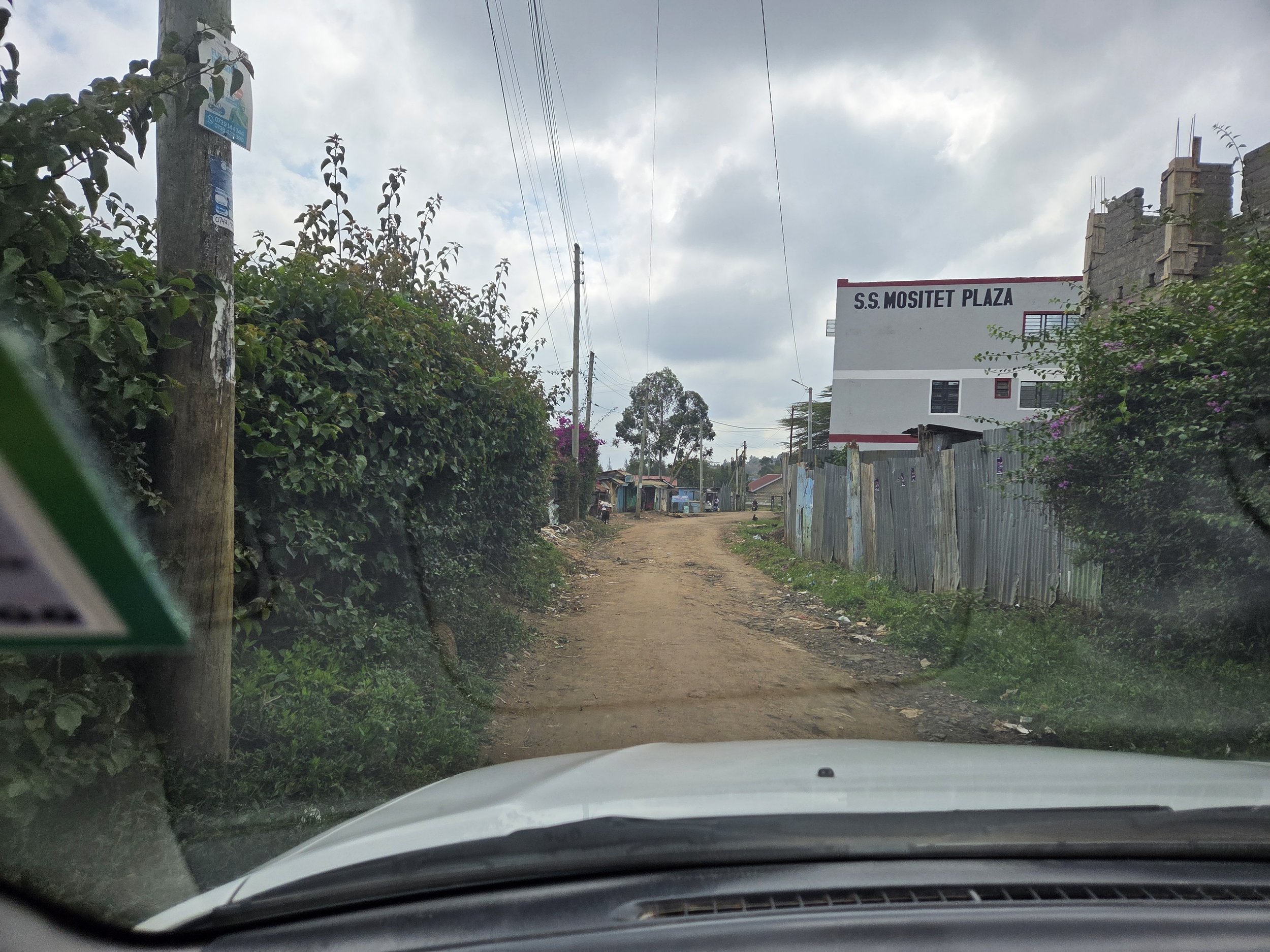
It is difficult to get where we need to go in Kibera. There aren’t real roads, but vehicles drive there anyway. Below, we are driving down an alley. The shops on either side makes the path too narrow for our van in some places. The vendors have to shimmy the carts to the side to let us through. People often will object to photography, so the shot below is from inside the van without people looking.
The settlement has a number of chiefs, who are the leaders in the area. Our plan was to drive to a chief’s headquarters and park there. It isn’t safe to park the van anywhere else and our driver, Greg, will stay with it.
At one point, we had to turn into another alley. There was a pickup going the other way towards us. There isn’t enough room for one vehicle, let alone two to pass by each other. Our path forward was blocked by a couple of fruit carts. Neither vehicle could back up for the long distance to get to a place where we could pass.
The fruit carts eventually moved back, other vendors moved, we pulled in where they were, the truck passed behind us, and we were able to go. Solving the puzzle was a community effort.
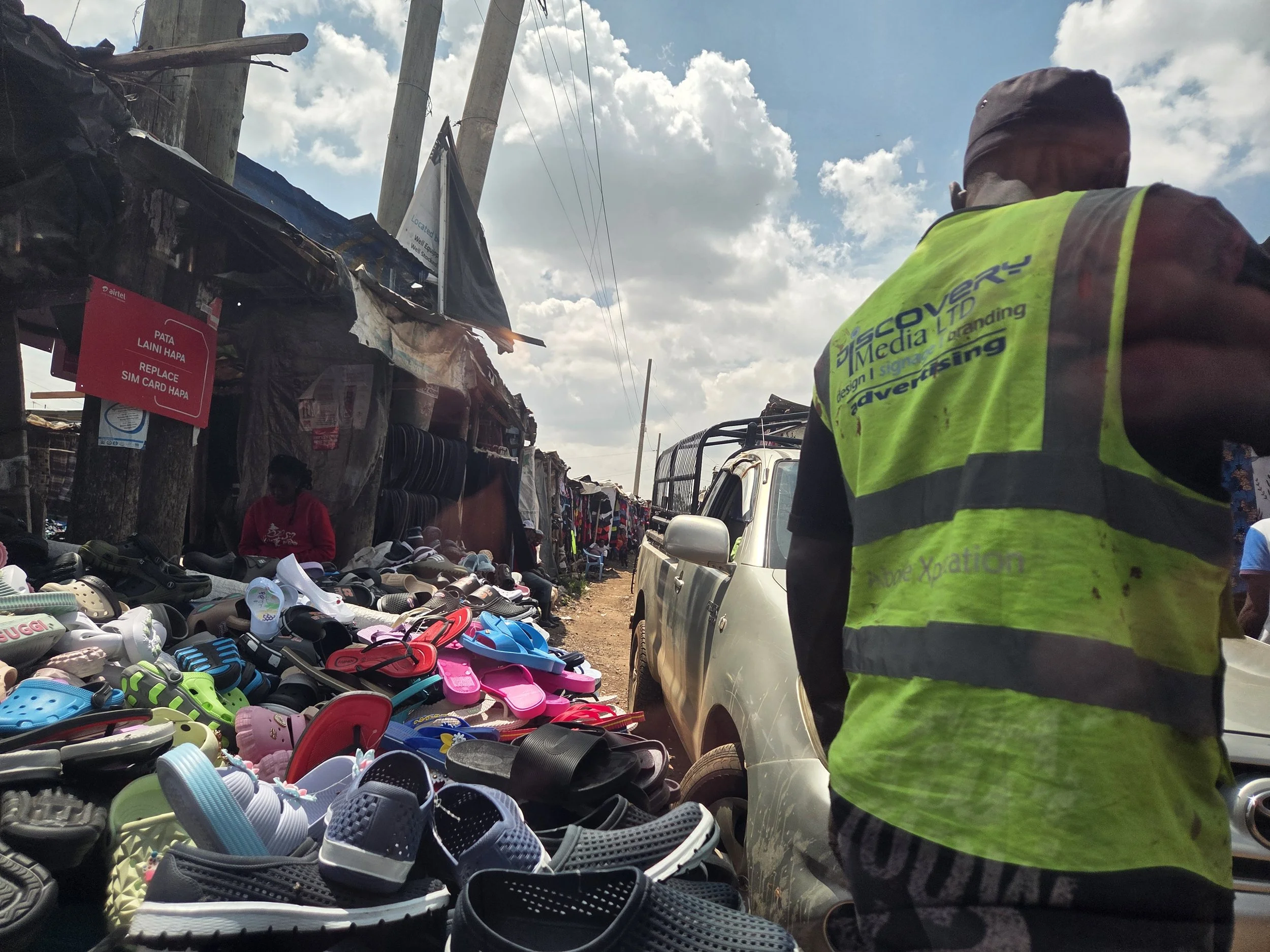
We got to the chief’s office and parked. Someone was coming to meet us to walk us to where the class will be.
This area is dangerous for anyone. Even the locals won’t pull their phones out on the paths due to snatching. I’m very accustomed to not seeing another white person for several days in a row while I’m here. But Kibera is different. I’m clearly not safe. Even the rest of our team doesn’t feel safe here, and they blend in. As we are walking through, I need to be in the middle of our pack. Team members Cedric and Kikey walked in the back together so they could watch. I kept an eye on the women in front of me, as well as behind as much as I could.
This isn’t my first trip here, or to other settlements where the dangers are similar. I keep going because of the dangers—not to me, but to the women and girls we teach. This is where they are. So we go to them.
We walked probably close to a mile to get to the class venue. The scenery is interesting, but I couldn’t take pictures.
We got to the class venue. There was a metal wall with a slightly open metal door, into a dirt and rock area. I knew Cedric and Kikey were right behind us. So I took the opportunity to slip out my phone to grab a picture. To both our surprise, a guy from the street had slipped in behind me, in front of Cedric. He clearly wasn’t going where we were and there didn’t appear to be anyplace else to go in the enclosed area. I don’t know if he was trying to sneak up behind me or not. But when he saw I was facing him and taking pictures, he went on by.
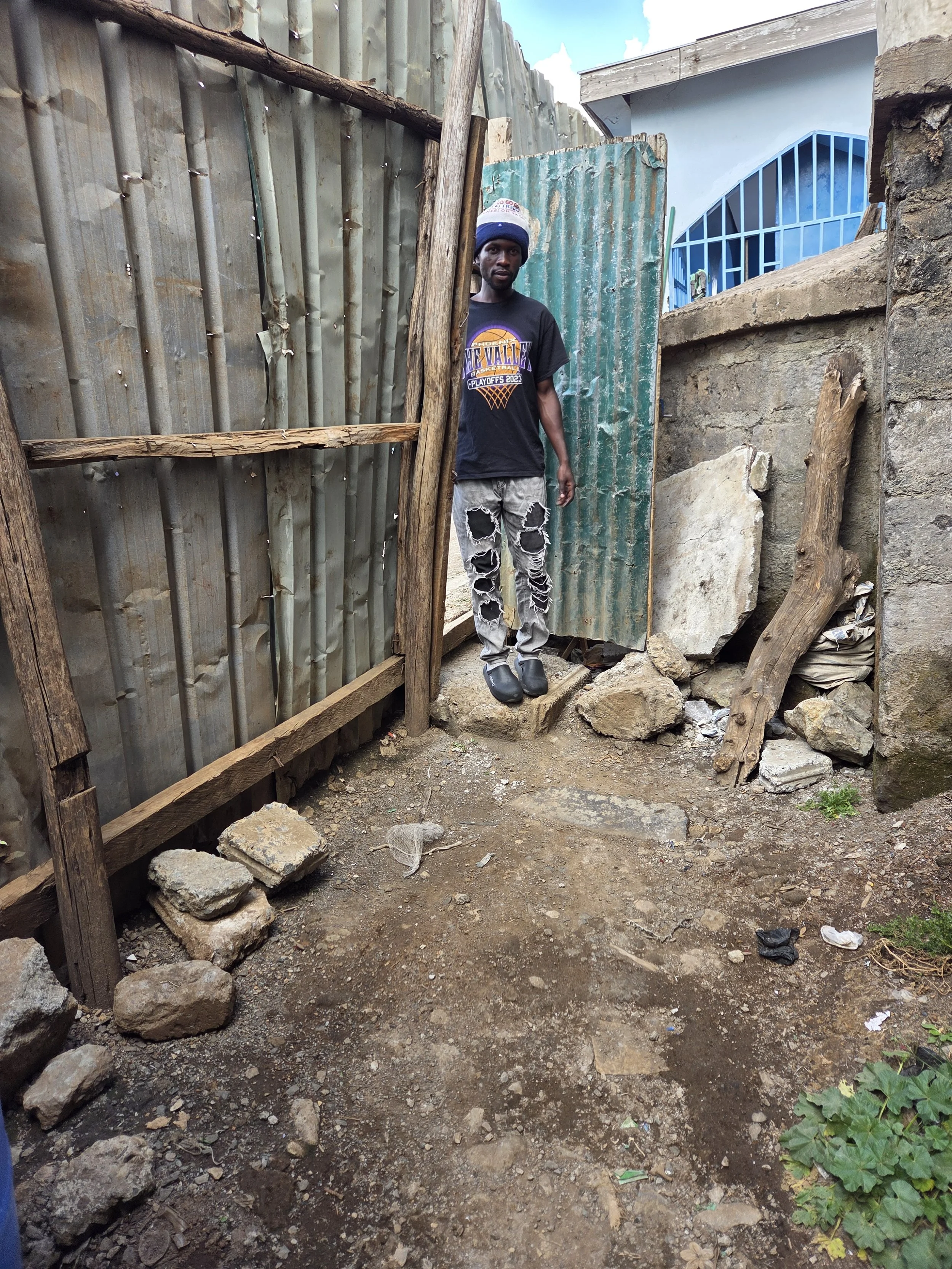
After that encounter, we went in another door and up a set of dark stairs to the room.
Our classroom was in a mosque. The organizers had struggled to find a new spot after a last-minute cancellation, and this was their solution.
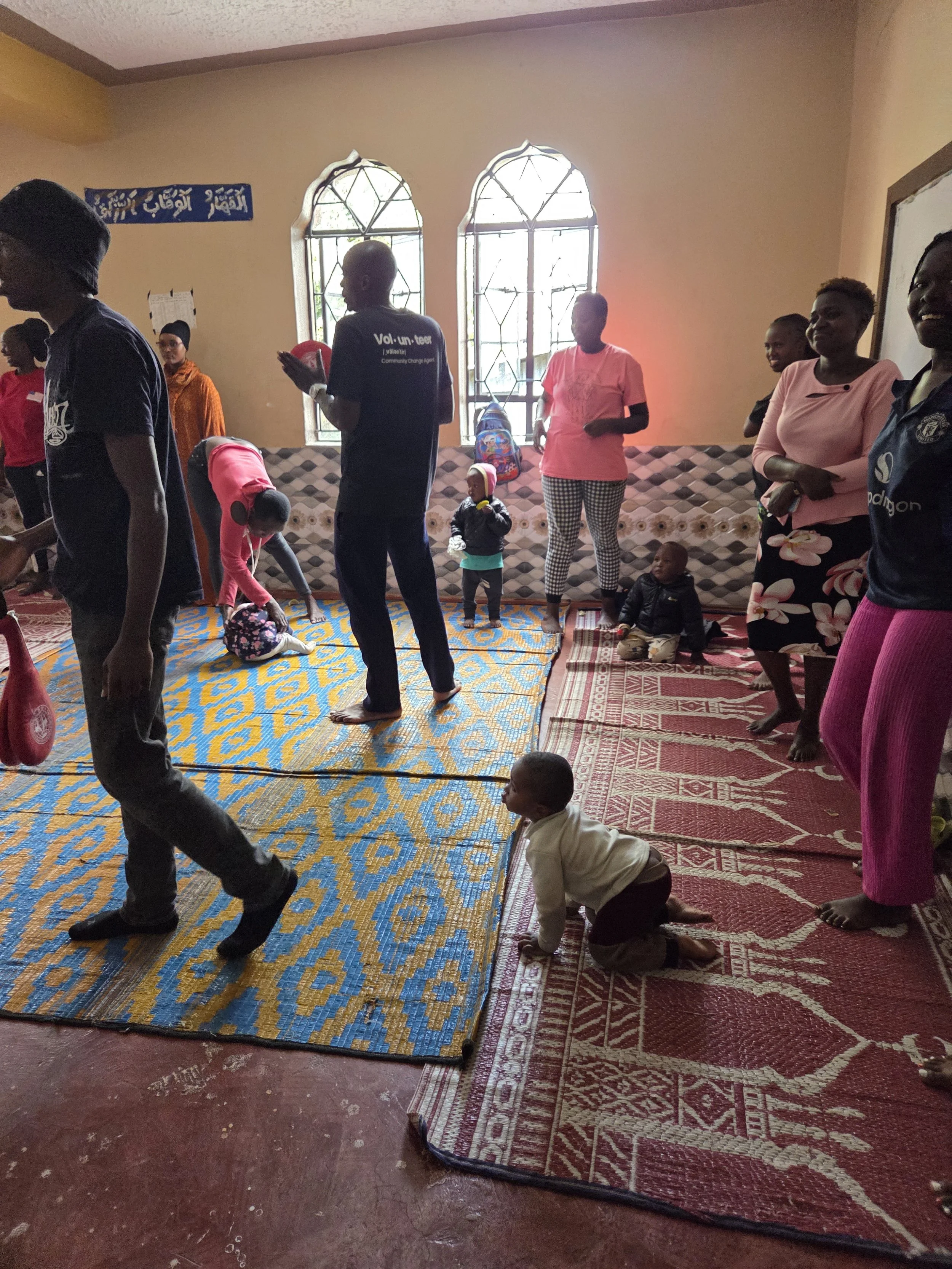
There were about 35 women and a number of babies and toddlers. We had a good class. Most of the women here work hard at really doing the techniques right. They can see the value in what we’re teaching.
We had brought nearly 100 kg of corn flour to give out to the women. We’d left it in the van. So several young women were leading us back to the chief’s office to fetch it.
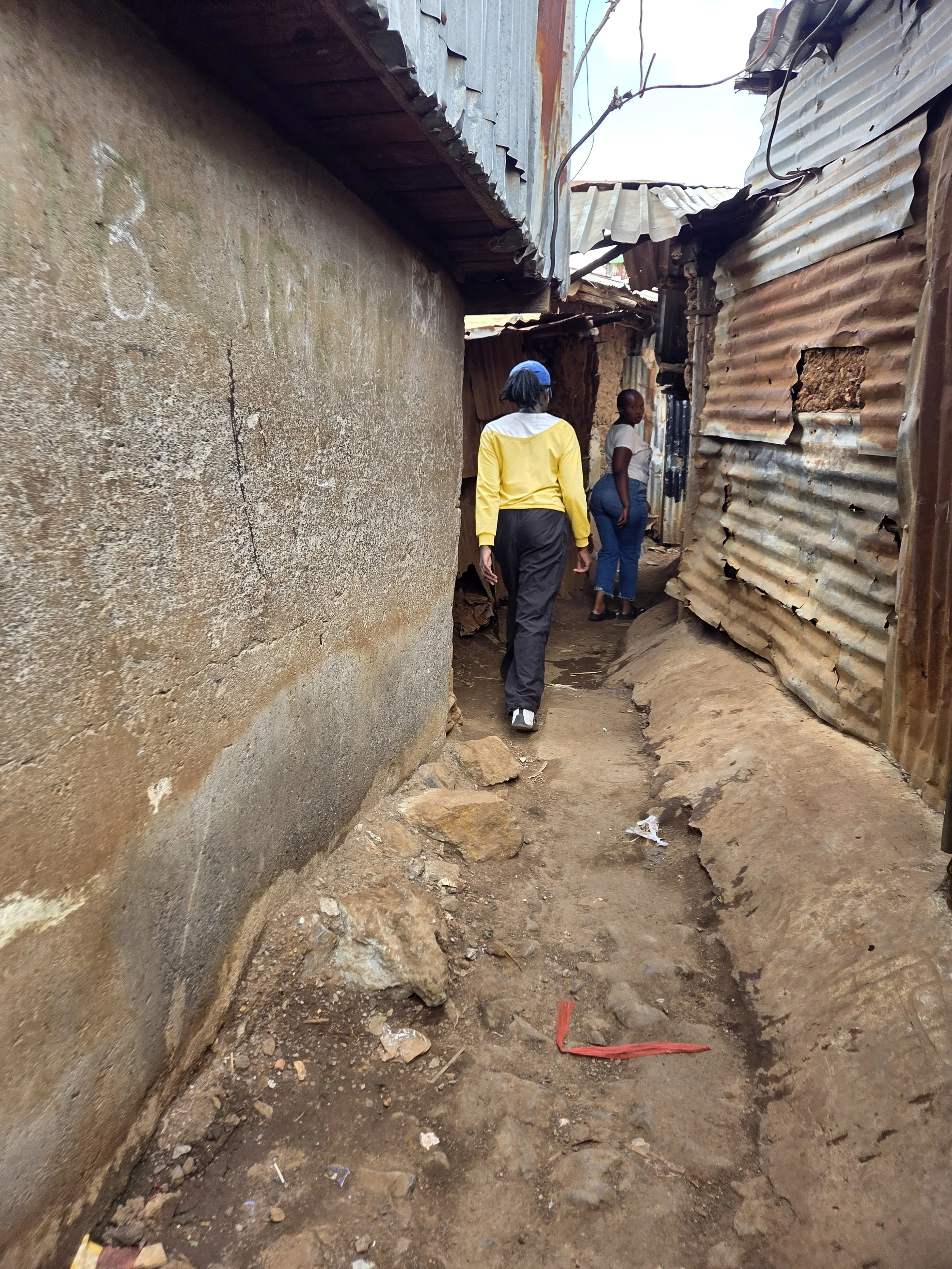
As we expected, there are shortcuts all through the area. Our guide took us through some of these. As I could see when no one but our team was in sight in front or behind, I grabbed some pictures.
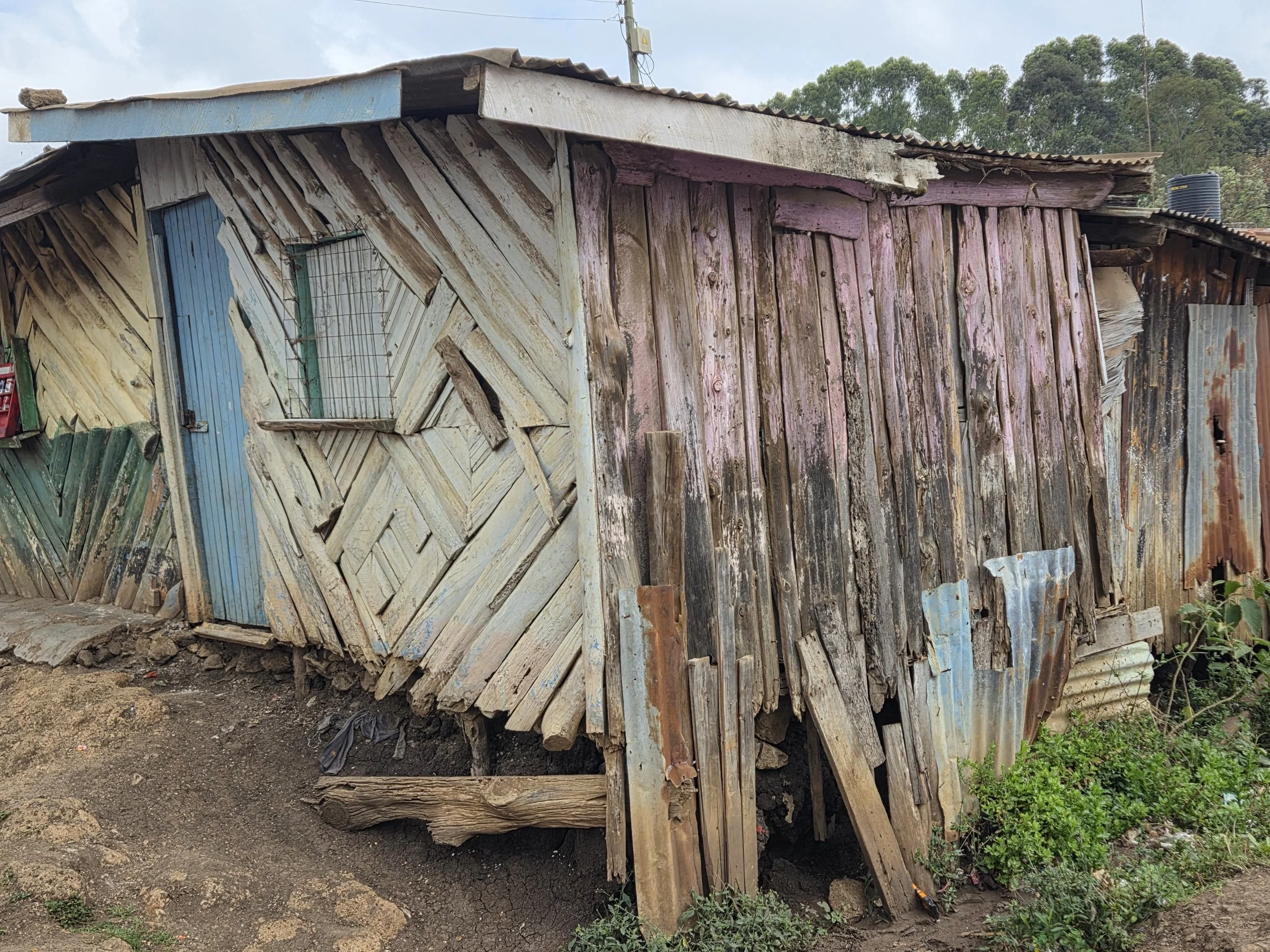
Along the way, we passed people either walking or just living their lives. We passed a mother with several kids sitting outside their door. One kid was sitting on a training toilet.
Several of the people were calling to me for various reasons. Stopping to chat wasn’t on my bingo card.
We passed one small boy sitting and playing with broken glass. He had collected some big pieces and was smashing them together to make little pieces.
We came out of the shortcut into a large dirt plaza—at the wrong chief’s office. Is a shortcut to the wrong place still a shortcut?
We continued on to the right place, which wasn’t too much farther.
We gave the flour (unga) to the women with us. They hired a motorbike to take it to the mosque, and we parted company.
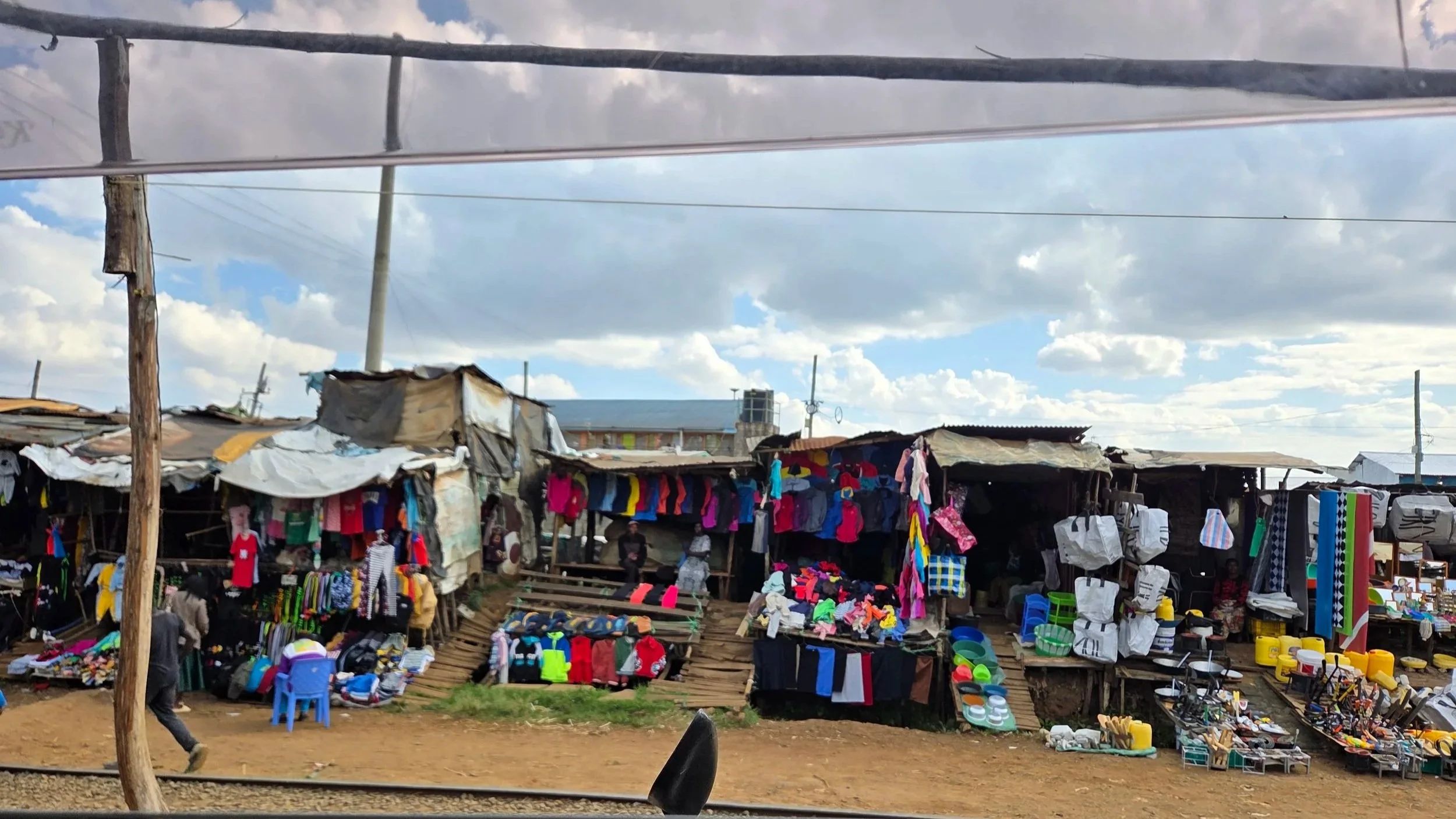
I snapped a street scene on the way out. After checking to make sure no one was nearby outside and holding the phone back from the window.
Our other classes were far less adventurous.
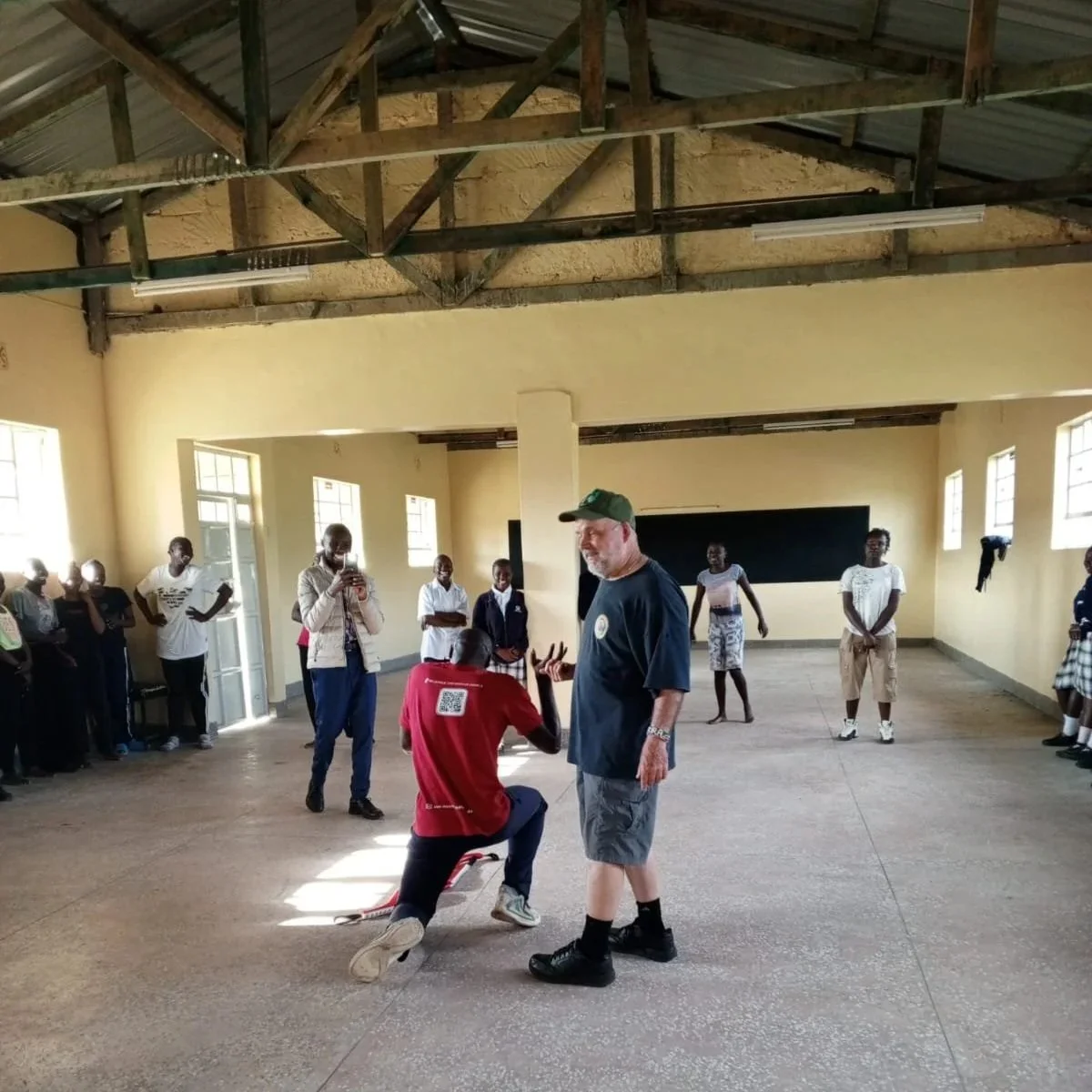
Below, we are teaching at Embulbul Secondary school. Cedric had arranged a class with a group of about 30 girls, including a couple of teachers.
Part of Tuko Pamoja’s self-defense team, Cedric is in the local Rotary Club and also works with the Kenya Red Cross. He uses these connections to set up classes.
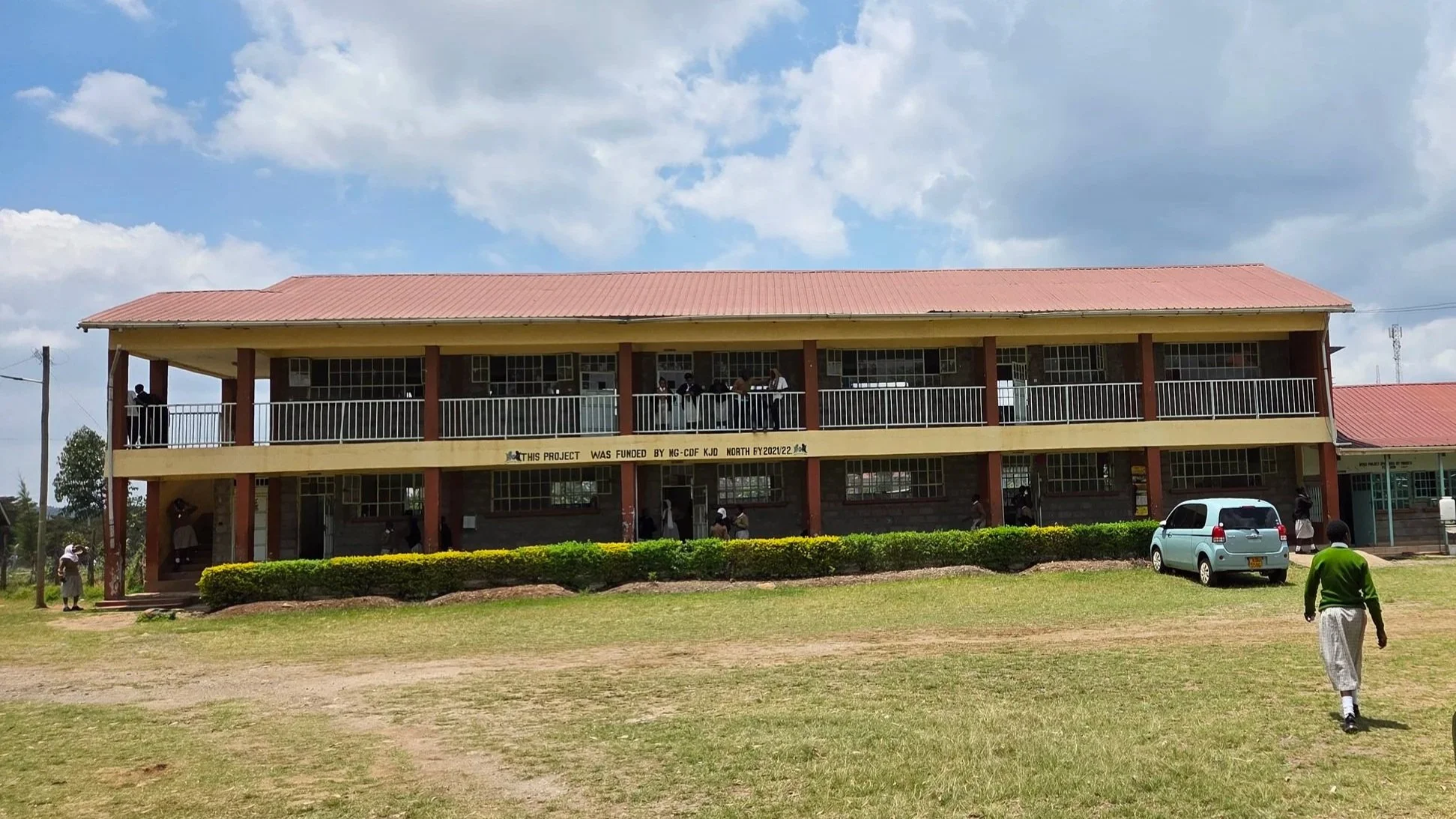
Our other self-defense team leader Wangari and I will go back and forth as to who leads each class. It depends on the English knowledge of the attendees. For more urban schools, English is pretty well known, especially at secondary schools. For adult women, and more rural schools, we often need to teach in Kiswahili, which I don’t speak.
Wangari is an excellent teacher, and I think the material often comes across better from a 25-year-old local woman than some old dude from the US.
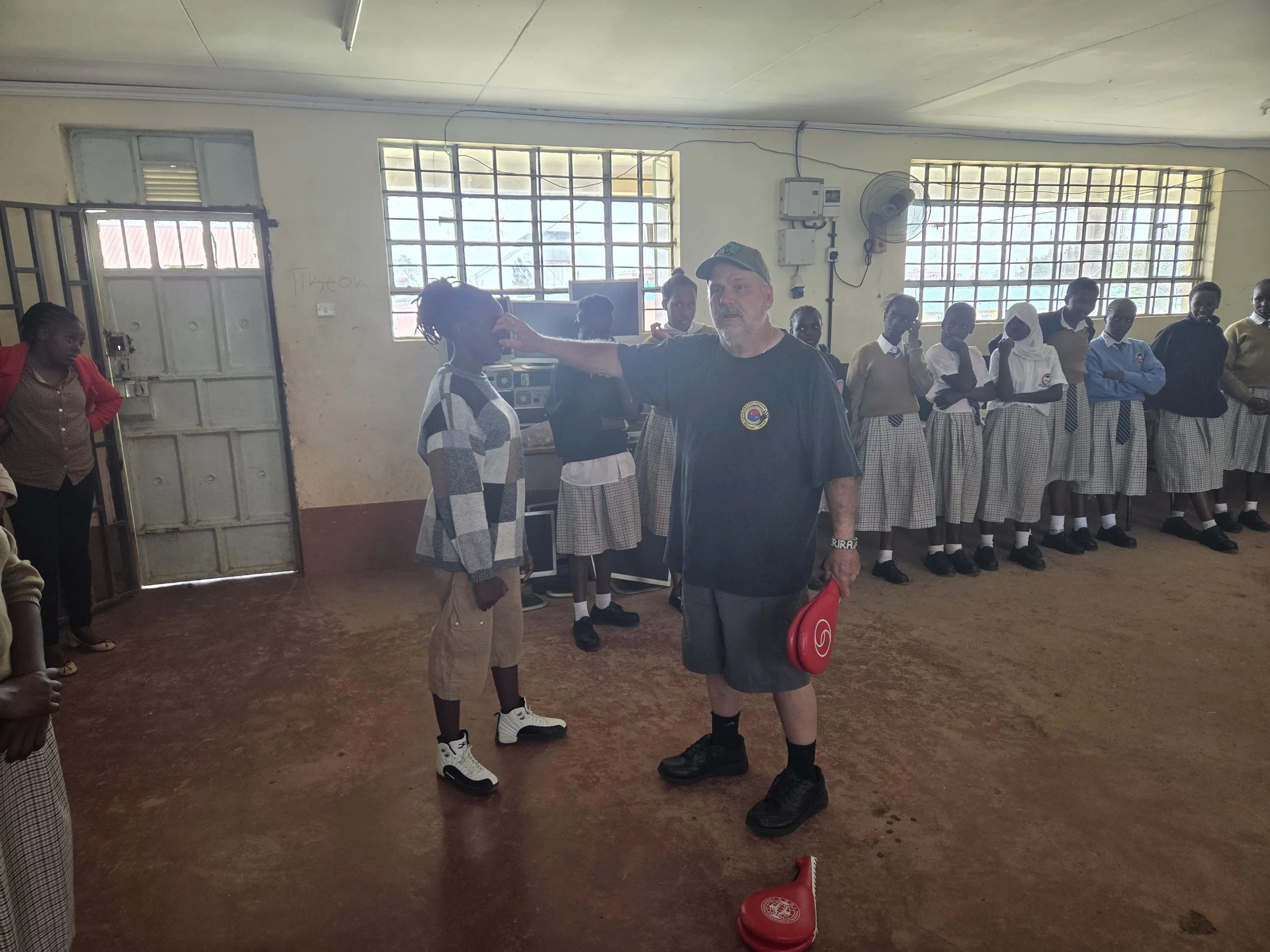
Below, I’m demonstrating an eye-gouge technique on Wangari. It’s very predictable. When we get to the exact part shown in the picture, we stop the narration. The girls will gasp and hiss at the thought of performing the eye gouge. We have to wait for the quiet after this reaction before the explanation can continue.
We also visited Joy Yard school. We have one sponsored girl there, Pauline (see Getting Started post from this trip). She is an orphan. She lives with her aunt, Lucy, who is the head teacher of the school.
On the way there, we made a wrong turn. We wound up in a clearly wrong area and had to get directions.
Below, Cedric works with one of the girls.
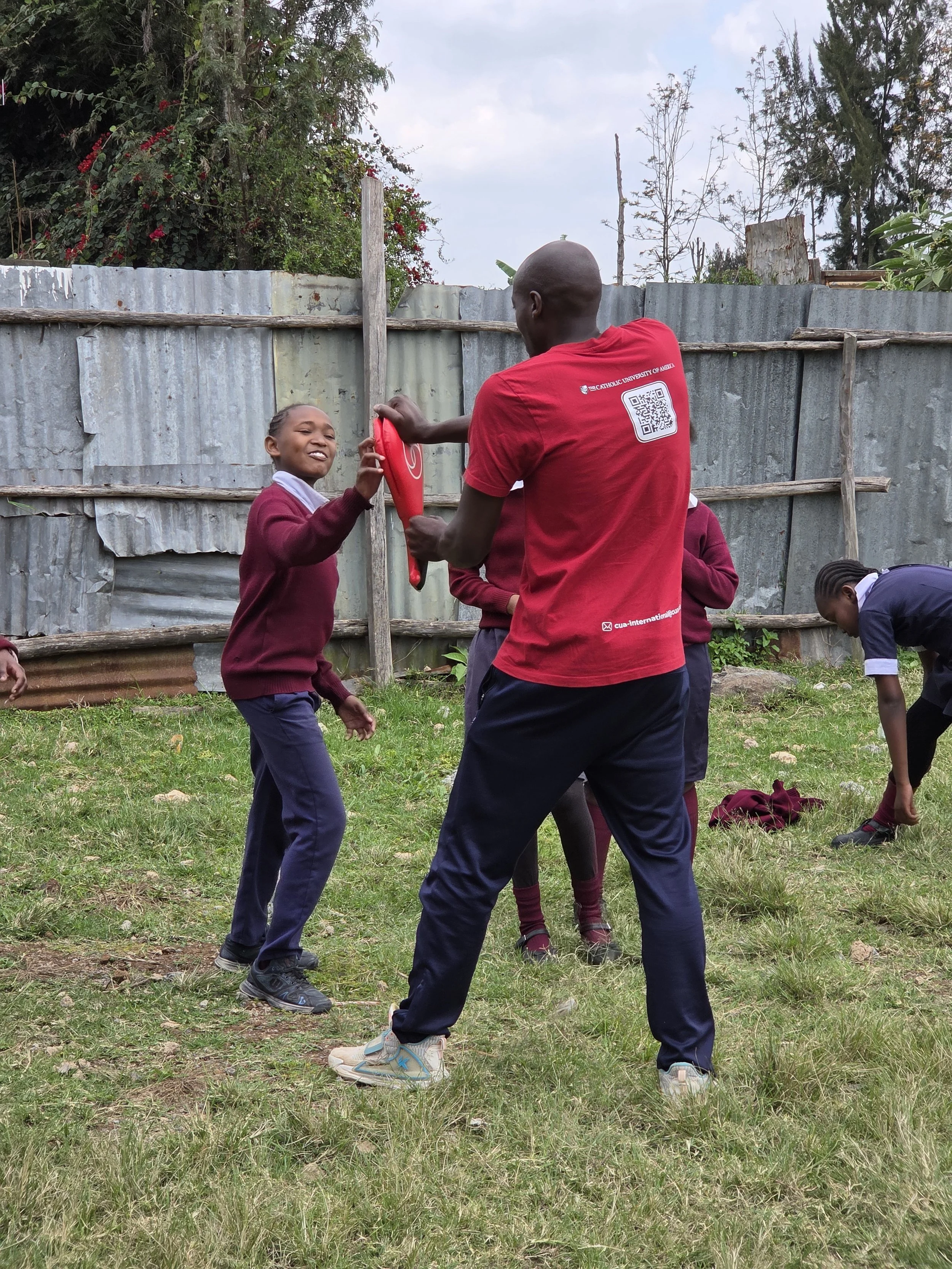
We also visited a Kenya Red Cross office in Kajiado. This is about an hour and a half from where we stay.
The office is right across the street from Maasai Polytechnic University. Since only a few women showed up from the Red Cross, Cedric recruited some from the university. We had about 19 women and 6 trainers, so we covered a lot of ground fast.
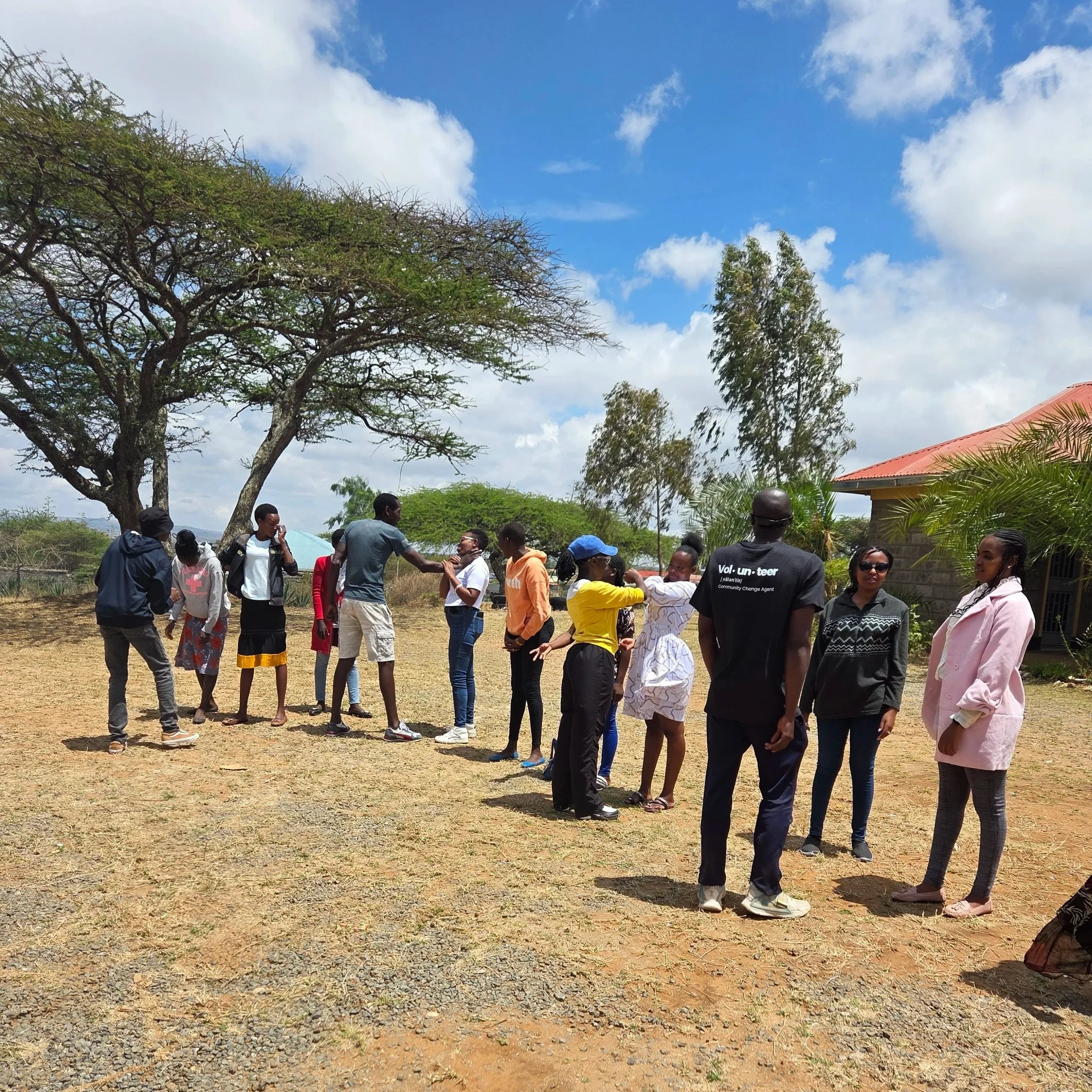
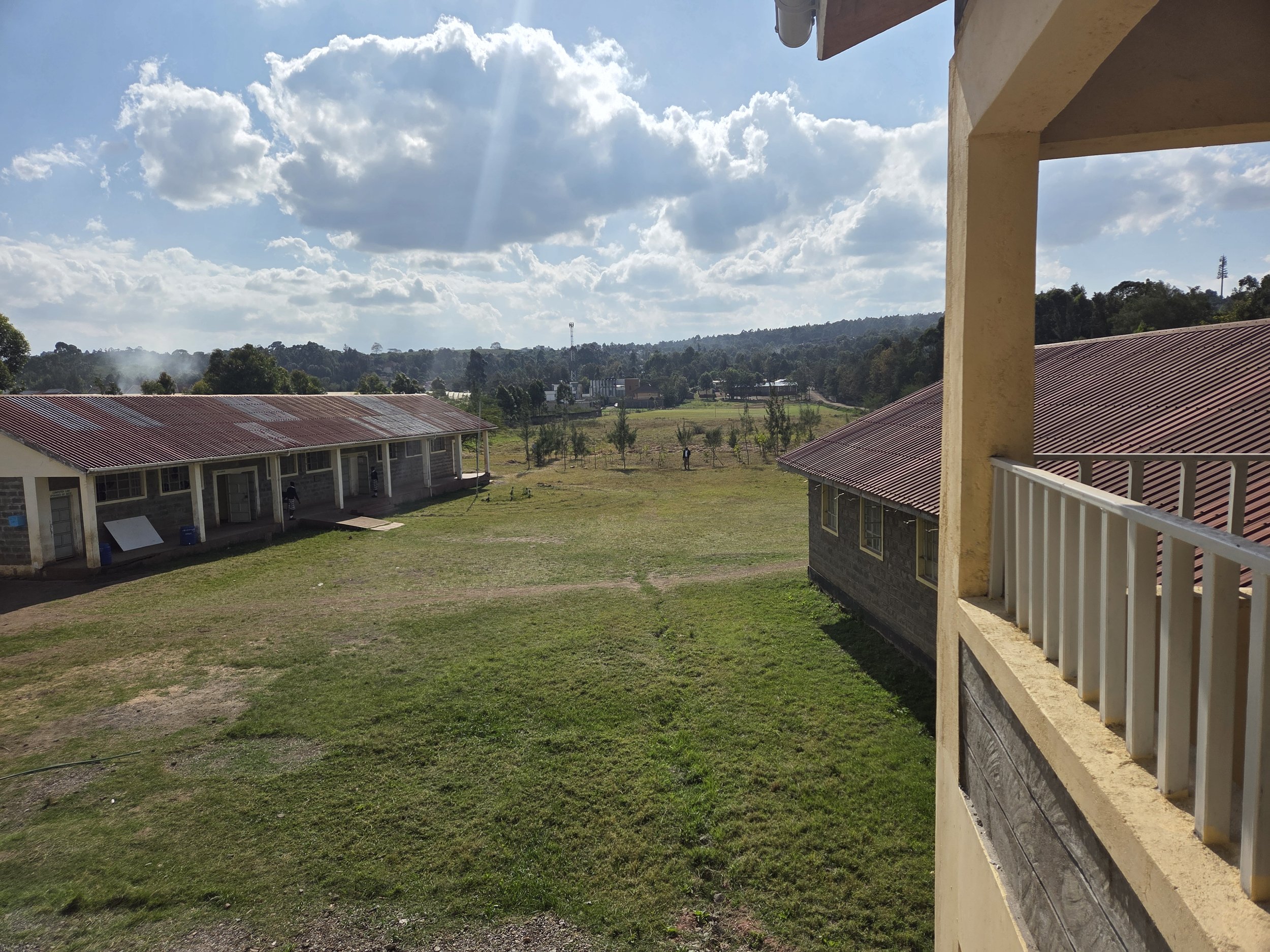
The fifth class was at Kerarapon Secondary school in Karen. This was another class arranged through Cedric’s Rotary Club connections.
There were 20 girls in the original group. When we got there, the group mentor asked if another 20 interested girls could attend. Of course we said yes.
Right before the class, the mentor (who is male) and two other men we weren’t introduced to wanted to watch. We have a firm policy of not teaching the class to men or boys, including not letting them watch. The mentor told me the other men wanted to watch. I said it wasn’t up to me. It’s up to the girls.
When the class started, I explained we don’t let men watch unless they are approved by the girls. I asked if they were OK with the men watching. A loud roar of “NO!” followed. The men then left.
The mentor came back in a minute and said he would be more comfortable if someone from the school staff were there. We held a second vote for him alone, and he passed.
Below, you can see the mentor videoing the move we are demonstrating. I encourage video and photography in the classes, so they can show the moves to other girls or use it to refresh. In this case, the mentor was also taking the class so he could work with the girls himself on the skills.