Kimuka and Olmaroroi
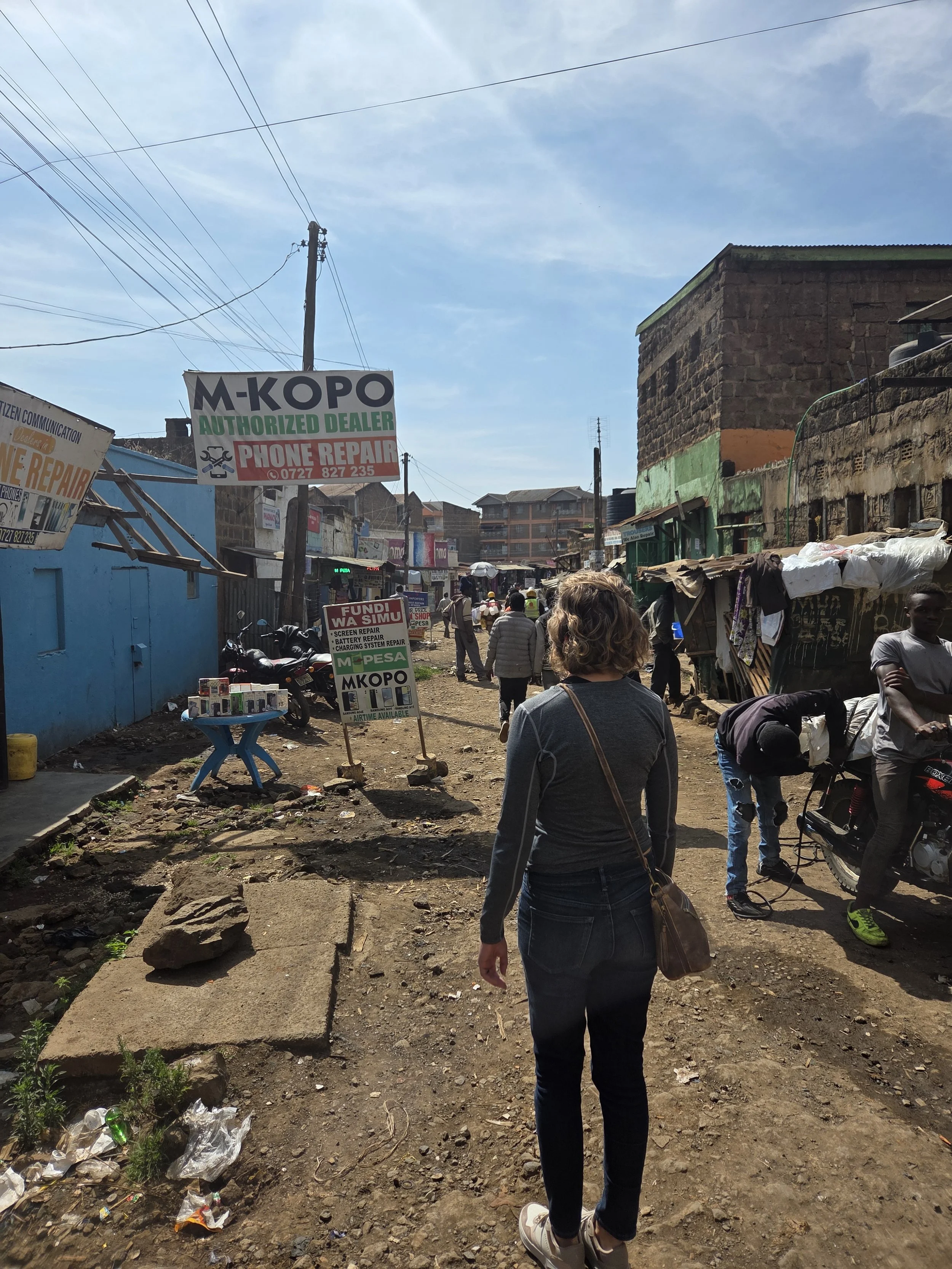
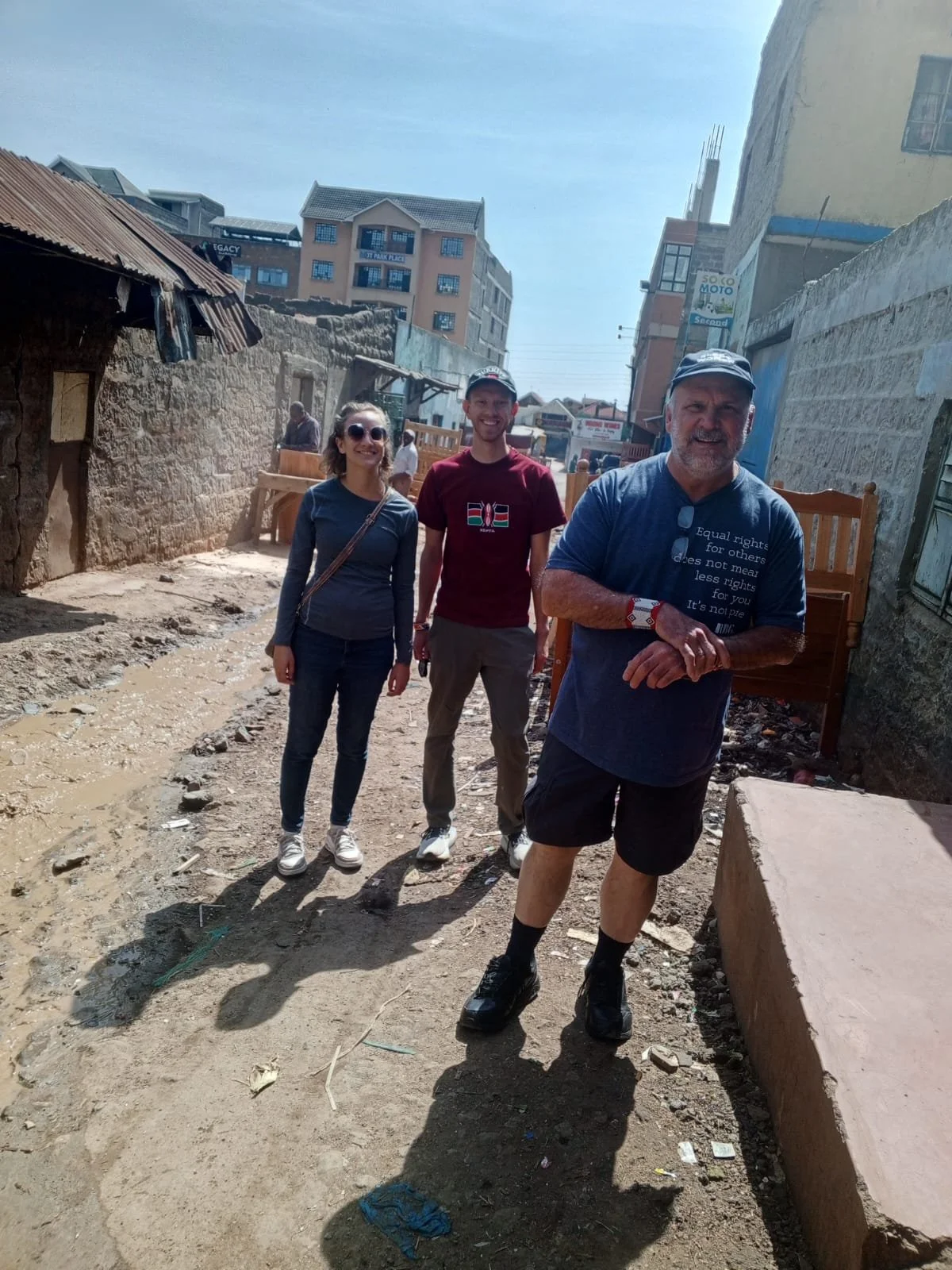
The streets of Ngong.
Today we had more school visits and porridge deliveries planned. The first step is to get the flour and sugar. We had gotten away a little early, so we had time for walking around a bit. Jaime and I jumped out at the bank, then took the road less traveled to meet up with the rest of the team at the grain mill.
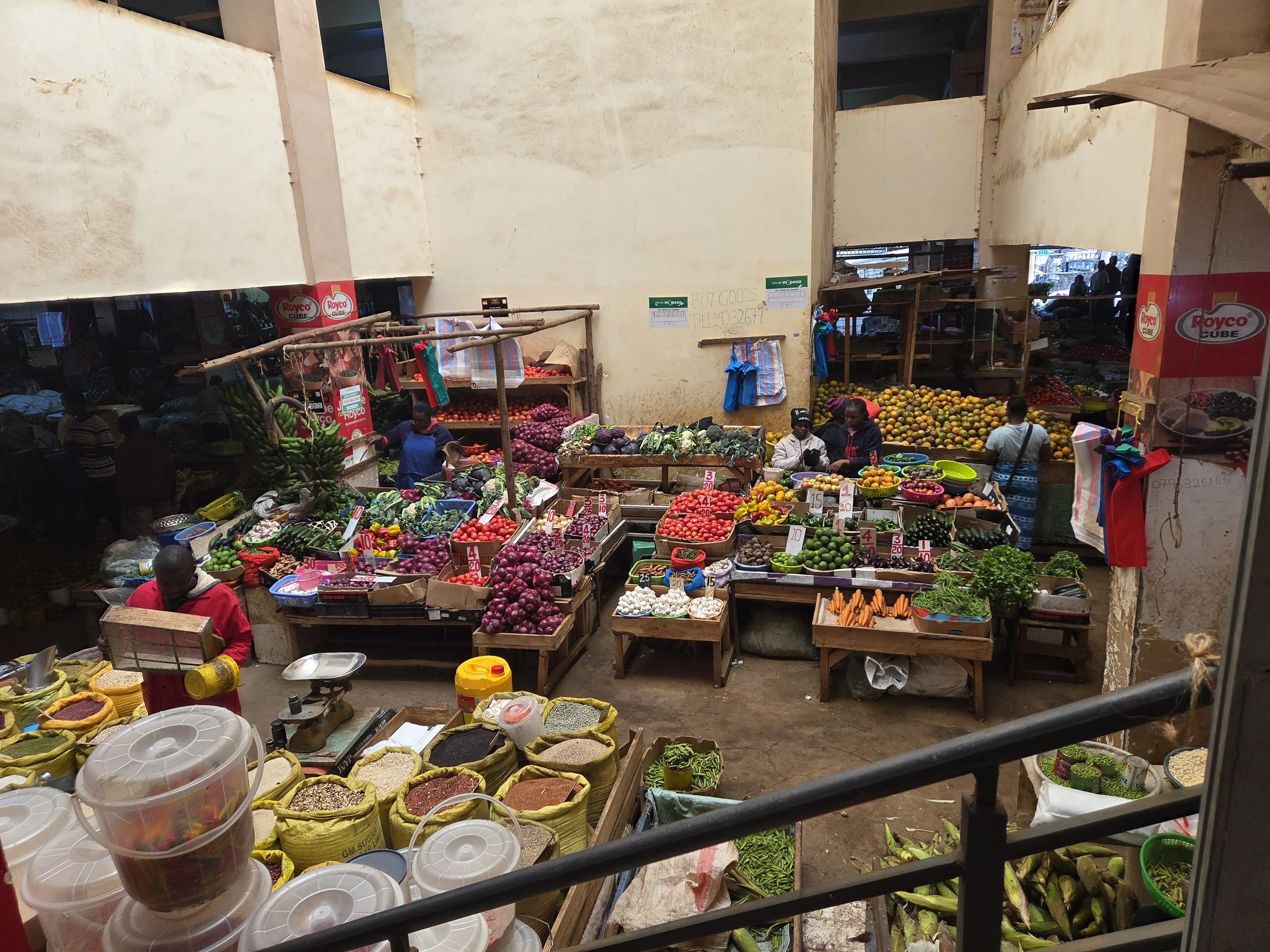
We swung through the Ngong Market. There are two large floors of stands selling food products, mostly fresh. There’s no refrigeration and water is carried in by the 10-gallon container. But the food still often looks good. The colors and activity are enticing.
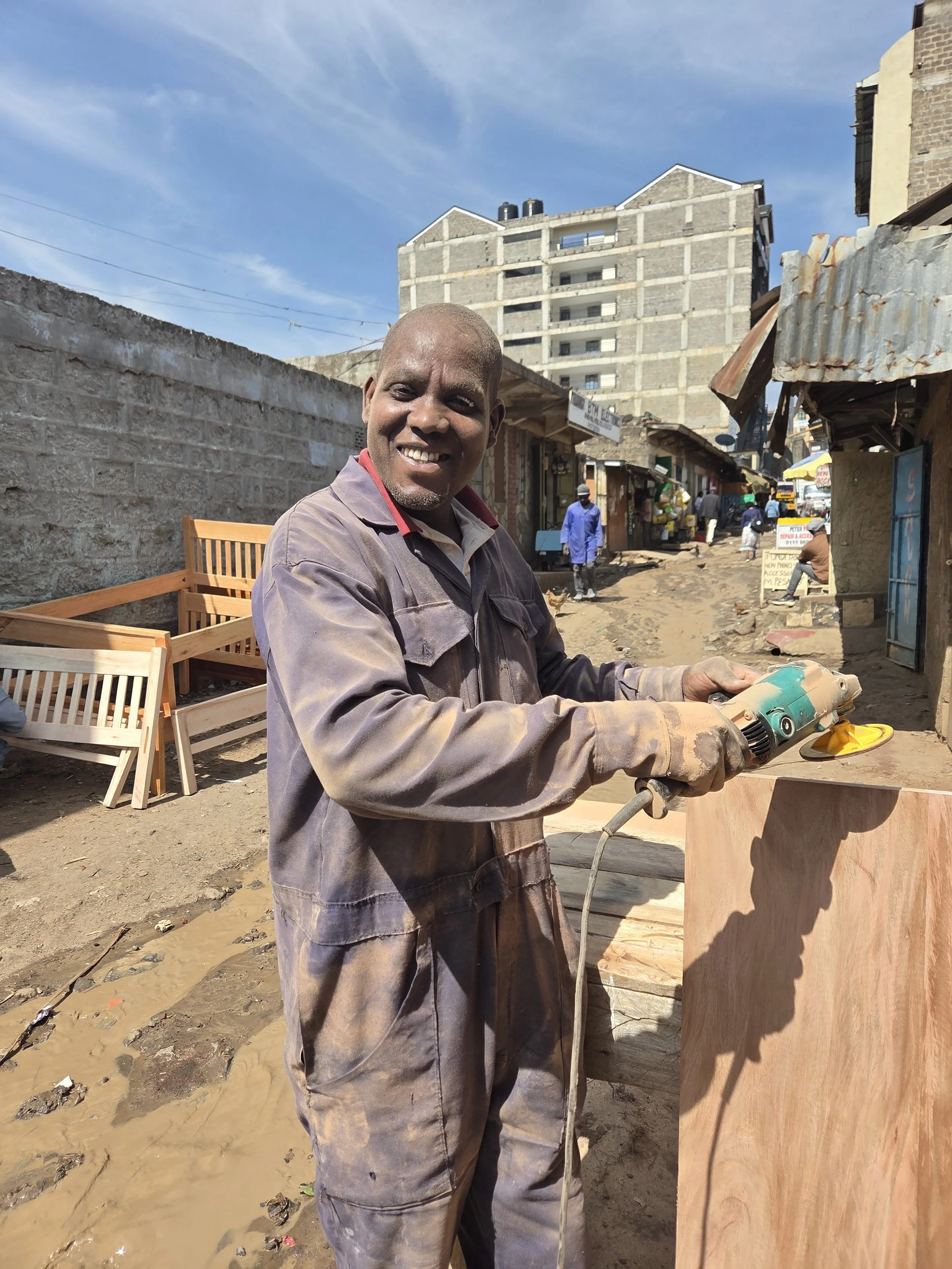
We cut through some more back pathways. This included a pass by the furniture maker Tuko Pamoja has used to build the furniture for our safe houses and post-secondary kids’ housing.
We noted the carpenter’s lack of eye protection and face mask. But he had fun posing for the picture. And a face mask would have hidden his great smile.
We made our way back to the grain mill. Virginia’s brother Nicolas was there with his van and we loaded up.
Our first school visit was Kimuka. This school was the second porridge program that we established. We were referred there by the teachers at Osupuko. The two schools had traded food supplies to help each other out when neither had much to share or a regular supply. So it made sense for Osupuko to refer us there.
This is a good school. The head teacher, Beatrice, is really working hard to improve the facility and the education. We talked a bit about the school test scores. They are steadily improving, and at a pretty rapid rate. Beatrice has hired a math teacher to come in and work with the kids, which has helped.
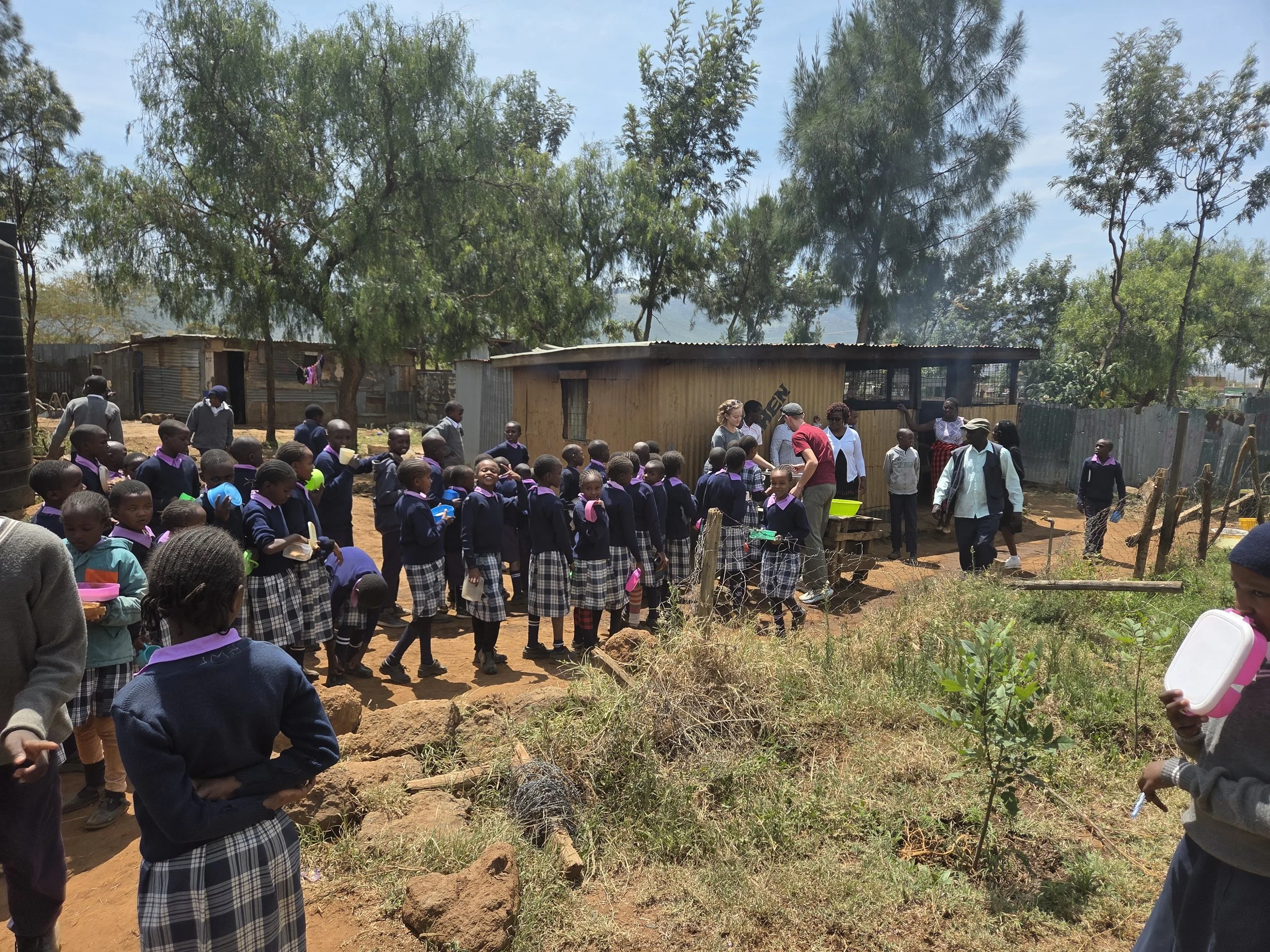
We were in time for Nathan and Jaime to serve porridge. The building immediately behind them is the kitchen. Behind that, to the right, is a new garden area.
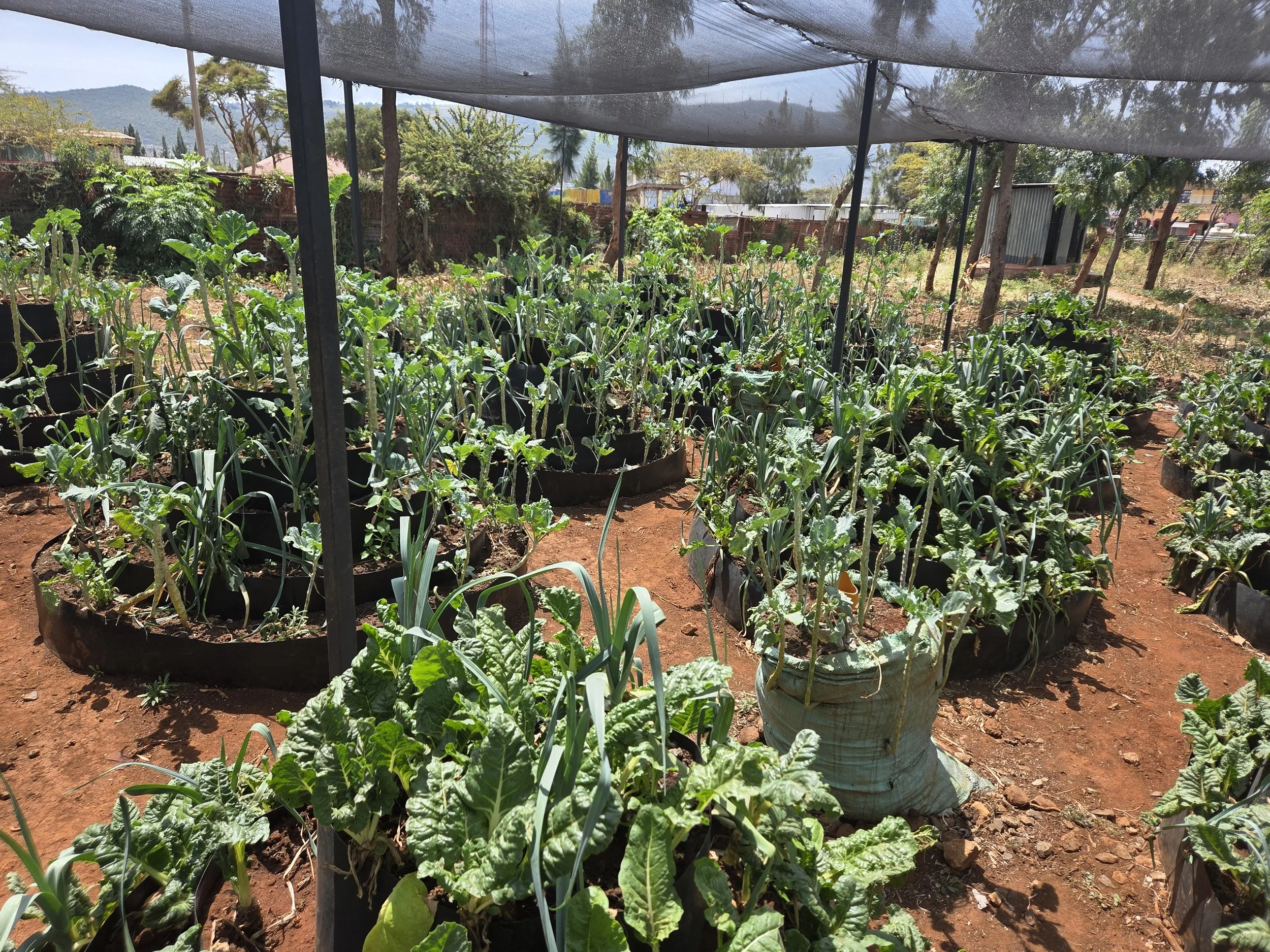
The school has started raising chickens. They started with a dozen or so, and most died due to illness. They are planning to replace them. They also have planted a few different garden areas, including the vertical gardens below.
The vertical gardens make better use of the limited water supply than traditional planting. But they have traditional gardens too.
After porridge, we got to meet with our 7 sponsored kids at the school.
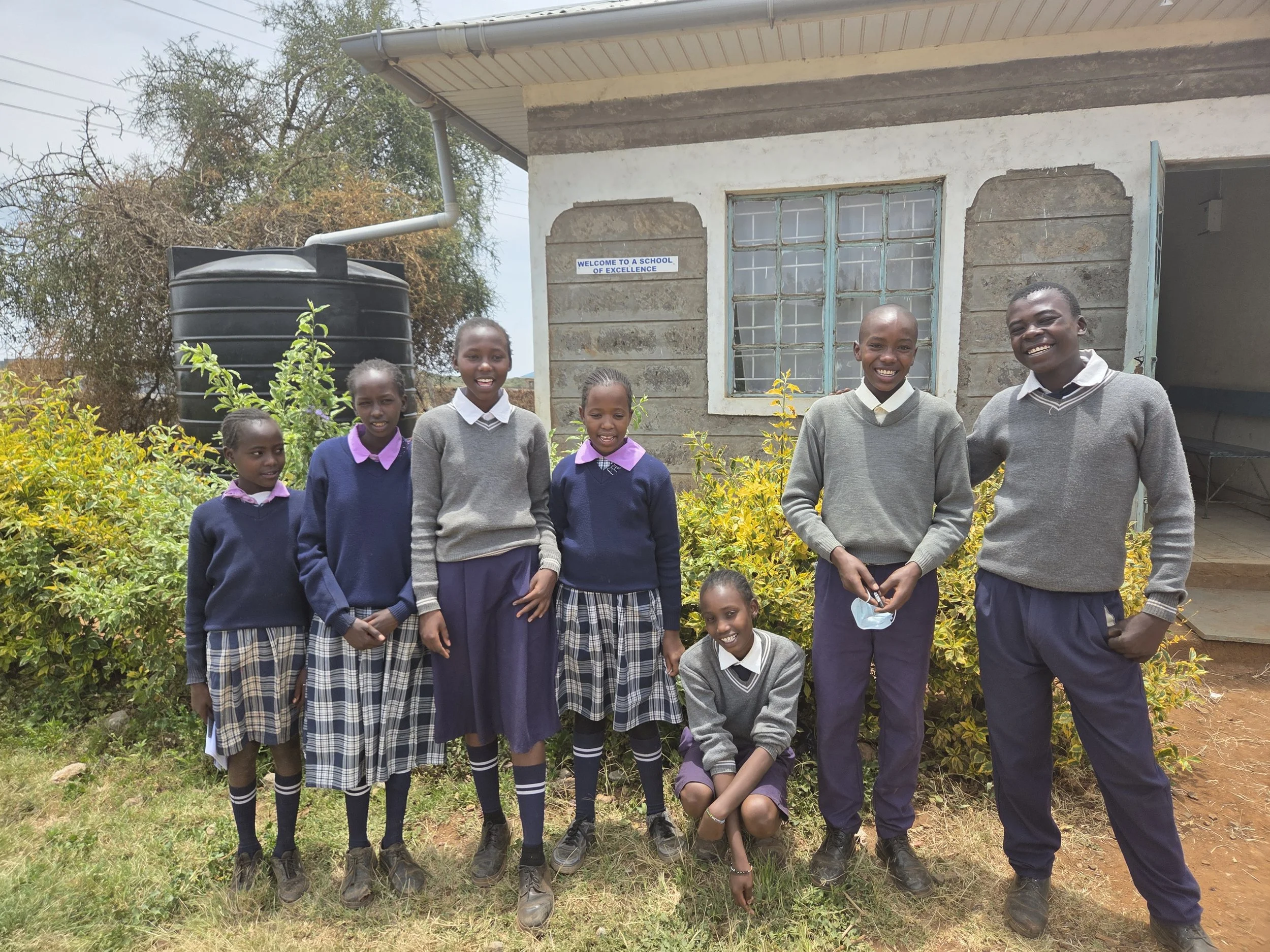
L to R: Lillian, Jackline, Sylvia, Precious Pereruan, Monicah, Gabriel, and Francis Mutuka
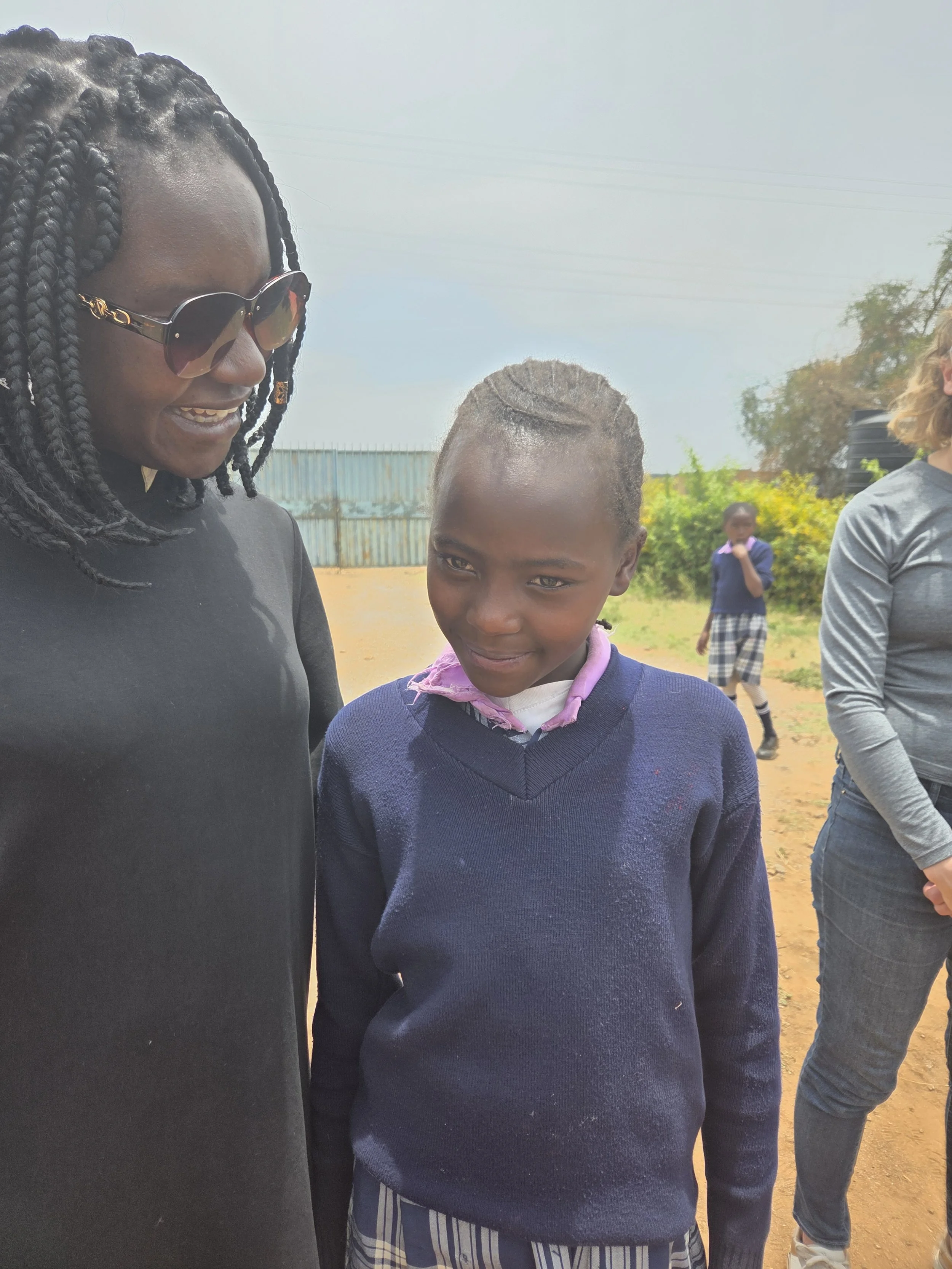
Lillian with Wangari (left)
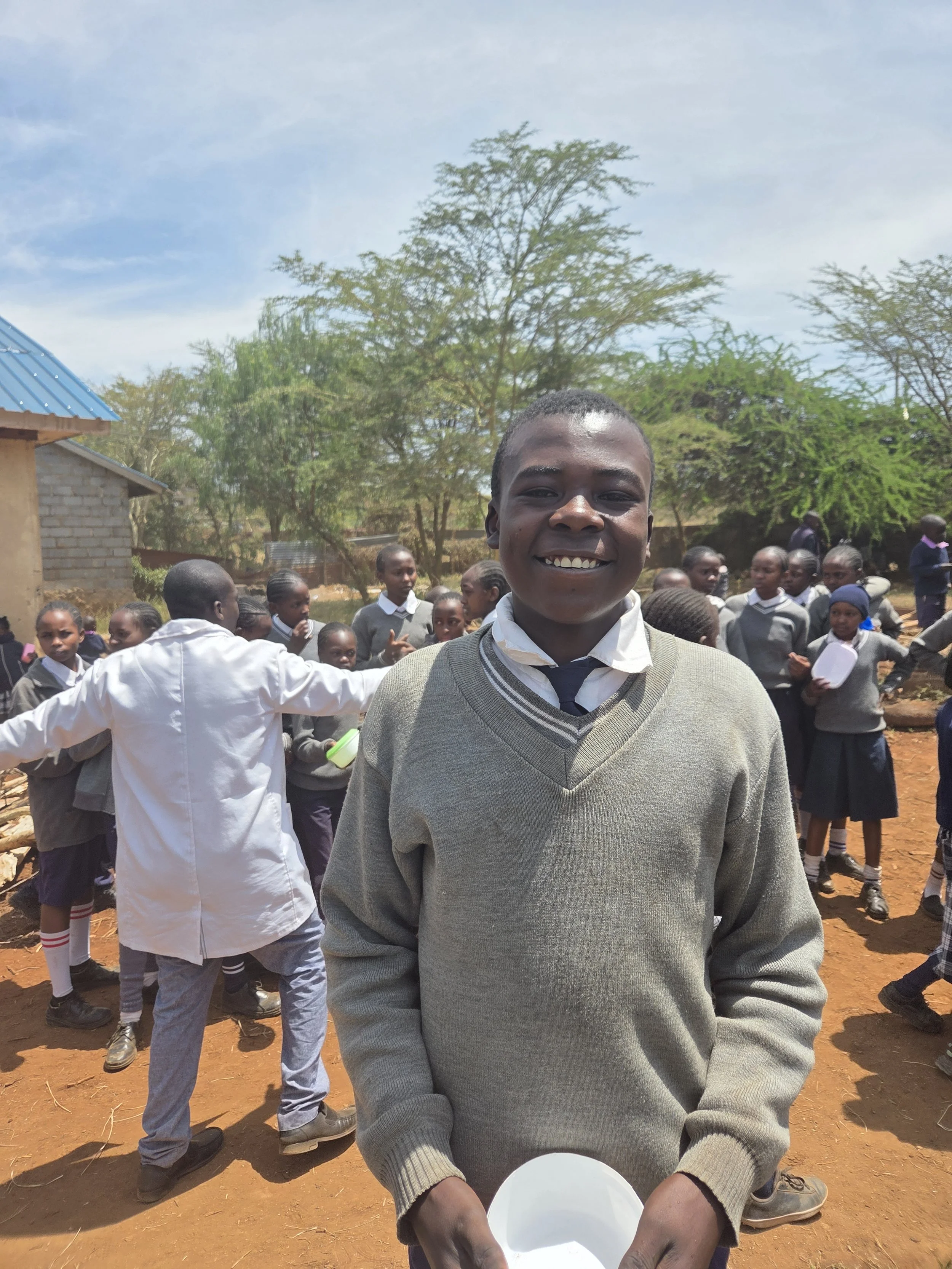
Francis
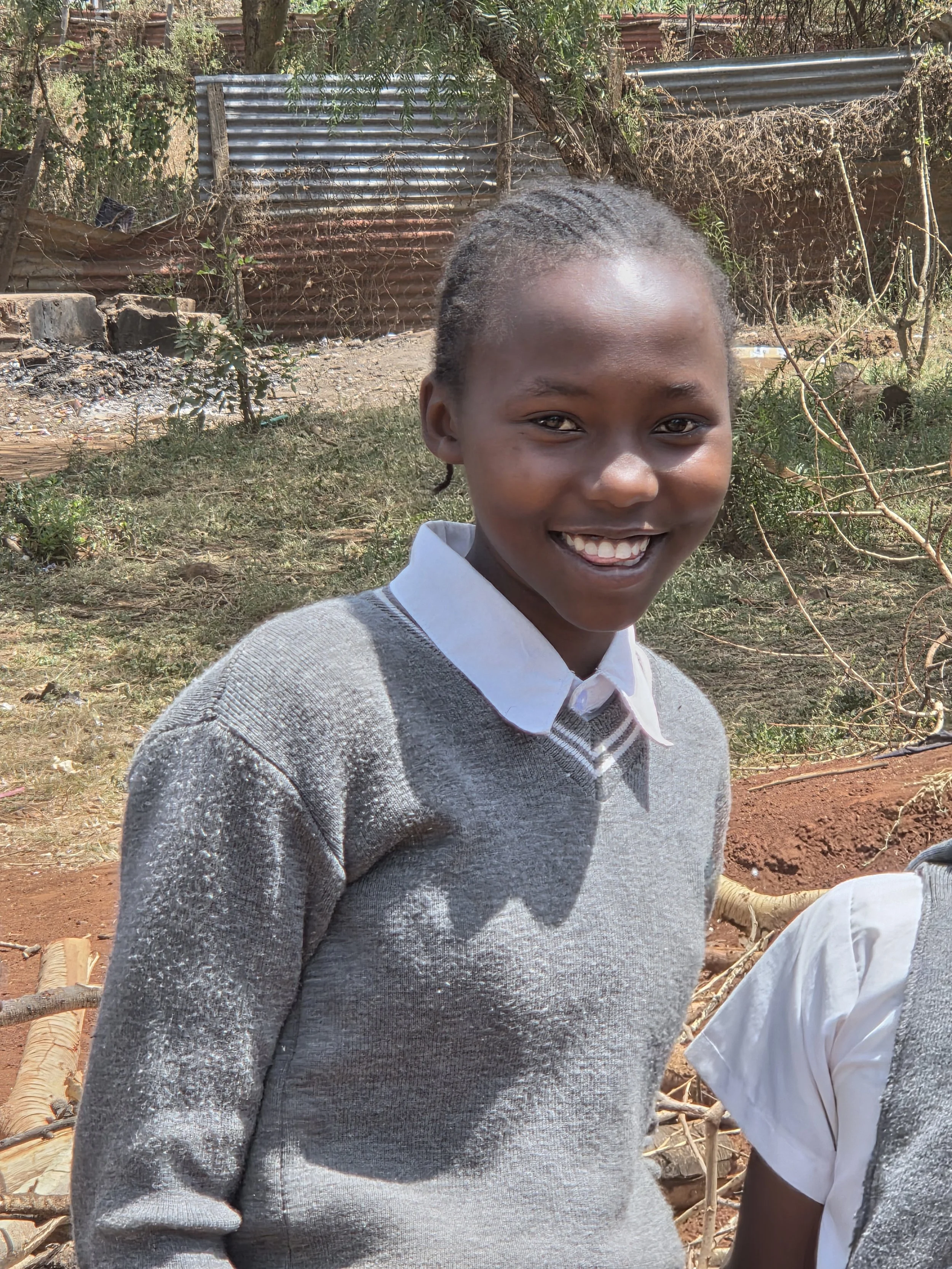
Sylvia
From Kimuka, we headed farther out into Maasailand to Olmaroroi Primary School. We recently started providing the porridge at this school. It is small, but growing.
Below, the obligatory presentation of the porridge, with Jaime, Wangari, Nathan, and me in the pic.
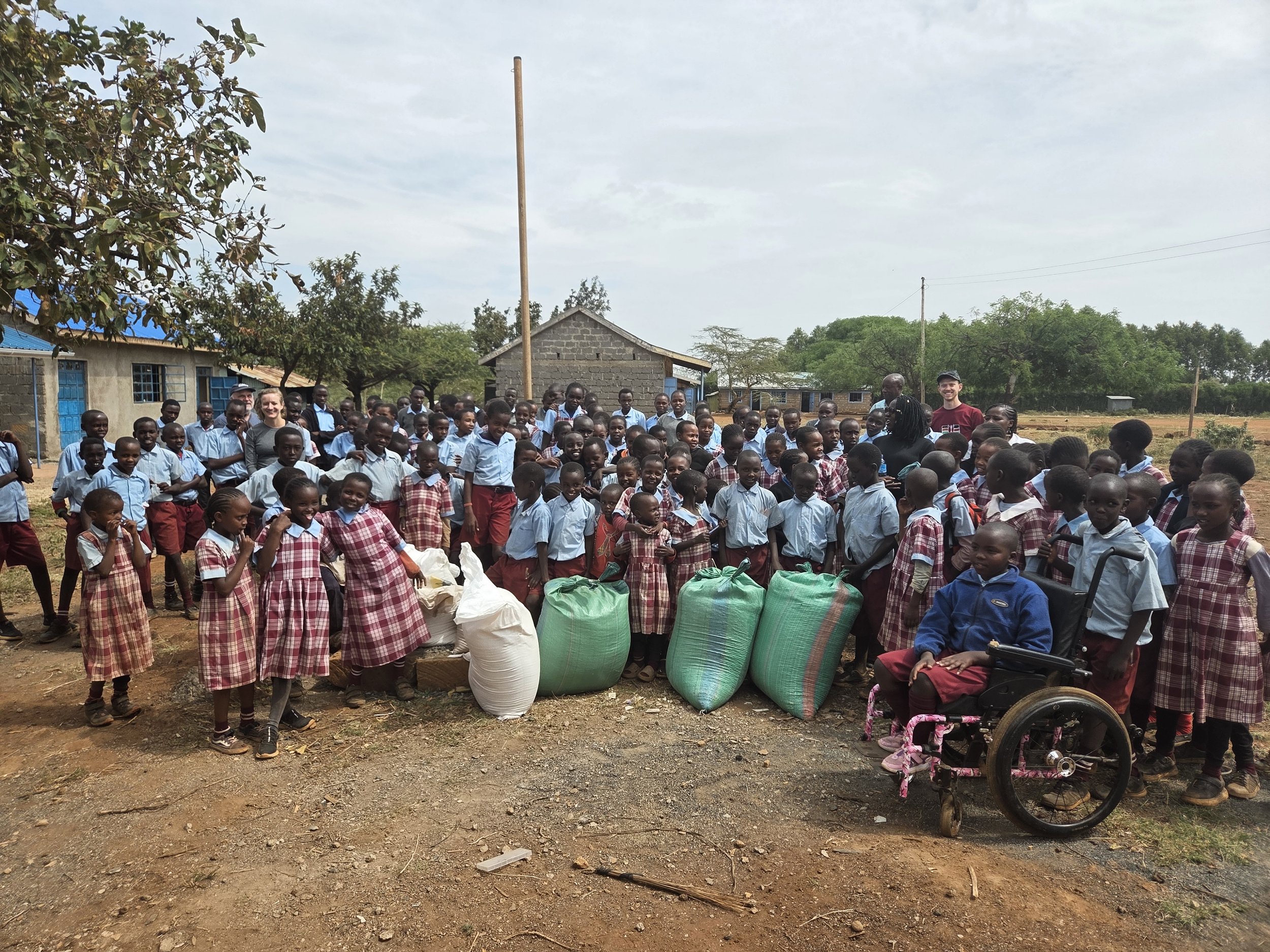
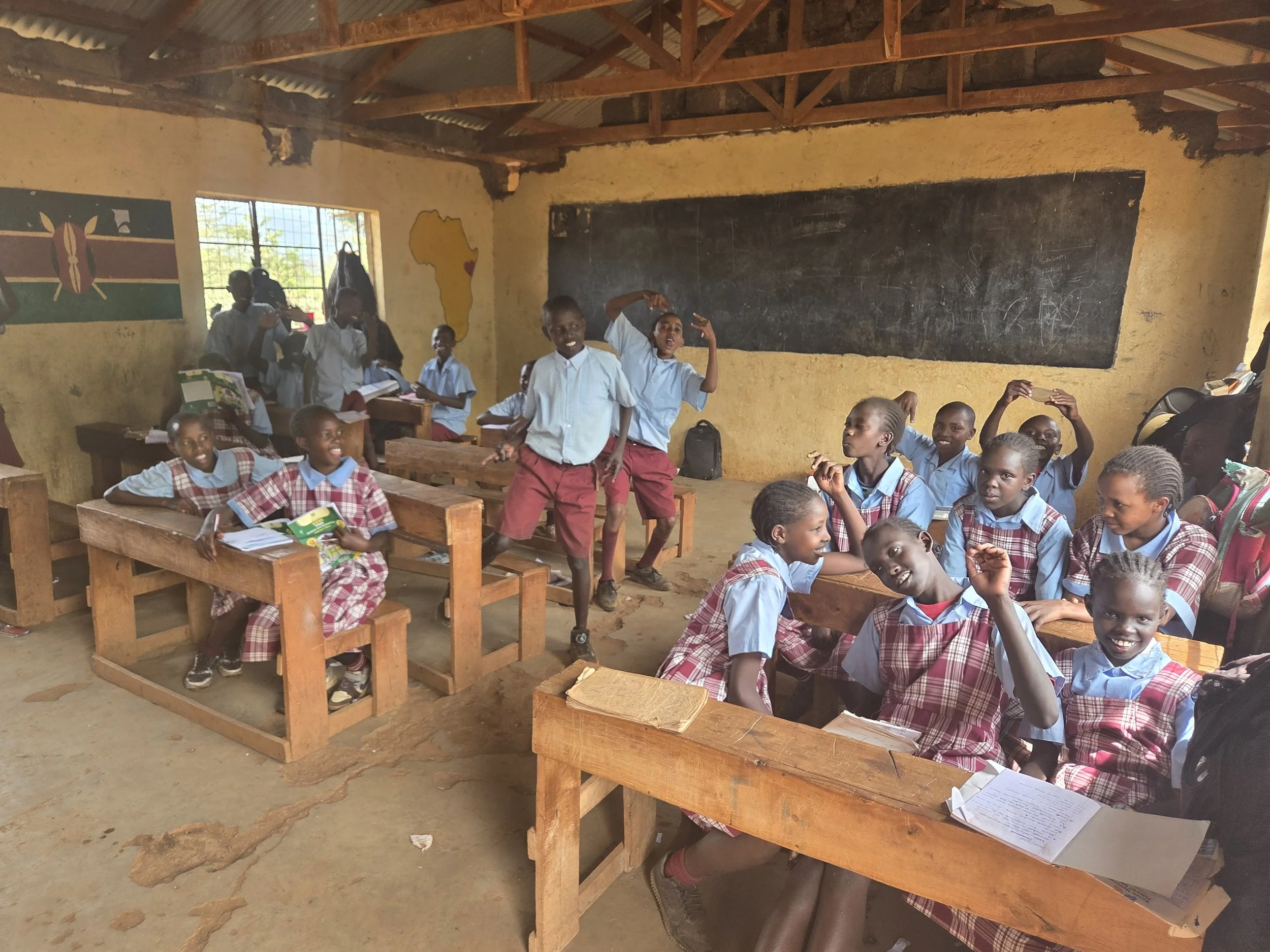
We got a tour of the school. Below is one of the classrooms. The kids were having fun and mugging for the picture. I like the kid in the back right, holding up a piece of cardboard to “take a picture” of me too. Every school needs a photographer.
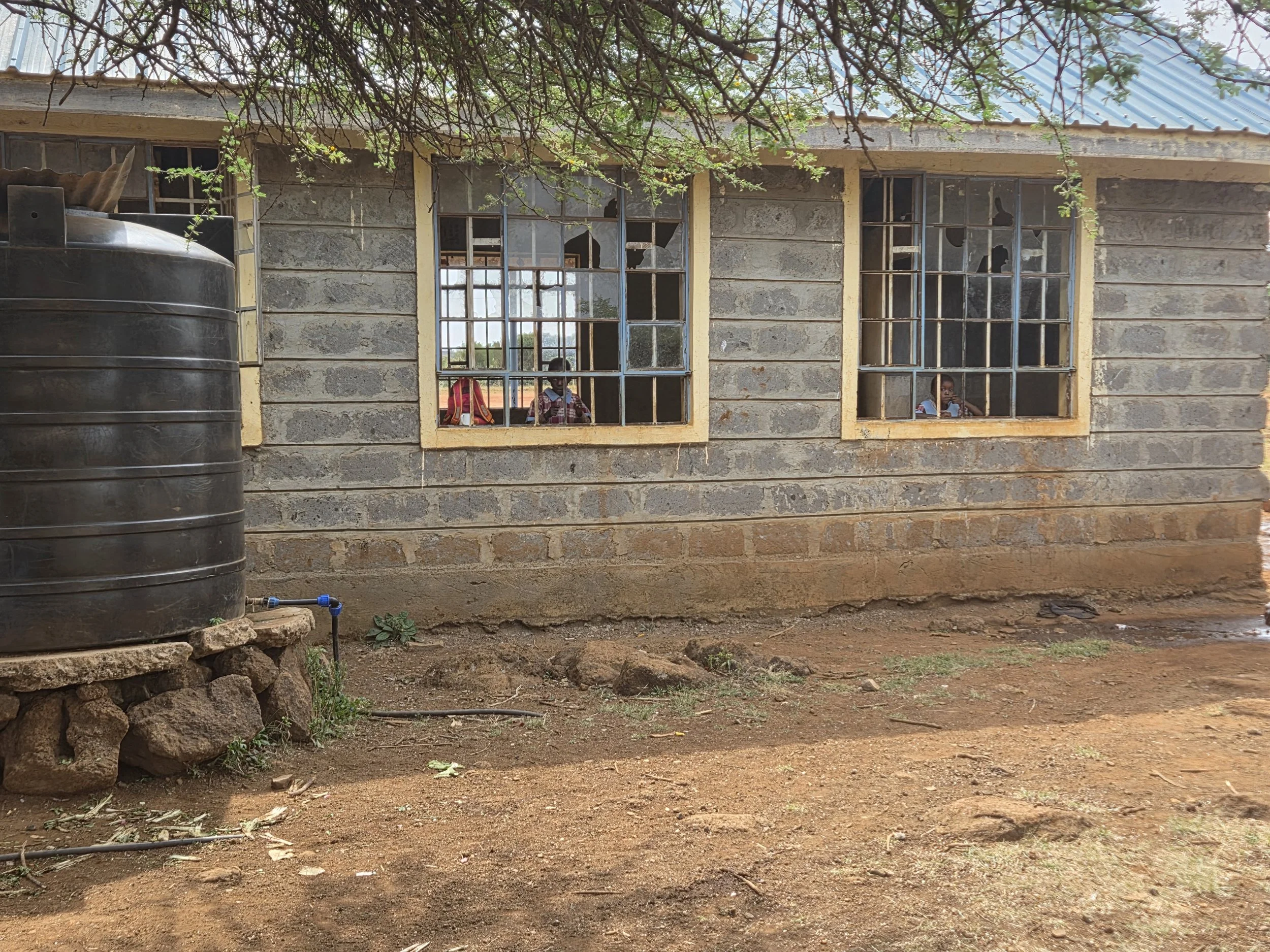
Walking around the school, I noticed the windows of another classroom. I think it was first grade. I guess the good news is the kids are too short to reach the broken glass.
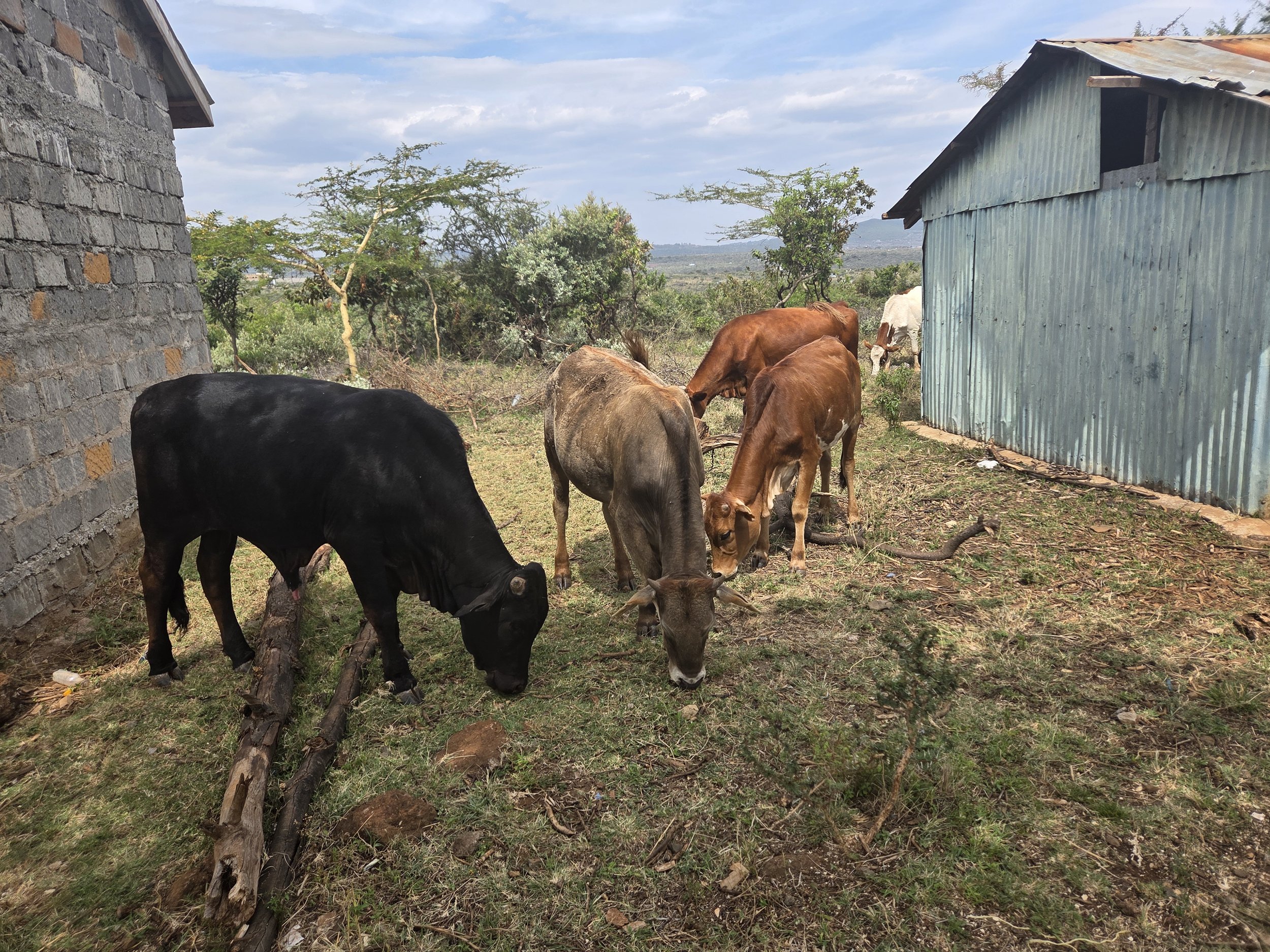
The school isn’t fenced in at all. So a small herd of cows wandered through. The Maasai are traditionally herders and tend to go where there is grass. This wasn’t an isolated incident. The cows pass through often, with or without a shepherd. In Maasailand, I think everyone is used to it.
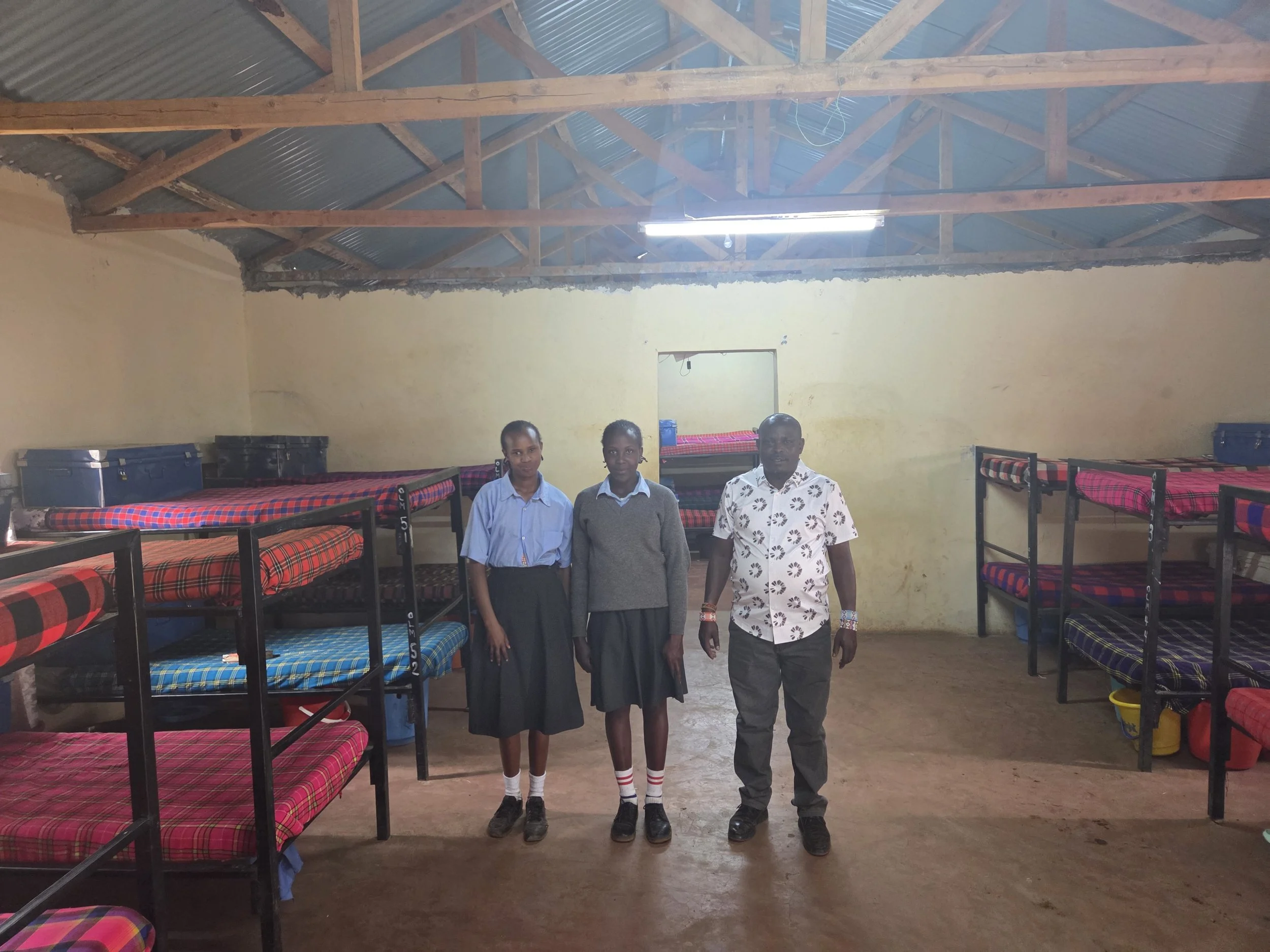
One of the things that we find attractive about the school is that they took it upon themselves to set up boarding facilities for the older girls. Many of the girls were walking a long way to school each day. Sexual assault is prevalent and the distance they walked increased the risk. In addition, boarding keeps the girls fed on weekends and nights. It also protects them some from child marriages and FGM. They describe the facility as a “Dormitory and Girls’ Rescue Centre.”
A significant part of Tuko Pamoja’s mission is to help provide a safe environment at a grassroots level for girls and women to thrive. We seek to partner with organizations with a like mindset. Olmaroroi is a good example of this. We look forward to working with them.
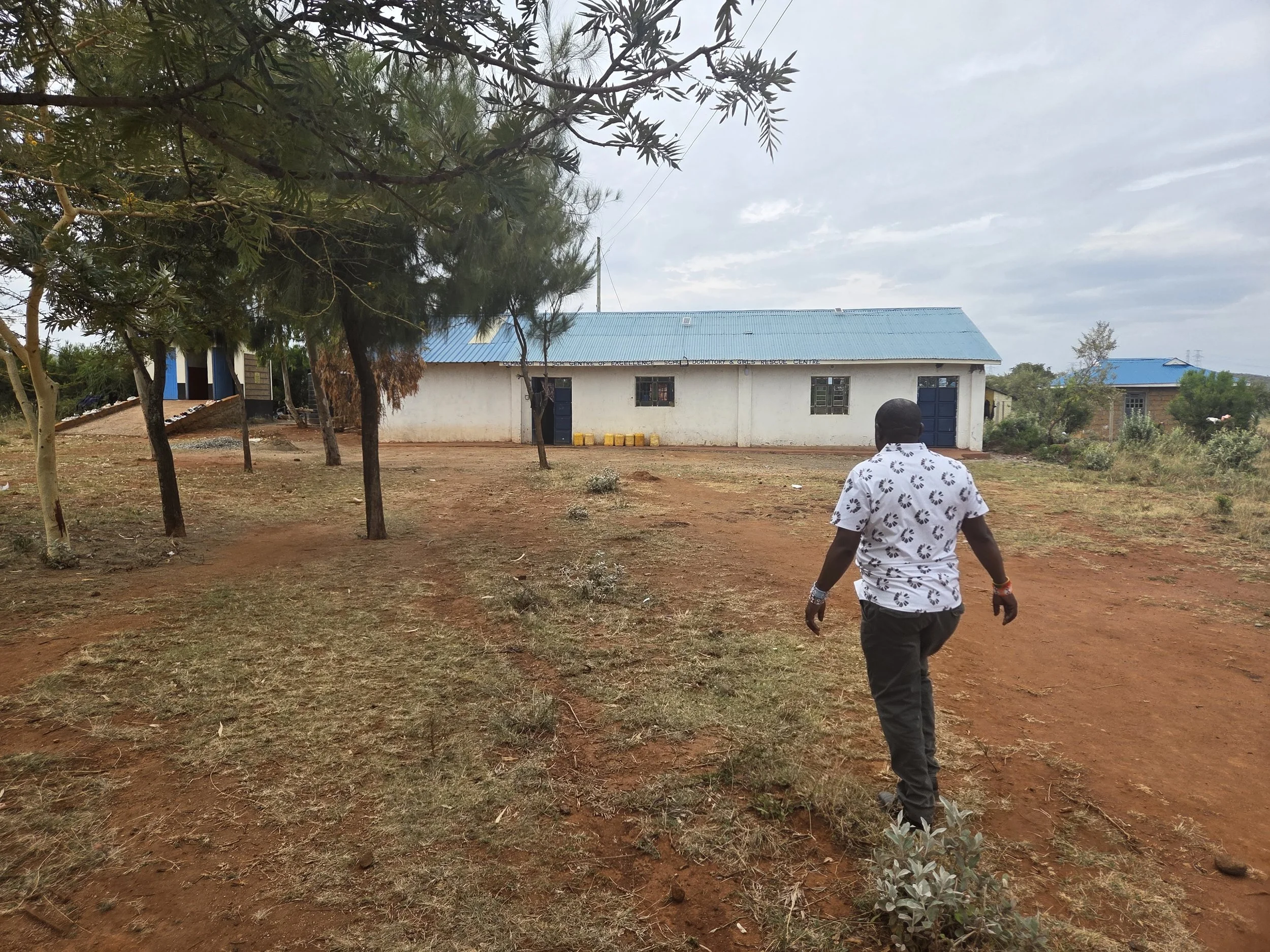
Above, head teacher David walks towards the facility.
Below, a couple of the girls show us around. The center is immaculate.
The dorm also has its own kitchen, so they don’t have to use the school’s. They have a cook at night for dinner and on weekends.
After visiting the two schools, we still had daylight. In that situation, we look at what we want to accomplish on the trip and either add something new or move something earlier in the agenda to free space later. In this case, we wanted to get to the Maasai Market in Karen.
The town is named after Karen Blixen, who lived there. She wrote under the pen name Isak Dinesen. Her most famous works are Out of Africa and short story “Babette’s Feast.” Out of Africa is semi-autobiographical, about her life living in the area (1913 to 1931).
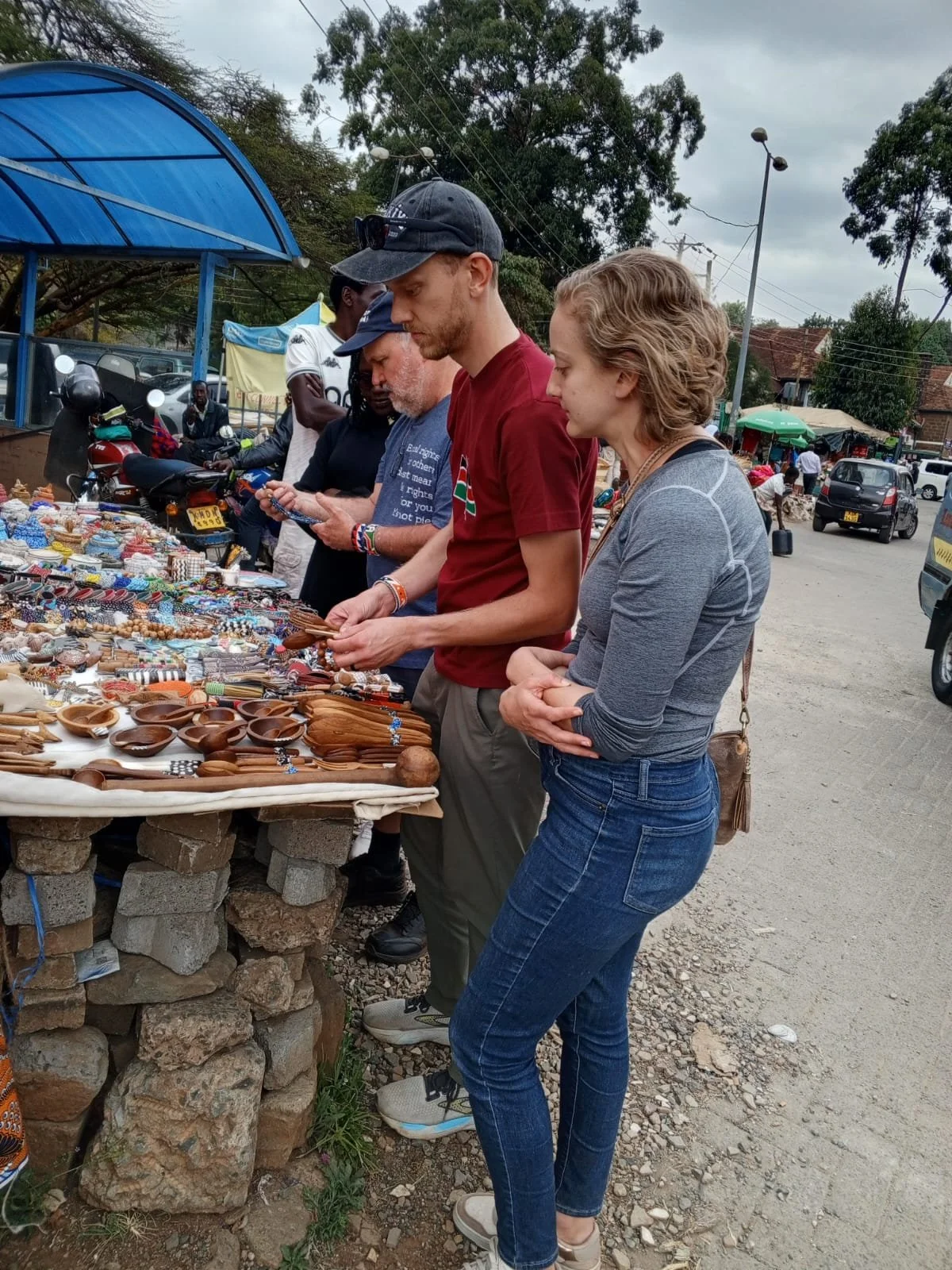
The market has wonderful beadwork, woodwork, textiles, and other crafts for sale. The quality is pretty good and the prices are embarrassingly cheap. I needed to go in order to get a bracelet modified. Nathan and Jaime enjoyed it. The women working there are aggressive, but friendly.